Does Laminated Glass Block Sound Effectively
Yes, laminated glass can significantly reduce sound transmission, making your home quieter and more peaceful. If you’re tired of noise from outside or between rooms, laminated glass could be the solution you’re looking for. Its layered structure absorbs and dampens sound waves more effectively than regular glass, providing a serene environment.
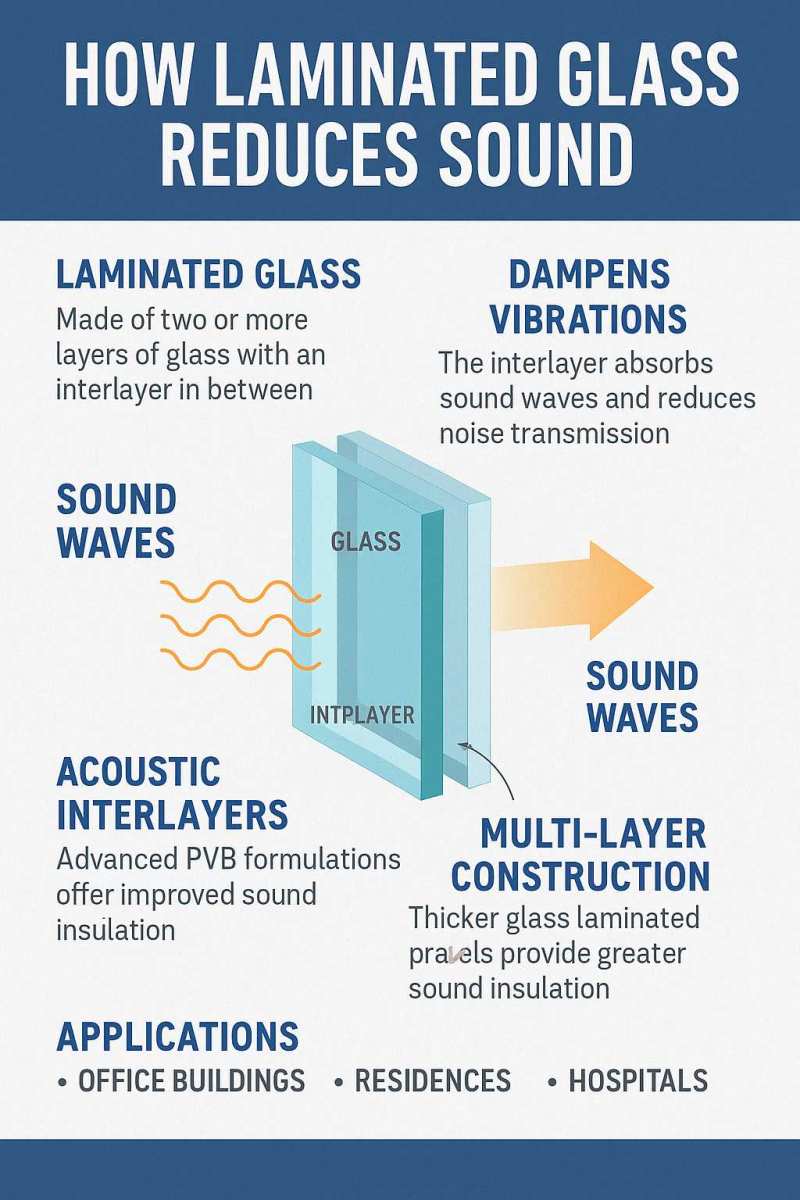
Laminated glass acts as a sound barrier by incorporating one or more polyvinyl butyral (PVB) interlayers between glass panes, which helps in absorbing vibrations and reducing noise. This makes it an excellent choice for windows in noisy neighborhoods or for spaces where privacy and tranquility are priorities. While it’s not completely soundproof, laminated glass can drastically improve acoustic comfort compared to standard glass, enhancing your overall living experience.

Does Laminated Glass Block Sound?
Understanding Laminated Glass and Its Composition
Laminated glass is made by bonding two or more panes of glass together with a strong plastic interlayer, typically polyvinyl butyral (PVB). This layer holds the glass pieces tightly in place, even if the glass breaks. The plastic layer is key to the soundproofing abilities of laminated glass, as it helps absorb and reduce noise transmission.
Laminated glass is commonly used in car windshields and building windows because it offers extra safety and security. But aside from safety, many wonder if it can effectively block sound from entering or leaving a space. To answer this, we need to explore how sound travels through glass and how laminated glass impacts that process.
How Sound Travels Through Glass
Sound waves move by causing vibrations in the medium they travel through, such as air, water, or solids. When sound hits a window, some of that energy is reflected back, but much is transmitted through. Regular glass tends to transmit sound quite easily because of its rigid, solid structure.
The amount of sound transmitted depends on the glass’s thickness, density, and the way it vibrates. Thinner or lighter glass allows more sound to pass through, while thicker or denser glass can block more sound. This is where laminated glass offers advantages over traditional single-pane glass.
How Laminated Glass Reduces Sound Transmission
Laminated glass’s plastic interlayer plays a significant role in dampening sound vibrations. When sound waves hit the glass, they cause the glass layers to vibrate, but the plastic layer absorbs some of this energy. This absorption reduces the amount of sound that makes it through to the other side.
Additionally, the laminated structure creates a damping effect, which further decreases sound transmission. The thicker and more complex the laminated glass, the better it can reduce noise levels, especially in noisy environments like airports or busy streets.
The Effectiveness of Laminated Glass in Blocking Sound
Research shows that laminated glass can reduce noise levels by approximately 20 to 50 decibels depending on the construction. For example, a typical laminated window can cut down noise from traffic or construction by about 25 decibels. That makes the environment noticeably quieter.
However, laminated glass is not a complete sound barrier. It significantly lowers high-frequency noise, such as sirens or chatter, but might be less effective against low-frequency sounds like bass music or engine noise. In loud areas, multiple layers or special acoustic laminates can enhance soundproofing.
Comparison Between Different Glass Types for Soundproofing
| Glass Type | Sound Transmission Class (STC) Rating | Typical Noise Reduction (Decibels) | Additional Features |
|---|---|---|---|
| Single-pane glass | 20-25 | Minimal | Least effective for soundproofing |
| Double-pane glass | 30-35 | Moderate | Improved insulation but limited noise control |
| Laminated glass | 35-45 | Significant reduction | Best for noise blocking with safety benefits |
| Acoustic laminated glass | 45-50+ | High level | Designed specifically for soundproofing |
As seen in the table, laminated glass provides better noise reduction compared to standard double-pane glass, especially when designed with acoustic properties in mind.
Factors Influencing Sound Blocking Performance
Several elements impact how well laminated glass blocks sound. First, the **thickness of the glass** plays a big role; thicker glass tends to block more sound. Second, the **type of plastic interlayer** matters; thicker or specially engineered layers improve soundproofing.
The **number of layers** also influences performance; adding more layers enhances noise reduction but increases weight and cost. The **air gaps** between glass panes can further improve sound blocking if filled with inert gases like argon, which add insulation.
Finally, **installation quality** affects soundproofing. Proper sealing and framing prevent noise leaks around the edges, maximizing the laminate’s effectiveness.
Related Topics: Enhancing Soundproofing with Laminated Glass
Combining Laminated Glass with Other Soundproofing Methods
While laminated glass is effective, combining it with other solutions can provide even better results. Using **sealed window frames**, for example, prevents sound leaks around the glass. Adding **window inserts or secondary glazing** can further enhance noise reduction.
Installing **soundproof curtains or acoustic panels** inside the room complements the laminated glass and creates a quieter space. Employing **door sweeps and weather stripping** also helps reduce airborne noise infiltration.
Choosing the Right Laminated Glass for Your Needs
When selecting laminated glass for soundproofing, consider the **sound frequency** you want to block. High-frequency sounds are easier to reduce than low-frequency sounds, so opt for **acoustic laminated glass** if low-frequency noise is a concern.
Discussing your needs with a professional allows you to choose the ideal **thickness, layering,** and **interlayer materials**. Remember that **costs** increase with enhanced soundproofing properties but often provide the best noise reduction.
Limitations of Laminated Glass in Soundproofing
Despite its benefits, laminated glass cannot eliminate all noise. Extremely loud environments or low-frequency sounds may still penetrate, especially if the glass is thin or poorly installed.
Furthermore, laminated glass adds weight, which can complicate installation and window frame design. It is also more expensive than standard glass options, so budget considerations are important.
Summary of Key Points
- Laminated glass reduces sound transmission by absorbing and damping vibrations through the plastic layer.
- Effectiveness varies with thickness, layering, and installation quality.
- It is best suited for blocking high-frequency noise but may need to be combined with other methods for low-frequency sounds.
- Compared to other glass types, laminated glass offers superior noise reduction and safety features.
Final Thoughts on Laminated Glass and Soundproofing
Laminated glass is a practical solution for quieting noisy environments. Its ability to block sound improves as you increase layers and thickness, making it suitable for homes, offices, and sound-sensitive areas. While it may not completely eliminate all noise, it offers a significant reduction that enhances comfort and privacy.
Choosing laminated glass designed specifically for acoustic performance, along with proper installation, ensures you get the best results. When combined with other soundproofing strategies, laminated glass is a powerful tool in creating a peaceful, quiet space.
Best Windows for Soundproofing Your Home | Dual Pane, Triple Pane, & Laminated Glass Explained
Frequently Asked Questions
How effective is laminated glass at reducing noise from outside?
Laminated glass significantly decreases noise transmission from external sources. Its layered structure, which includes a polyvinyl butyral (PVB) interlayer, absorbs and dampens sound waves, resulting in a quieter indoor environment. The level of noise reduction depends on the thickness of the glass and the number of layers used, but overall, it provides a noticeable improvement over standard glass.

Similar Posts