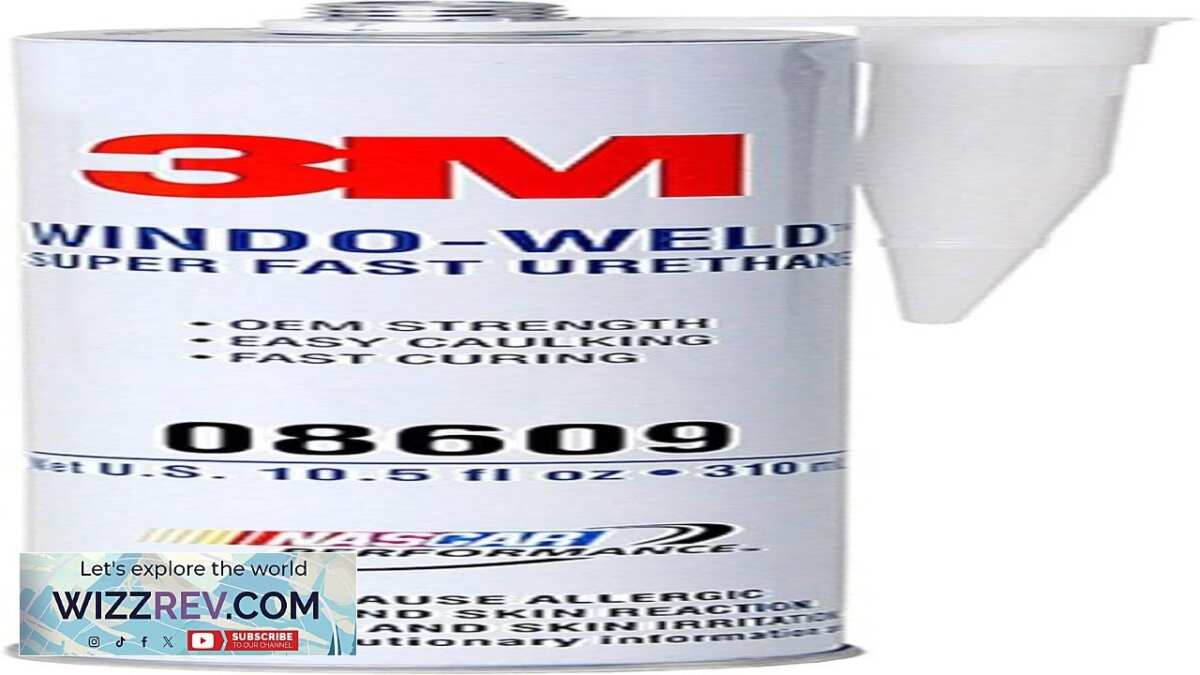
You're hunting for the right urethane for a windshield job, and you've heard people swear by the "best 3M window weld super fast urethane." It sounds perfect, a one-hour drive-away time, a strong bond, and a brand name you trust. But before you grab a cartridge, there's a catch you need to understand. Fast cure urethanes aren't forgiving.
They demand speed, precision, and the right conditions.
Per ANSI/AGRSS (Automotive Glass Replacement Safety Standard) guidelines, a proper bond requires both surface preparation and correct open time for glass positioning. Super Fast delivers speed, but it also demands precision. Let's break down what this variant really offers and who should use it.
Quick Answer
3M Window-Weld Super Fast Urethane drives away in one hour. It cures faster than the Standard version. But it requires experience and precise timing.
If you are a beginner, choose the Standard variant. It gives you more working time.
Why This Comparison Matters
Choosing the wrong urethane can ruin your windshield installation. If you pick Super Fast without understanding its short open time, you might end up with a misaligned glass panel. That mistake costs you time, money, and a lot of frustration.
The difference between the three main variants, Standard, Super Fast, and Ultra, isn't just about speed. Each one has a different open time, cure profile, and temperature tolerance. Picking the right one up front saves you from rework.
Think about your typical work environment. Are you in a heated shop with steady 70°F temps? Or are you working outside in cold weather?
The answer changes which variant you should buy. This comparison helps you avoid a costly mismatch between the product and your real conditions.

Image source: YouTube / Wizard Review (YouTube thumbnail (fair-use with source credit))
What Makes Super Fast Different? (Cure Chemistry & Open Time)
Super Fast uses a modified urethane chemistry that accelerates the reaction between the adhesive and moisture in the air. This speeds up both the initial set and the full cure. The trade-off?
You lose working time.
Open time is the window you have to position the glass after applying the urethane bead. Super Fast has an open time of about 5 to 7 minutes at 70°F. Once that window closes, the adhesive starts to skin over.
Moving the glass after that point weakens the bond.
Compare that to the Standard variant, which gives you 15 to 20 minutes of open time. That extra time lets you adjust, remove, and reset the glass if needed. With Super Fast, you have to be confident in your placement from the start.
Drive-away time is another key metric. Super Fast claims a one-hour drive-away at 70°F. Standard takes six hours.
That difference is huge for shops that return cars same-day. But drive-away time assumes proper surface prep, correct primer application, and ideal temperature.
If your shop runs cold, say 50°F, that one-hour drive-away can stretch to four or more hours. The chemical reaction slows down significantly in low temperatures. Manufacturer specifications indicate that the cure time doubles roughly for every 10°F drop below 70°F.
Also, Super Fast requires primer. You must use a compatible glass primer (like 3M's 08680 or 08682) on both the glass and the pinchweld. Skipping primer leads to adhesion failure.
The fast cure doesn't compensate for a missing chemical bond.
3M Window-Weld Variants at a Glance: Standard, Super Fast, Ultra
Before we dig deeper, let's map out the three main options in this family. Each one has a different job to do.
| Variant | Part Number | Open Time (70°F) | Drive-Away Time | Best For |
|---|---|---|---|---|
| Standard | 08691 | 15–20 minutes | 6 hours | Beginners, cold weather, large windows |
| Super Fast | 08693 | 5–7 minutes | 1 hour | Professionals, warm shop, same-day return |
| Ultra | 08695 | 10–15 minutes | 1 hour | Mixed conditions, enhanced adhesion |
Super Fast sits in the middle of the lineup. Standard is slower but forgiving. Ultra offers a compromise, longer open time than Super Fast but the same one-hour drive-away.
If you've ever wondered what adhesive is used for rear windshield applications, the same family of urethanes applies.
The Ultra variant uses a different catalyst system that gives you extra working time while still maintaining fast cure. Some professionals prefer Ultra because it balances speed with safety. But Super Fast remains the go-to for high-volume shops where every minute counts.
Super Fast Urethane: The Good and the Tricky
Let's be honest about both sides. Super Fast has real advantages, but it's not for everyone.
The good:
- One-hour drive-away. This lets you return vehicles the same day. That's a big deal for collision repair shops or mobile glass services.
- High green strength. The adhesive grabs quickly, holding the glass in place even if you don't tape it down (though we recommend taping anyway).
- Reliable bond. When applied correctly, it meets OEM specifications for windshield retention. It's been tested against industry standards.
The tricky:
- Very short open time. Five minutes goes fast. If you need to adjust the glass position, you likely won't have time. You'll have to cut the bead and start over.
- Temperature sensitive. Below 60°F, the performance drops. In cold weather, you may need to heat the vehicle or the cartridge.
- Requires primer. Some modern urethanes are primerless. Super Fast is not. Forgetting primer voids any hope of a long-term bond.
- Hard to clean up. Once it starts curing, you need mineral spirits quickly. Dried urethane is tough to remove from paint or trim.
If you're working alone, the short open time is especially risky. You need both hands on the glass, suction cups ready, and the car prepped perfectly. One distraction and you're in trouble.
The cost per cartridge is slightly higher than Standard, roughly $10 to $15 versus $8 to $10 as of 2026. But that premium buys you speed. If you do multiple windshields a day, the time savings can justify the price.
However, if you're a DIYer replacing a single windshield at home, the extra cost and pressure aren't worth it. Stick with Standard for your job. And if you're dealing with rear glass replacement, the same logic applies, especially if you've checked how much rear windshield replacement costs and want to avoid rework.
Side-by-Side Comparison: Standard vs. Super Fast vs. Ultra
Let's go deeper than the quick overview. This table covers every spec that matters when you're standing in the aisle choosing a cartridge.
| Spec | Standard (08691) | Super Fast (08693) | Ultra (08695) |
|---|---|---|---|
| Open time at 70°F | 15–20 minutes | 5–7 minutes | 10–15 minutes |
| Drive-away time | 6 hours | 1 hour | 1 hour |
| Full cure strength | 48 hours | 24–48 hours | 24 hours |
| Tensile strength | ~1,800 psi | ~2,000 psi | ~2,200 psi |
| Elongation at break | 250% | 200% | 300% |
| Temperature range | -30°F to 200°F | -40°F to 200°F | -40°F to 200°F |
| Primer required | Yes | Yes | Yes (but Ultra has better adhesion on bare metal) |
| Best shop temp | 60°F–90°F | 65°F–85°F | 60°F–100°F |
| Cost per 10.5 oz | $8–$10 | $10–$15 | $12–$16 |

Image source: YouTube / Wizard Review (YouTube thumbnail (fair-use with source credit))
The numbers tell a clear story. Standard is the forgiving choice. Super Fast trades open time for speed.
Ultra gives you the best of both if you're willing to pay a little more.
Notice that Ultra has a higher elongation at break. That matters if your vehicle flexes a lot or if you're installing glass on a truck frame. The urethane needs to move with the body.
Super Fast is stiffer, which can be fine for most cars but less ideal for heavy trucks.
If you're replacing a rear windshield, the application is similar. The same adhesive family works. Our research shows many shops use Standard for rear glass because the extra open time helps with awkward angles.
But if you're in a hurry, Super Fast works too.
Who Should Use Super Fast? (Best Use Cases)
Super Fast is not a beginner product. It's designed for professionals who have done hundreds of windshield installations. Here are the situations where it shines.
High-volume auto glass shops. If you're doing five or more windshields a day, saving five hours per car adds up fast. One-hour drive-away means you can schedule two or three jobs per bay per day. That's real revenue.
Mobile glass repair services. When you're working at a customer's home or office, you don't want to leave the car sitting for six hours. Super Fast lets you finish the job and move on. The customer drives away in an hour, and you're onto the next call.
Collision repair shops with same-day return promises. Many body shops guarantee that a windshield replacement won't delay delivery. Super Fast makes that promise possible. The glass is bonded and safe to drive before the paint shop finishes buffing.
Warm climate installations. If your shop or outdoor workspace stays above 65°F year-round, Super Fast performs exactly as advertised. Open time is predictable. Cure time stays on schedule.
You can plan your workflow without heating blankets or waiting.
Emergency replacements. Sometimes a cracked windshield needs to be replaced immediately so the customer can drive home. Super Fast gets them back on the road faster. Just make sure you explain the 24-hour full cure window, they should avoid car washes and rough roads for a day.
If you're a DIY homeowner replacing a single windshield in your driveway, Super Fast is probably overkill. You'd be better served by Standard. That extra open time lets you adjust the glass position and correct mistakes.
It's also more forgiving of temperature swings. And if you've ever wondered how to replace rear windshield at home, the same advice applies, give yourself time.
When to Avoid Super Fast (Mistakes & Wrong Scenarios)
Super Fast can cause serious problems in the wrong conditions. Here's when you should reach for Standard or Ultra instead.
Cold weather installations. If your shop temperature is below 60°F, don't use Super Fast. The open time shrinks further, and the cure time stretches unpredictably. You might get a bond that looks fine but fails later.
At 40°F, drive-away time can exceed four hours. That defeats the purpose of fast cure.
Large or heavy glass panels. If you're installing a panoramic roof, a heavy rear window, or a truck back glass with defroster grids, you need time to position and press the glass. Super Fast's 5-minute open window is too tight. One wrong slip and you're cutting the bead and starting over.
Unpainted or bare metal pinchwelds. The primer is critical on bare metal. Super Fast doesn't tolerate primer mistakes. If you rush the primer application or skip a spot, the bond will fail.
Ultra has slightly better adhesion on difficult surfaces, but Standard gives you more time to get the primer right.
Busy jobs with interruptions. Phone calls, customers walking up, tools falling off the bench. Any distraction during the 5-minute open window can ruin the job. If you work in a chaotic environment, use Standard.
It's more forgiving of interruptions.
First-time installations. Aggregate user reviews report that beginners often misalign the glass with Super Fast. They panic, try to shift the glass, and compromise the bond. If you've never replaced a windshield before, start with Standard.
Learn the process with a longer open time.
Also, avoid Super Fast if you're working on a vehicle where the windshield is difficult to reach or position. Some cars require you to set the glass from inside the cabin. That extra maneuvering time eats into your 5-minute window.
Use Standard for those tricky jobs.
Common Mistakes with Fast-Cure Urethane
Even experienced installers make errors with fast-cure urethanes. Here are the most frequent ones and how to avoid them.
Skipping the primer. This is the number one cause of adhesion failure. Super Fast requires primer on both the glass and the pinchweld. The primer creates a chemical bond that the urethane can grab.
Without it, the adhesive sticks temporarily but loses grip as the car vibrates and heats up. Always apply a thin, uniform coat. Let it dry for the recommended time (usually 3 to 5 minutes) before applying urethane.
Applying too thin a bead. The recommended bead shape for windshield urethane is a triangle or V-profile. A thin bead reduces surface contact and can lead to leaks or weak retention. Use the correct nozzle or cut the cartridge tip at a 45-degree angle.
The bead should be about 5/16 to 3/8 inch tall and wide.
Not tapping the glass into place quickly. With Super Fast, you have about five minutes from the moment the bead hits the pinchweld. If you spend three minutes trimming the bead or checking fitment, you leave only two minutes for final positioning. Have the glass ready with suction cups attached.
Set it in one smooth motion.
Cleaning up too late. Once Super Fast cures, it's tough to remove. Wipe any squeeze-out immediately with mineral spirits. If it dries, you'll need a razor blade and solvents.
That risks scratching the paint or glass.
Ignoring temperature and humidity. The cure rate depends on both. Low humidity (under 30%) slows the reaction. High humidity accelerates it.
Check the weather before you start. If it's dry and cold, consider using Ultra instead.
Forgetting to tape the glass. Even with fast green strength, the glass can shift during the first hour if you hit a bump while backing out of the shop. Tape the top edge of the glass to the roof with painter's tape. Leave it in place for at least an hour.
A related safety concern involves isocyanates. These chemicals are in urethane adhesives and can cause respiratory sensitization. Always wear gloves and a respirator rated for isocyanates.
The OSHA safety guidelines for isocyanates apply here. Work in a ventilated area.
Pricing and Value: What You're Paying For
Super Fast costs about 20 to 30 percent more than Standard per cartridge. That price difference matters if you're a business owner buying in bulk. Let's look at the real value.
A case of 12 cartridges of Standard runs about $100 to $120. Super Fast costs $120 to $180 for the same quantity. That's a $60 to $80 difference per case.
But consider the labor cost. If your shop labor rate is $80 per hour and Super Fast saves five hours of waiting per job, that's $400 saved per installation. The extra $5 per cartridge is irrelevant compared to the time savings.
For a DIYer, the math is different. You're not paying yourself an hourly rate. You save nothing by using Super Fast because you have all day.
The extra $5 to $7 per cartridge just adds cost. Standard gives you a better experience with less stress.
Also, note that Super Fast has a shorter shelf life than Standard. Once opened, a cartridge should be used within 24 hours. Unopened, it lasts about 12 to 18 months if stored between 60°F and 80°F.
Standard has a slightly longer shelf life due to its slower chemistry. Factor in waste if you don't use the whole cartridge.
If you're only doing one windshield, buy a single Standard cartridge. It's cheaper, easier, and more forgiving. If you're a shop owner, the value case for Super Fast is strong.
Just make sure your team has the skills to use it correctly.
Expert Tips for Getting It Right
Getting Super Fast to perform well comes down to preparation. Here are the techniques that experienced installers use to avoid problems.
Preheat the cartridge in cold weather. If your shop is below 65°F, warm the urethane cartridge. Place it in a bucket of warm water (100°F max) for 10 minutes before loading the gun. This lowers viscosity and improves flow.
Never use a heat gun directly on the cartridge. That can damage the chemistry.
Cut the nozzle for speed. With Super Fast, you don't want to struggle with a slow flow rate. Cut the nozzle at a 45-degree angle to create a 5/16-inch opening. This gives you a proper bead width without needing excessive trigger pressure.
Practice on a scrap piece first.
Have glass mounted and ready. Before you apply any urethane, attach the suction cups to the windshield. Test the fit by setting the glass in place dry. Make sure the clips and trim line up.
Once the urethane goes down, you won't have time to adjust.

Image source: YouTube / SHOWTIME GLASS, INC. (YouTube thumbnail (fair-use with source credit))
Apply primer in thin layers. A thick coat of primer dries unevenly and can cause adhesion spots. Use a fresh primer applicator for each job. Dab it lightly on the glass and the pinchweld.
Let it dry fully (typically 3 to 5 minutes) before you apply urethane.
Check the bead continuity. After you lay the bead, inspect it for gaps. Run your finger lightly along the bead (with a glove on) to feel for low spots. If you find a gap, apply a small extra dab before setting the glass.
Do this within the first minute.
Press firmly and quickly. Once the glass is in place, apply even pressure across the entire surface. Push from the center outward to avoid trapping air. Use a firm hand pressure for 30 seconds.
Then tape the glass at the top edge to hold position during initial cure.
Real-World Scenario: When Super Fast Saved the Day
Let's look at a typical situation from a shop in Phoenix. The temperature was 85°F, the humidity was low, and the shop was busy. A customer needed a windshield replacement on a sedan.
They were waiting in the lounge.
The installer used Standard in the past but decided to try Super Fast for speed. The prep took 15 minutes. Primer dried in 4 minutes.
The urethane bead was applied in under 2 minutes. The glass was set and pressed within 3 minutes of the bead hitting the pinchweld.
The customer left the shop 50 minutes later. That was over five hours faster than Standard would have allowed. The shop saved the labor cost of a loaner car and freed up a parking spot.
But here's where the scenario could have gone wrong. The installer had a backup plan. They kept a utility knife and a fresh Standard cartridge nearby.
If the glass slipped or they hit a problem, they could cut the bead and restart. That safety net made the fast cure less risky.

Image source: YouTube / Christian's Reviews & Deal's (YouTube thumbnail (fair-use with source credit))
Now consider a different scenario. A DIY homeowner tried Super Fast in their garage in Chicago in November. The garage temperature was 45°F.
They rushed the primer application. The glass shifted during setting but they didn't notice. Two days later, a whistling sound came from the windshield edge.
The bond had partially failed.
This outcome is common when users ignore temperature and experience. Super Fast is not a magic fix. It's a professional tool that requires proper conditions.
If you are a first-timer, do not try to replicate the Phoenix shop. Go with Standard.
Frequently Asked Questions
Can I use Super Fast without primer?
No. Super Fast requires primer on both the glass and the pinchweld. The primer creates a chemical bond that the urethane locks into.
Without it, the adhesive will eventually fail. Always use 3M Glass Primer 08680 or 08682.
How long can I store an opened cartridge?
An opened cartridge should be used within 24 hours. Once the nozzle is cut and exposed to air, the urethane starts to cure inside the tip. You can seal the nozzle with tape and a screw, but the performance drops after a day.
Does Super Fast work on polyurethane primer?
Yes, but only if the primer is compatible with urethane adhesives. Always use the primer specified by the manufacturer. Mixed primer systems can cause adhesion problems.
Stick with the 3M primer system for best results.
What happens if I drive the car too soon?
Driving before the one-hour mark can stress the bond. The glass may shift or leak. Full cure takes 24 to 48 hours.
Avoid car washes, rough roads, and hard cornering for at least a day.
Can I use Super Fast on a rear windshield?
Yes. The application process is the same as for the front windshield. However, the open time is more critical because rear windows often have awkward angles.
Consider Standard for rear glass installations if you are less experienced.
Is Super Fast safe for heated windshields?
Yes, but you must be careful with the primer application. Avoid getting primer on the electrical contacts or heating elements. The urethane itself does not damage the heating grid.
Just apply the primer sparingly around the connection points.
Final Verdict: The Right Choice for Your Job
Here is the bottom line. Super Fast is the right choice if you are an experienced installer working in a warm environment with controlled conditions. It saves time and increases shop throughput.
The extra cost per cartridge is irrelevant compared to the labor savings.
But if you are a beginner, a DIY homeowner, or working in cold temperatures, choose Standard. The longer open time gives you room to make mistakes. The lower cost is a bonus.
If you want a middle ground, consider Ultra. It offers the same one-hour drive-away as Super Fast but with a longer open time. That extra 5 to 10 minutes of adjustment time can prevent a failed installation.
Ultra costs a bit more but is worth the insurance for tricky jobs.
Remember the key metrics: open time, drive-away time, and temperature tolerance. Match them to your situation. And always use proper primer and surface preparation.
The best urethane in the world won't fix a rushed prep job.
Now you have the information to decide. Pick the variant that fits your skill level, your shop conditions, and your schedule. Then get the glass installed with confidence.
- Best Rear Windshield Sealant Glue to Stop Leaks - July 16, 2026
- Best 3M Window Weld Super Fast Urethane: Top Picks - July 16, 2026