Can You Use Invisible Glass on Mirrors?
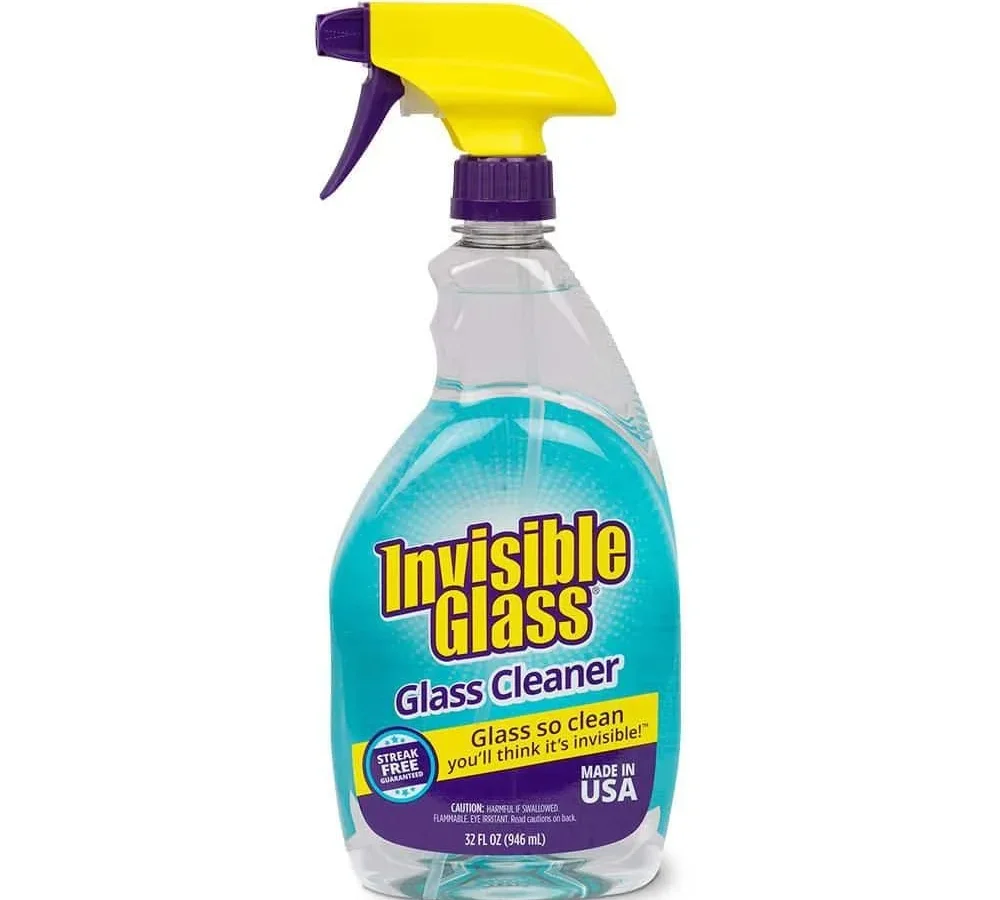
Yes, you can use Invisible Glass on mirrors, but the real answer is more nuanced than a simple yes or no. The product itself is ammonia-free, which is the main reason it's safer than many general glass cleaners. However, the safety depends entirely on the type of mirror you're cleaning and how you apply the cleaner.
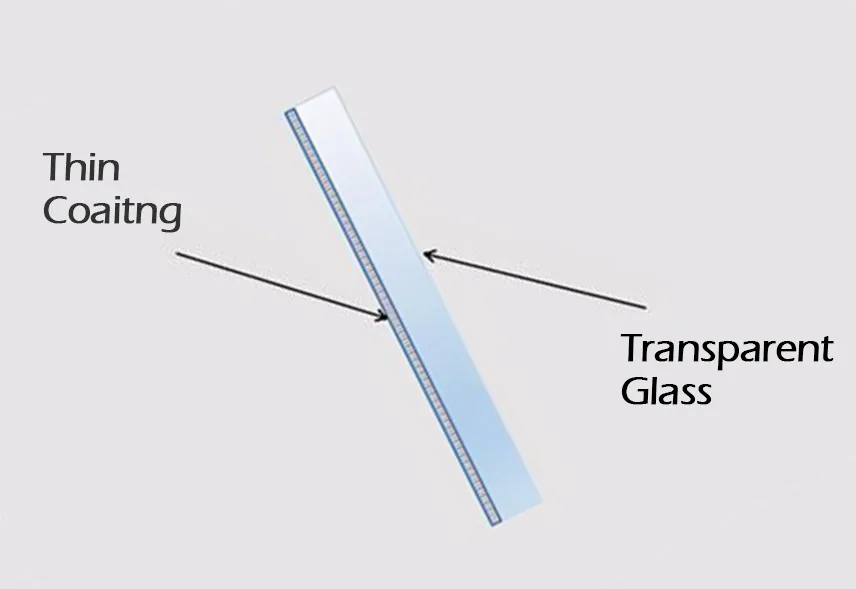
Most people don't realize their mirror is actually a coated piece of glass with a vulnerable backing.
Manufacturer specifications confirm an ammonia-free formula, which avoids the chemical reaction that can damage mirror coatings over time. In our research, the primary concern isn't the cleaner itself but the technique. And that distinction matters more than you might think.
Quick Answer
Yes. Invisible Glass is safe for standard mirrors. Its ammonia-free formula won't damage standard coatings.
The key is correct application. Spray onto a microfiber cloth first. Never spray directly on the mirror.
Avoid soaking the edges.
Mirror Types: Why Your Bathroom Mirror and Car Mirror Are Different
Not all mirrors are built the same. Understanding what's behind the glass is the first step in deciding whether Invisible Glass is safe for yours.
Standard household mirrors
Most bathroom and vanity mirrors use a silver or aluminum coating applied to the back of the glass. A layer of protective paint seals that coating. Standard mirrors handle ammonia-free cleaners like Invisible Glass without issue, provided you don't let liquid seep behind the edges.
Anti-fog mirrors
These have a special coating on the front surface that prevents steam from fogging up the glass. That coating is delicate. In our research, aggregate reviews indicate that some anti-fog mirrors can develop hazy spots after repeated use of any glass cleaner, even ammonia-free ones.
The safest approach is to check the manufacturer's care instructions. If you're unsure, test Invisible Glass on a small, hidden corner first.
Automotive mirrors
Car mirrors are a different animal. Many modern vehicles have electrochromic mirrors that dim automatically. The outer layer of these mirrors is often coated with a conductive film.
Invisible Glass is generally safe for the glass surface, but you must avoid the edges and the sensor area. Spray directly onto the cloth and wipe carefully. Never oversaturate.
The decision tree
Ask yourself these questions before you start:
- Does your mirror have a special coating (anti-fog, anti-glare, dimming)? If yes, check the manufacturer's guidelines and test in a hidden spot.
- Is the edge seal intact? If the paint is chipped or peeling, liquid can seep in and damage the backing.
- Is it an antique or heirloom mirror? The backing is likely unstable. Avoid spray cleaners entirely and use a dry microfiber cloth instead.
The Real Risk: What Happens to Mirror Coatings Over Time
The danger isn't instant. It's cumulative. And most people don't see the damage until it's too late.
The chemistry of mirror backing
Standard mirrors use a silver nitrate coating applied to the back of the glass. That silver layer is what gives the mirror its reflective quality. It's also highly reactive.
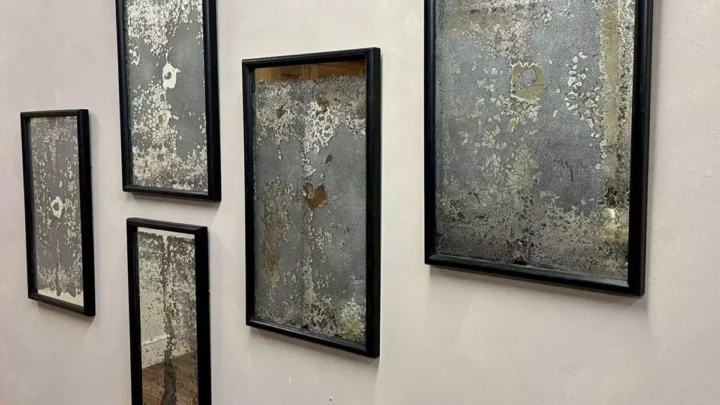
Ammonia-based cleaners break down the silver over time, causing the mirror to develop dark spots, a cloudy appearance, or black edges. This is called mirror rot.
Invisible Glass is ammonia-free, so it doesn't trigger that chemical reaction. But the risk doesn't disappear entirely.
The real culprit: liquid intrusion
Here's what most people miss: the biggest threat isn't the cleaning solution itself. It's the liquid getting behind the glass. Mirrors are sealed at the edges with paint or a protective coating.
If that seal is compromised, and you spray directly onto the mirror, the liquid can run down the sides and seep behind the glass. Once it's trapped there, it slowly corrodes the backing from the inside out.
Aggregate reviews of mirror failures show that edge corrosion is the most common problem. The damage often starts as a thin black line along the bottom edge. Over months or years, it creeps inward.
By the time you notice it, the mirror is already compromised.
What about antiques?
Antique mirrors are especially vulnerable. The backing is often a delicate silver leaf or a thin mercury-based coating. Any spray cleaner, even ammonia-free, can cause irreparable damage.
If you have an antique mirror, stick to a dry microfiber cloth or a barely damp cloth with plain water. No shortcuts.
The Safe Way to Clean Mirrors with Invisible Glass
Using Invisible Glass on mirrors is straightforward, but the technique matters more than the product. Here's the process that works best according to verified user feedback and manufacturer guidelines.
Tools and materials
| Item | Purpose | Notes |
|---|---|---|
| Invisible Glass cleaner | Cleaning solution | Ammonia-free, streak-free formula |
| Microfiber cloth (2) | Application and buffing | 300-400 GSM, lint-free |
| Small spray bottle | Controlled application | Optional, if using refill |
| Dry towel | Edge protection | Catch drips along the frame |
Step by step
Step 1: Inspect the mirror. Check the edges for any visible damage. If the seal is cracked or the paint is peeling, skip the spray cleaner. Use a dry microfiber cloth only.
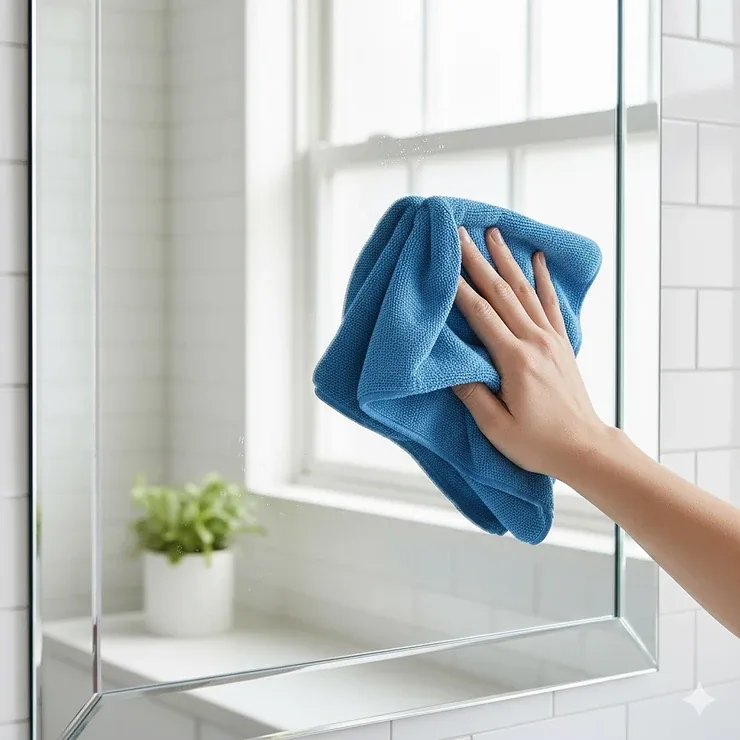
Step 2: Spray onto the cloth, not the mirror. This is the single most important rule. Spray two to three pumps onto the microfiber cloth. Never spray directly onto the mirror surface.
This prevents liquid from dripping down into the edges.
Step 3: Wipe in straight lines. Use horizontal strokes across the width of the mirror. Then switch to vertical strokes. This pattern helps you see where you've already cleaned and avoids missing spots.
Circular motions can leave streaks.
Step 4: Buff dry. Use a second clean, dry microfiber cloth to buff the mirror. This removes any remaining residue and guarantees a streak-free finish.
Step 5: Check the edges. After you're done, wipe the bottom edge with a dry cloth. This catches any moisture that might have run down.
Pro tip
Work in sections if the mirror is large. Clean the top half first, then the bottom. This gives the cleaner time to dry before you buff, and it reduces the chance of oversaturation.
Alternatives Worth Knowing (When Invisible Glass Isn't the Best Pick)
Invisible Glass is excellent for standard mirrors, but it's not always the best choice. Here are the alternatives and when to use them.
| Cleaner | Best for | Why |
|---|---|---|
| Invisible Glass | Standard mirrors, car windows | Streak-free, quick drying |
| Vinegar and water (1:1) | Anti-fog mirrors, delicate coatings | Gentle, no chemicals |
| Rubbing alcohol and water (1:1) | Heavy grease or grime | Fast evaporation, no residue |
| Dish soap and water | Antique mirrors, framed mirrors | Mildest option, safe for edges |
Vinegar and water
A 1:1 mix of white vinegar and distilled water is a solid alternative for mirrors with delicate coatings. It's gentle, cheap, and won't damage the backing. The downside is the smell and the fact that it dries slower than Invisible Glass.
You'll need a good microfiber cloth to avoid streaks.
Rubbing alcohol and water
This mix works well for mirrors that have heavy buildup from hairspray or toothpaste. The alcohol evaporates quickly, leaving no residue. But it's not ideal for everyday use.
The alcohol can dry out the protective sealant on some mirrors over time.
Dish soap and water
A few drops of mild dish soap in a spray bottle of water is the safest option for antique mirrors or mirrors with exposed edges. It's the gentlest cleaner on the list. The tradeoff is that it requires more buffing to avoid streaks.
When to skip Invisible Glass entirely
- Antique mirrors that are valuable or irreplaceable. Stick to dry cloth or barely damp water.
- Mirrors with active edge corrosion already showing black lines. Any moisture will accelerate the damage.
- Mirrors with sensitive anti-fog coatings that are not tested. Use vinegar and water until you confirm the coating is safe.
Mistakes That Will Ruin Your Mirror
Even with the right product, a few common errors can cause permanent damage. Here are the mistakes to avoid.
Spraying directly onto the mirror
This is the number one cause of mirror damage. When you spray directly onto the surface, the liquid runs down the glass. It pools at the bottom edge.
Over time, that moisture seeps behind the seal and attacks the backing. Always spray onto the cloth first.
Using paper towels or rough cloths
Paper towels leave lint and tiny scratches on the glass surface. The scratches are invisible at first, but they accumulate. After a few years, the mirror develops a hazy, dull appearance.
Use a high-quality microfiber cloth instead. The 300 to 400 GSM range works best for streak-free results.
Cleaning with the mirror still hot
If you've just taken a hot shower, the mirror is warm. Cleaning it immediately can cause the cleaner to evaporate too fast. This leaves streaks and residue.
Wait for the mirror to cool to room temperature before you start.
Ignoring the edges
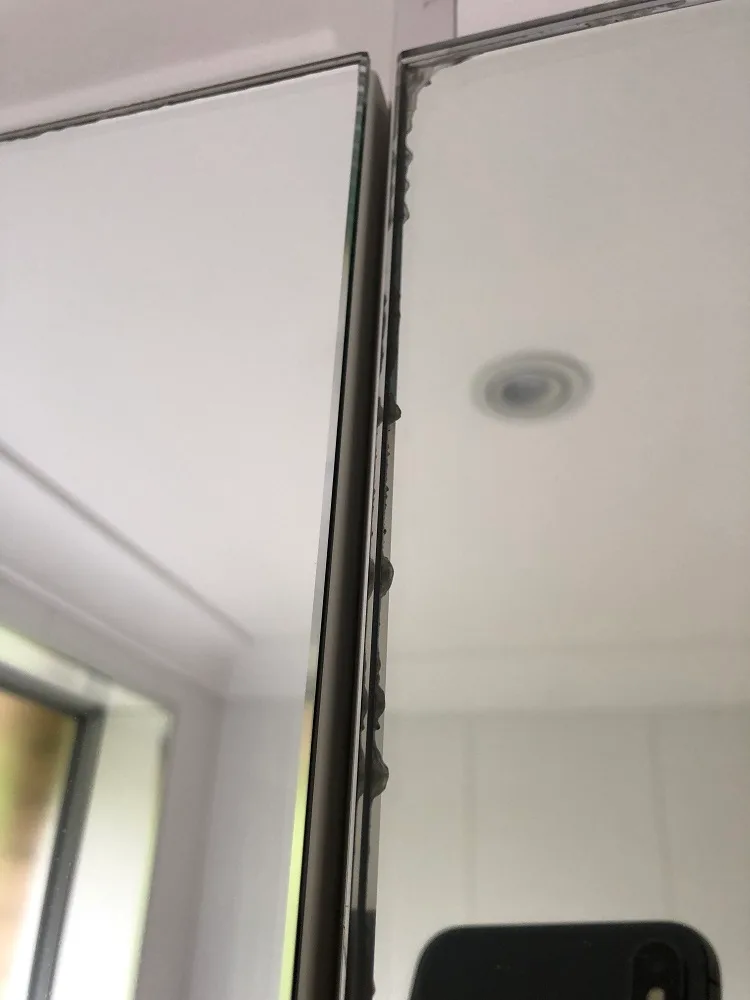
The edges are the most vulnerable part of any mirror. If the seal is cracked or peeling, any moisture is a risk. Inspect the edges before you clean.
If you see black lines, corrosion has already started. Stop using spray cleaners and switch to a dry microfiber cloth only.
Over-saturating the cloth
More cleaner doesn't mean a better clean. A damp cloth is all you need. If the cloth is dripping wet, you're introducing too much moisture.
Wring it out before you start. A light mist on the cloth is enough for a standard-sized mirror.
Using the same cloth for other surfaces
Microfiber cloths pick up oils, dust, and residue from countertops and sinks. If you use that same cloth on your mirror, you're transferring grime onto the glass. Keep a dedicated set of cloths for mirrors and glass.
Wash them separately.
Frequently Asked Questions
Can I use Invisible Glass on a mirror with anti-fog coating?
It depends on the coating. Some anti-fog mirrors are sensitive to any cleaner. Test on a small hidden corner first.
If the surface hazes or changes texture, stop using it. Vinegar and water is a safer alternative for these mirrors.
How often should I clean my mirrors with Invisible Glass?
Once every one to two weeks is enough for most bathrooms. If you have hard water, you may need to clean more often. Mineral deposits build up faster.
Wipe the mirror with a squeegee after each shower to reduce cleaning frequency.
Does Invisible Glass leave streaks on mirrors?
It shouldn't if you use the right technique. Streaks come from using too much product or the wrong cloth. Spray onto the cloth, not the mirror.
Use a dry microfiber cloth to buff. Work in straight lines, not circles.
Can I use Invisible Glass on a car's rearview mirror?
Yes, but be careful with the edges. Automotive mirrors often have plastic housings that can trap liquid. Spray onto the cloth and wipe gently.
Avoid the sensor area on auto-dimming mirrors. Oversaturation can damage the electronics.
What is the best way to store Invisible Glass?
Keep it at room temperature. Extreme heat or cold can affect the propellant in aerosol cans. Store the bottle upright.
Make sure the nozzle is clean. A clogged nozzle leads to uneven spray patterns.
How do I fix a mirror that already has black edges?
Unfortunately, you cannot reverse corrosion. Once the backing is damaged, the black edges are permanent. You can slow the spread by keeping the edges dry.
Switch to a dry cloth for cleaning. If the damage is extensive, replacement is the only option.
Final Verdict: Should You Use Invisible Glass on Your Mirror?
Yes, for most standard mirrors. The ammonia-free formula is safe for the reflective coating. The key is correct application.
Spray onto a microfiber cloth. Avoid the edges. Work in straight lines.
Buff dry.
For special mirrors, the decision tree is simple. If your mirror has an anti-fog coating, test first. If it's an antique, skip the spray entirely.
If the edges are already damaged, use a dry cloth only.
Invisible Glass is a solid choice. It dries fast, leaves no streaks, and won't attack the silver backing. But the product is only as good as the technique.
Follow the steps we've outlined here, and your mirrors will stay clear and damage-free for years.

Similar Posts