Are Mirrors Bad for Birds? What to Know

If you've ever wondered whether mirrors are bad for birds, the honest answer is: it depends entirely on where the mirror sits, what it reflects, and how birds behave around it. A small bathroom mirror inside your home is basically harmless. A large garden mirror facing a feeder, on the other hand, can be a genuine hazard.
The numbers back this up. Research from the Cornell Lab of Ornithology estimates that up to one billion birds die each year in the United States alone from window and reflective-surface collisions. The good news is that the fix is often simple, cheap, and takes about ten minutes.
Let's walk through exactly what makes a mirror dangerous and what you can do about it.
Quick Answer
So, are mirrors bad for birds? Yes, but only when placed outdoors or near windows where they create a convincing reflection of open sky, trees, or habitat.
Birds see their own reflection and either attack it or fly straight into it. Both outcomes are bad. Some birds get concussions, broken beaks, or die on impact.
Others exhaust themselves fighting an "intruder" they can never win against.
Indoor mirrors are rarely a problem. The danger appears when a reflective surface sits outside, faces outward, and is large enough to look like a flight path.
The solution is simple. Move the mirror, angle it downward, cover it, or replace it with bird-safe glass. Every option works.
The Real Danger: How Mirrors Harm Birds
Birds don't understand the concept of a mirror. To them, a reflective surface is just another window into the landscape. When a mirror reflects trees, shrubs, or open sky, a bird sees a safe route and flies toward it at full speed.
The collision happens in a split second.
There are actually two separate harm mechanisms at play here. Knowing which one you're dealing with changes the fix.
Collision: The Silent Killer
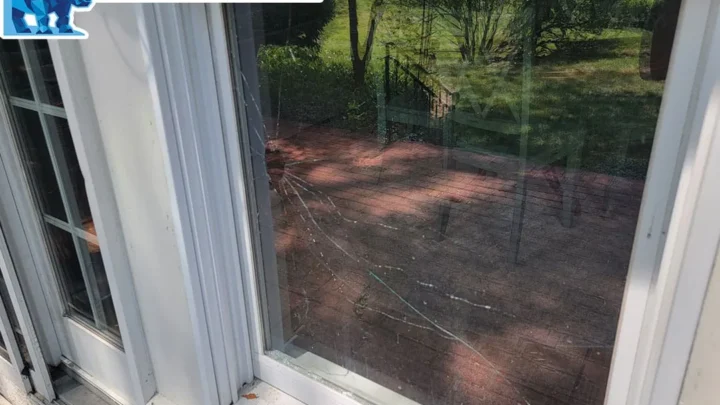
This is the most common and the most deadly. A bird sees a reflection of the yard, assumes it's real space, and flies directly into the glass or mirror. Impact at full flight speed causes internal injuries, head trauma, broken bones, or death.
Even if a bird flies away stunned, it often dies later from internal bleeding or becomes easy prey.
Researchers call this "glass as invisible predator." The bird never sees the actual barrier. It just sees a continuation of the world.
Territorial Aggression: The Exhausting Battle
The second problem is behavioral. During nesting season, male birds defend their territory aggressively. When they see their own reflection, they read it as a rival male.
They'll attack the mirror repeatedly, sometimes for hours or days on end.
This isn't just exhausting. Birds burn critical energy they need for feeding and nesting. In severe cases, a bird can injure its beak, damage its wings, or literally drop dead from exhaustion.
Common culprits are cardinals, robins, mockingbirds, and bluebirds.
Not every mirror is dangerous. A small decorative mirror leaning against a garden wall, angled slightly downward, reflects only ground and grass. That's low risk.
A large standing mirror facing a bird bath at eye level reflects sky and shrubs. That's a high-risk setup. The mirror itself isn't bad, but the placement and angle decide the risk.
The Biggest Risk Factor: Where Your Mirror Is Placed
Placement is everything. You can have two identical mirrors, and one becomes a bird-killing hazard while the other never causes a single collision. The difference comes down to three factors: proximity to feeders, reflection angle, and what the mirror actually reflects.
Proximity to Bird Feeders and Baths
Bird feeders attract birds, obviously. They fly in fast, focused on food, and often from odd angles. When a reflective surface sits within 30 feet of a feeder, the risk spikes dramatically.
Why 30 feet? Because that's roughly the distance where a flying bird commits to its landing approach. At that point, they're moving fast and reading cues quickly.
A reflection that looks like open space on the far side of the feeder reads as a clear landing path. The result is a high-speed collision.
If you have a mirror within 30 feet of any bird attractant, you have a problem. Move the mirror, move the feeder, or break up the reflection.
Reflection Angle Matters More Than Size
A mirror angled toward the canopy reflects trees and sky. That's a bird's natural flight corridor. A mirror angled toward the ground reflects grass, dirt, and mulch.
That's far less compelling to a flying bird.
The guideline from bird-safety research is simple. Tilt any outdoor mirror downward at a 20 to 40 degree angle. This changes the reflection from "open flight path" to "ground cover," dramatically reducing collision risk.
What the Mirror Reflects
This is the question people skip. Stand in front of your mirror and look at what's actually reflected.
- Does it show a continuous stretch of yard or sky?
- Does it line up with a direct flight path from a tree or feeder?
- Does it create a visual tunnel leading toward house windows on the other side?
If you answer yes to any of these, birds see it too. They'll follow that reflection straight into the mirror.

The 30-Foot Rule in Practice
Here's a quick way to assess your own setup. Use a simple tape measure and a visual test.
| Factor | Safe Setup | Risky Setup |
|---|---|---|
| Distance from feeder | More than 30 feet | Less than 30 feet |
| Mirror angle | Tilted downward 20-40° | Facing horizontally outward |
| What it reflects | Ground, lawn, mulch | Open sky, trees, shrubs |
| Size | Small, under 12 inches | Large, over 24 inches |
| Adjacent windows | No windows nearby | Reflective glass within 10 feet |
If your mirror matches the risky column on more than one row, it's worth changing. The fix takes minutes.
Your Simple Decision Guide: How to Fix the Problem in 3 Steps
This is where you actually solve the problem. It's a three-step workflow that works for any mirror setup.
Step 1: Assess the Situation
Walk out to your mirror and ask three things.
- Where is it relative to feeders, baths, or dense shrubbery?
- What exactly does it reflect when you stand at a bird's eye height?
- Are you within 30 feet of active bird attractants?
Write down the answers. That takes 30 seconds and tells you whether you have a genuine hazard.
Step 2: Apply the Fix
Here's where the if/then logic comes in. Choose the first fix that matches your situation.
- If the mirror reflects open sky or trees, tilt it downward at least 20 degrees.
- If it's within 30 feet of a feeder, move the mirror at least 10 feet farther away, or move the feeder.
- If it's too big to move or angle, cover it with a decorative screen, shade cloth, or remove it entirely.
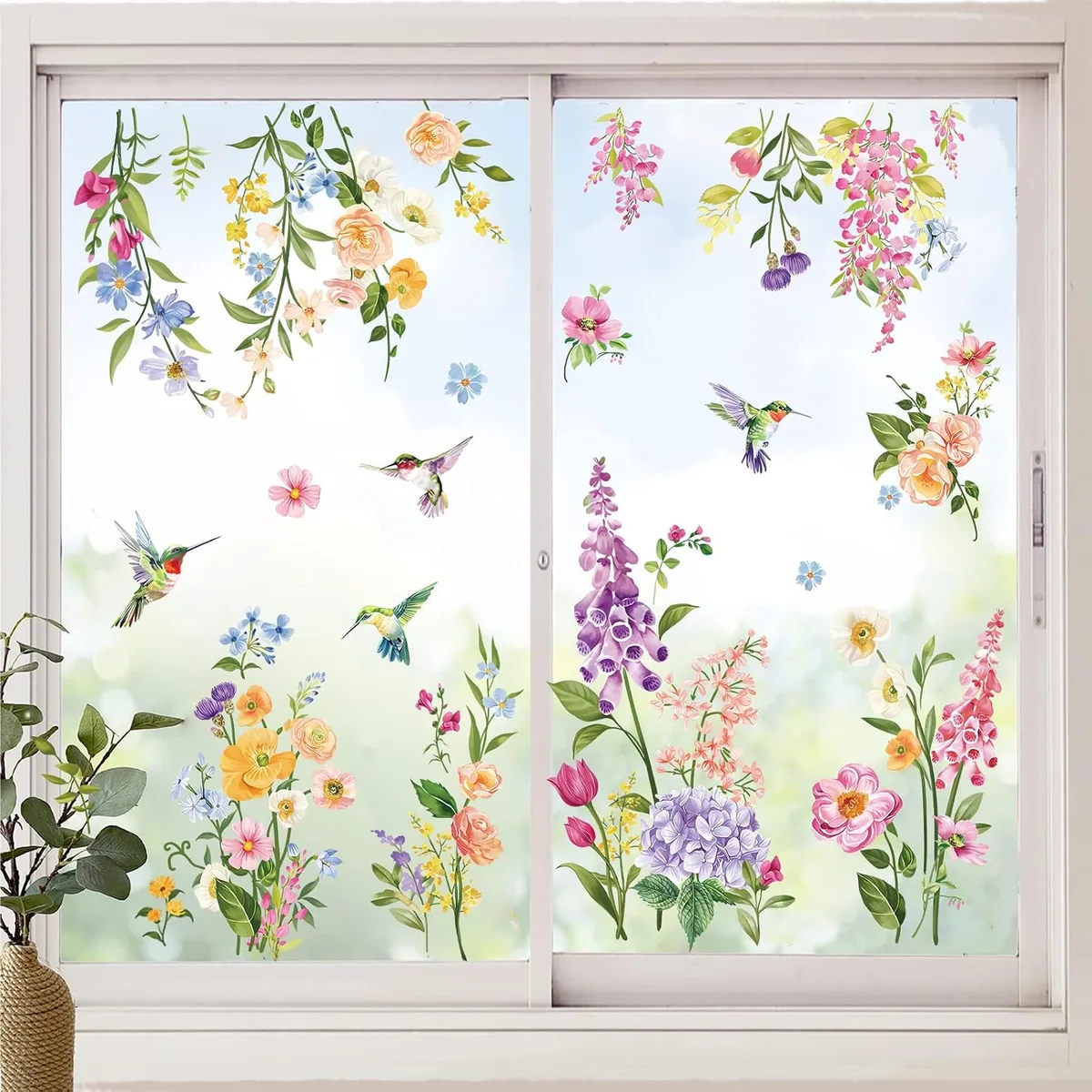
- If you want to keep it in place, apply bird-safe window film or decals to break up the reflective surface.
| Situation | Best Fix | Difficulty |
|---|---|---|
| Small mirror, near feeder | Move it or tilt it down | Easy |
| Large mirror, cannot move | Cover with screen or decals | Moderate |
| Wall-mounted mirror | Install a removable cover | Easy |
| Reflective window | Apply bird-safe film | Moderate |
Step 3: Monitor Over Two Weeks
After you make a change, watch the spot for about two weeks. Birds are creatures of habit. If they were flying into a reflection, they may still approach from that route for a while.
- Check the area around the mirror for feathers, stunned birds, or impact marks.
- Look for birds hovering near the mirror without actually striking it.
- After two weeks, if you're not seeing any new strikes, the fix is working.
What If You Can't Do Any of This?
Some situations genuinely can't be fixed easily. If you have a huge wall-mounted mirror in a small garden, and moving it isn't possible, use a simple felt or fabric cover. Yes, it looks less decorative.
But it saves birds.
Common Mistakes That Keep Mirrors Dangerous
People often try to fix the problem and accidentally make it worse. Here are the most common mistakes and what to do instead.
Mistake 1: Placing Decals Too Far Apart
One or two small decals on a large mirror do almost nothing. Birds see the spaces between decals as open flight paths. They'll target gaps just as readily as an empty surface.
The research-backed rule is simple. Cover the entire reflective surface with decals spaced no more than 2 inches apart in both directions. Lightly colored tape, soap smears, or weather-resistant stickers all work as long as the spacing is tight.
Mistake 2: Only Treating the Inside Surface
If you have a mirror inside looking out through a window, the reflection on the outer window glass still causes collisions. A bird never sees your indoor mirror. It sees the window's reflection.
Treating the mirror alone doesn't solve the outdoor hazard.
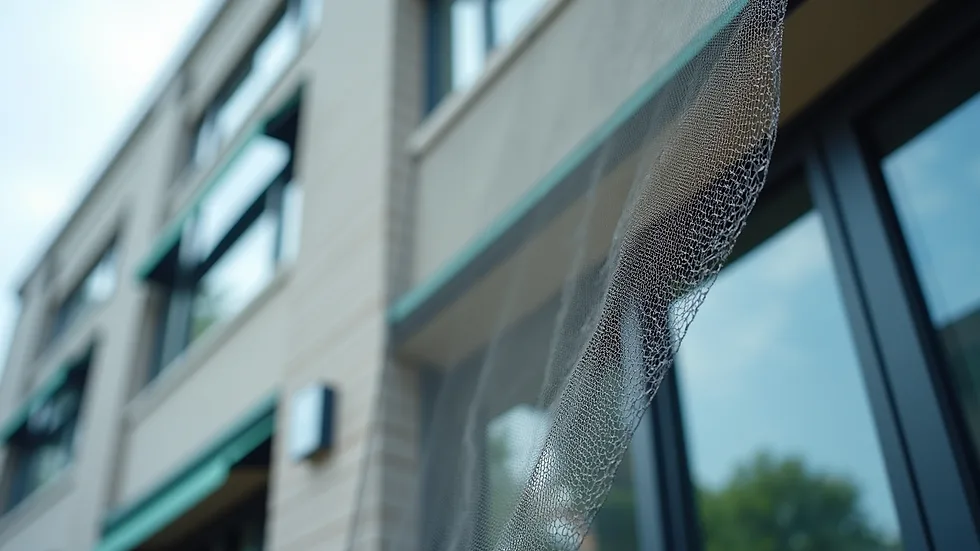
Check for the actual outdoor-facing reflective surface. That's the one that needs decals, film, or netting.
Mistake 3: Angling the Mirror Too Slightly
A 5 degree downward tilt sounds like it should work, but it doesn't. At that angle, the reflection still shows a broad stretch of yard or sky. Birds can't tell the difference.
The minimum effective angle is 20 degrees. If you're not sure whether your mirror is tilted enough, stand at eye level with a bird. If you can see more than a few inches of open sky in the reflection, tilt it farther down.
Mistake 4: Moving the Mirror Within the Same Flight Path
Moving a mirror to the other side of the same bird feeder doesn't fix anything. You're just shifting the danger zone. The bird still flies in from the same direction, still sees a reflection, still collides.
Move the mirror to a completely different area of the yard, ideally with no feeders, baths, or dense trees nearby. Distance matters more than exact positioning.
Mistake 5: Forgetting Seasonal Migration Spikes
Spring and fall are the most dangerous seasons for bird collisions. Migrating birds are moving through unfamiliar territory, often at night or at dawn, and they're more likely to mistake reflections for open space.
Birds return to the same territory each year. If you had a dangerous mirror last spring, you'll have the same danger again this year. Check your setup before migration peaks, not after.
When It's a Legal or Safety Issue
For a single homeowner, a garden mirror is a personal choice. But for buildings, apartment complexes, and commercial properties, reflective glass can become a legal responsibility. Several jurisdictions have rules that directly address this.
Building Codes and Bird-Safe Standards
As of 2026, a growing number of cities have adopted bird-safe building standards. San Francisco, Minneapolis, Oakland, and New York all require new construction to use bird-friendly materials in certain zones. Toronto passed a similar law covering all new buildings in the city.
These rules apply to glass facades and large reflective surfaces. The compliance standard often follows the American Bird Conservancy's "Bird-Friendly Building Design" guidelines, which call for fritted glass, external shading, or UV-reflective patterns spaced at 2 by 2 inches or 4 by 4 inches.
The single safest source for current guidance is the U.S. Fish and Wildlife Service's bird-safe resources. Their recommendations on glass treatment are widely adopted by architects and conservation planners.
Migration Peaks Multiply the Risk
Migration windows create a massive uptick in bird glass collisions. In North America, the two big peaks are April through May and September through October. During these seasons, millions of birds travel through unfamiliar areas.
A local bird might learn to avoid a mirror after a few days. A migrating bird passes through once and never gets that learning opportunity.
If you can't permanently fix a mirror, at minimum cover it during migration peaks. It's not a perfect solution, but it dramatically reduces risk during the most dangerous weeks of the year.
The Legal Reality for Homeowners
For most homeowners, mirror placement is not a legal issue. No zoning ordinance tells you where to put a decorative garden mirror. The only exception is large reflective installations that could cause glare hazards for drivers or neighbors.
Neighborhood associations are a different matter. Some HOAs restrict large mirrors on exterior walls for aesthetic reasons. If you're adding a big mirror to an exterior wall, check your HOA rules first.
When to Seek Professional Help
You generally don't need a professional to move a mirror or apply decals. But there are exceptions.
- If you have large fixed glass panels with high reflectivity, consult a windows contractor who can install exterior shading or fritted film.
- If you're managing a commercial or apartment building, work with an architect who understands local bird-safe ordinances.
- If you're seeing repeated strikes with multiple species, contact a local wildlife rehabilitation center. They can document the issue and may help you comply with local requirements.
Frequently Asked Questions
Can birds see glass or mirrors?
No, birds cannot tell the difference between transparent glass and open air. A mirror looks identical to the landscape around it. When a bird sees a reflection of sky, trees, or shrubs, it reads that as a real flight path.
This visual confusion is the root cause of nearly every mirror-related bird collision.
Why is my bird attacking the bathroom mirror?
That's territorial behavior, not confusion. A male bird sees its own reflection and mistakes it for a rival intruder. During nesting season, cardinals, robins, and mockingbirds will attack their reflection for hours to defend their territory.
Cover the mirror for a few weeks, and the bird will eventually redirect its energy elsewhere.
Do bird-safe decals really work?
Yes, but only when applied correctly. The spacing matters more than the decal design. Research-backed guidelines recommend placing decals no more than 2 inches apart in both vertical and horizontal rows.
With proper spacing, decals break up the reflection into small pieces that birds recognize as solid surfaces rather than open space.
Are indoor mirrors dangerous to birds?
Rarely. A mirror inside your home doesn't reflect the outdoor landscape, so passing birds don't perceive it as a flight path. The only exception is a mirror placed near a window where its reflection hits the exterior glass.
The outdoor glass surface itself becomes the collision hazard, not the mirror inside.
What should I do if a bird hits my window?
Check the bird immediately. If it's stunned, place it in a small ventilated box in a quiet, dark space for 30 to 60 minutes. Release it outside once it's alert.
If there's blood, wing droop, or no improvement within an hour, contact a licensed wildlife rehabilitator in your area.
The Verdict: What to Do With Your Mirror Today
Here's your move, plain and simple. Walk outside and look at every reflective surface within 30 feet of your bird feeders, baths, or dense shrubs.
If the mirror faces outward and reflects open sky or trees, tilt it down at least 20 degrees. If you can't tilt it, move it. If you can't move it, cover it.
If you're dealing with a large fixed glass panel, apply bird-safe film or decals with 2-inch spacing. Every one of these fixes takes less than 20 minutes and costs under $25.
You're not choosing between a beautiful garden and bird safety. You're choosing between a mirror that works and one that doesn't. A properly angled mirror still adds light and depth to your yard.
It just stops pretending to be a flight corridor.
Take the ten minutes today. Something as simple as a few decals or a slight angle change can save dozens of birds in your yard this year. That's a small effort for a genuinely meaningful difference.

Similar Posts