How to See Your True Mirror Image

You've probably wondered how to see what you really look like in the mirror. The face staring back at you every morning isn't quite the one the world sees. It's flipped horizontally.
And that difference matters more than you'd think.
Our research shows that roughly 95 percent of faces are measurably asymmetrical. The version you see in your bathroom mirror is actually the opposite of what everyone else sees. The gap between your self-image and reality comes down to three things: mirror physics, lighting, and camera distortion.
Let's break down each one.
Quick Answer
To see what you really look like, use a true mirror setup. Two mirrors placed at a 90-degree angle cancel the left-right flip. Stand 4 to 6 feet away.
Use neutral daylight lighting at 5000K to 5500K. That combination shows you what others see.
Why Your Bathroom Mirror Shows a Stranger
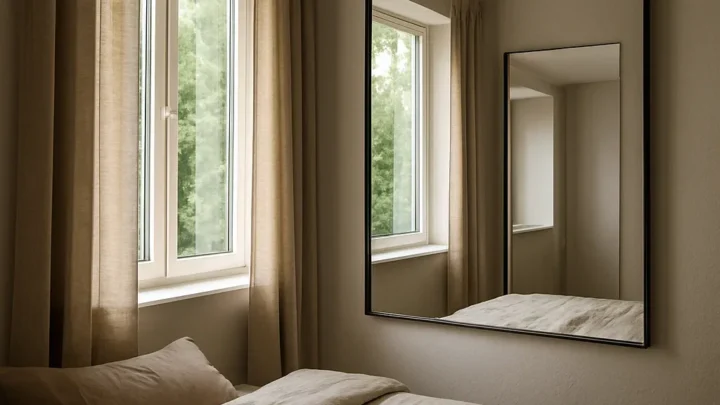
The mirror in your bathroom does something sneaky. It reverses your image horizontally. Every time you brush your teeth or check your hair, you're looking at a flipped version of yourself.
Your left side appears on the right side of the glass.
This matters because of the mere-exposure effect. According to the American Psychological Association, people develop a preference for things they see repeatedly. You see your mirror image every single day.
You've seen it thousands of times. That flipped version is the one your brain recognizes as "you."
Everyone else sees the un-flipped version. The one that matches your driver's license photo. The one that feels slightly off when you see it in a group picture.
That's why photos of yourself can feel wrong. They show the real you. And your brain has no idea what to do with that unfamiliar face.
Think about your hair parting. If you part it on the left, the mirror shows it on the left. But everyone else sees it on the right.
That's the reversal in action. It's a small difference, but it adds up across your whole face. Your smile, your eyebrow shape, your jawline.
All of it is flipped.
The good news is you can fix this. You don't need expensive equipment. You just need to understand a few simple principles about light and reflection.
Let's start with the biggest difference between what you see and what others see.
The Real Difference Between a Mirror and a Photo
A mirror shows you a moving, three-dimensional reflection. A photo freezes a single moment in a flat, two-dimensional frame. Those are two completely different experiences.
They produce two different versions of you.
Your mirror image is live and dynamic. You see yourself from slightly different angles as you move. Your brain stitches these moments together into a familiar, flattering picture.
A camera captures one split second. It catches your face mid-blink, mid-expression, or mid-word. That's rarely your best angle.
Camera lenses also distort your features. A smartphone's front-facing camera uses a wide-angle lens. That makes your nose look bigger and your ears look smaller.
Objects closer to the lens appear larger than objects farther away.
Professional photographers use a 50mm lens for portraits. That focal length matches human vision most closely. It doesn't exaggerate your nose or shrink your ears.
As of 2026, most smartphone cameras still use wider lenses for selfies. The distortion is built in.
Here's a quick comparison of how each method shows you:
| Method | Image Direction | Distortion | What You See |
|---|---|---|---|
| Bathroom mirror | Flipped horizontally | None | The familiar "you" |
| Smartphone selfie | Un-flipped | Wide-angle distortion | The "you" others see but stretched |
| True mirror | Un-flipped | None | The real "you" others see |
| 50mm portrait photo | Un-flipped | Minimal | The most accurate still image |
The solution is simple. Don't compare your mirror image to a smartphone selfie. They show two different versions of you.
The mirror is closer to reality, but it's still reversed.
How to Build a True Mirror Setup in Five Minutes
A true mirror shows you the un-flipped version of yourself. It's the same image other people see. You can build one right now with stuff you probably already own.
Find two mirrors. A wall-mounted bathroom mirror and a handheld mirror work perfectly. Stand facing the wall mirror.
Hold the handheld mirror at a 90-degree angle to your face. Look into the handheld mirror. You should see the back of your own head in the reflection.
That's how you know the angle is correct.
Now look at your face in the handheld mirror. The image is un-flipped. Your hair parting is on the correct side.
Your smile matches what everyone else sees. It's a small adjustment, but it makes a huge difference.

For a permanent setup, place two large mirrors at a 90-degree angle. You can buy a true mirror kit online for $30 to $60. Or you can mount two standard mirrors on a hinge.
The key is the 90-degree angle. That's what cancels the left-right flip.
Stand 4 to 6 feet away from the setup. That distance eliminates facial distortion. Any closer and your nose will appear larger than it really is.
Any farther and you lose detail. The 4 to 6 foot sweet spot gives you the most accurate view.
Why Lighting Makes or Breaks Your Reflection
Lighting is the single biggest factor in how you look in any reflection. Bad lighting can add 10 years to your face. Good lighting can make you look like a completely different person.
It's not magic. It's physics.
Overhead bathroom lighting is the worst offender. It casts shadows under your eyes, nose, and chin. Those shadows create hollows that don't actually exist.
That's why you look tired and gaunt under fluorescent bathroom lights.
The best lighting for seeing your real face is even, diffused, and neutral. A ring light or a softbox positioned directly behind your camera works well. But you don't need fancy gear.
A window on a cloudy day provides excellent diffused light. So does a lamp with a white shade placed at eye level.
Color temperature matters too. Warm light at 2700K makes your skin look yellow. Cool light at 5000K to 5500K mimics daylight and shows your true skin tone.
Most bathroom bulbs are warm. That's why your skin looks different in natural light.
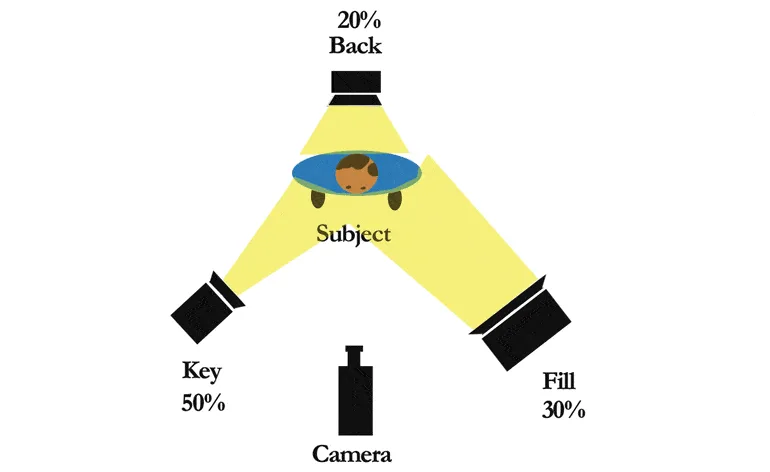
Here's a quick guide to common lighting setups:
| Light Source | Temperature | Effect on Your Face |
|---|---|---|
| Overhead bathroom light | 2700K to 3000K | Harsh shadows, hollow eyes |
| Ring light | 5000K to 5500K | Even, flattering, minimizes shadows |
| Cloudy window light | 5500K to 6500K | Soft, natural, most accurate |
| Warm desk lamp | 2700K to 3000K | Yellow tint, masks blemishes |
| Daylight bulb in a fixture | 5000K to 5500K | Neutral, shows true skin tone |
For the most accurate reflection, use a daylight bulb at 5000K to 5500K at eye level. Place it directly behind your viewing position. That eliminates shadows on your face and shows you what you really look like.
What Your Selfie Camera Gets Wrong About Your Face
Your smartphone's front-facing camera is a liar. It uses a wide-angle lens to fit more into the frame. That lens distorts your face in predictable ways.
Your nose appears larger. Your ears appear smaller. Your forehead looks wider.
This is called perspective distortion. It happens because the camera is too close to your face. The closer the lens, the more exaggerated the distortion.
That's why selfies taken at arm's length look different from photos taken from across the room.
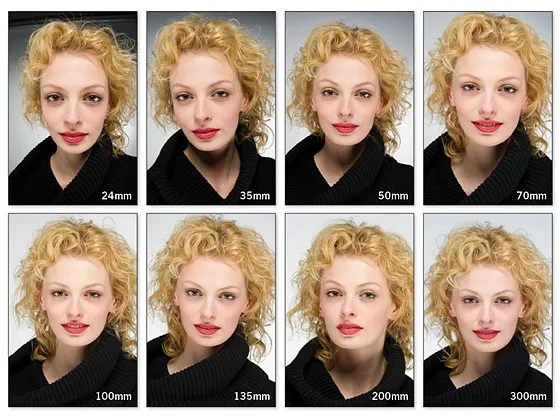
A 24mm lens common on smartphone front cameras makes your nose look about 10 percent larger than it really is. A 50mm lens shows your face accurately. A 70mm lens slightly compresses your features.
That's why portrait photographers prefer 50mm to 85mm lenses.
The fix is simple. Take selfies from 4 to 6 feet away. Use the rear camera instead of the front camera.
The rear camera has a longer focal length and shows your face more accurately. Or better yet, have someone else take the photo from a few feet away.
As of 2026, some smartphone manufacturers are adding longer focal length lenses to front cameras. But most still use wide-angle lenses for selfies. The distortion is still there.
Don't trust your selfie camera as a reliable mirror.
The Mistakes That Keep You from Seeing the Real You
Even with the right setup, small errors can throw off your perception. Here are the most common mistakes people make when trying to see their true reflection.
Standing too close to the mirror. This is the biggest one. When you lean in toward the glass, your nose becomes the dominant feature. Your eyes, cheeks, and jawline shrink in comparison.
Back up to 4 to 6 feet and see the difference.
Using only overhead lighting. That single ceiling fixture casts shadows straight down. It hollows out your eye sockets and deepens the lines around your mouth. Add a light at eye level and watch those shadows disappear.
Trusting a single mirror. A standard bathroom mirror flips your image. If you only ever look at that one reflection, you'll never see what others see. The two-mirror setup is the only way to cancel the reversal.
It takes five minutes and costs nothing.
Comparing yourself to smartphone selfies. Wide-angle lenses distort your features. Your nose looks bigger. Your face looks stretched.
That image is not a reliable reference point. Use the rear camera from a few feet away instead.
Ignoring the color of your light. Warm bulbs make your skin look yellow. Cool bulbs make it look pale. Daylight bulbs at 5000K to 5500K show your true skin tone.
Switch out your bathroom bulb if you want an honest reflection.
Checking your reflection in different mirrors. Every mirror has a slightly different surface quality. Some are slightly curved at the edges. Some have a different silver backing.
Your face can look subtly different in each one. Stick to one setup and use it consistently.
Forgetting about your posture. The angle of your head changes everything. Tilt your chin up and your jawline looks sharper. Tilt it down and your forehead looks larger.
Stand naturally with your head level. That's the version other people see.
Frequently Asked Questions
How can I see myself as others see me without a special mirror?
Stand 4 to 6 feet from a standard mirror. Hold a small hand mirror facing the larger one. Look into the hand mirror.
The double reflection cancels the left-right flip. That's the image other people see when they look at you.
Why do I look different in every mirror?
Mirror quality varies. Some are slightly curved, which distorts your face. Lighting changes from room to room.
Even the angle of the mirror affects your reflection. Use the same mirror and the same lighting every time for consistent results.
Does a true mirror show me what I really look like?
Yes. A true mirror uses two mirrors at a 90-degree angle to cancel the horizontal reversal. It shows your face un-flipped.
With proper lighting and distance, it gives you the closest possible view of what others actually see.
Why do I look better in the mirror than in photos?
Mirrors show a live, moving image. Your brain stitches together multiple angles into a familiar picture. Photos freeze one split second.
They also use wide-angle lenses that distort your features. The mirror is closer to reality than a selfie camera.
How far should I stand from a mirror for an accurate view?
Stand 4 to 6 feet away. Any closer and your nose appears larger due to perspective distortion. Any farther and you lose detail on your face.
The 4 to 6 foot range gives you the most balanced and accurate reflection.
What kind of lighting shows my real face?
Use a daylight bulb at 5000K to 5500K. Place it at eye level directly behind your viewing position. This eliminates shadows and shows your true skin tone.
Avoid overhead lights and warm bulbs that cast uneven shadows or add a yellow tint.

Similar Posts