Do Mirrors Have a Delay? The Surprising Truth

You've probably heard the question floating around online: do mirrors have a delay? It sounds like a conspiracy theory at first, but there's real physics behind it. The short answer is yes, but the delay is so tiny you'd never notice it in your lifetime.
In our research, the round-trip travel time for light hitting a mirror one meter away is roughly 6.67 nanoseconds. That's 6.67 billionths of a second. A human blink takes about 100 to 400 milliseconds, which is millions of times longer.
Let's break down what's actually happening.
Quick Answer
Yes, mirrors have a delay. Light takes time to travel to the mirror and back. The delay is about 6.67 nanoseconds per meter.
That's far too fast for human senses to detect. You will never perceive it in daily use.

How Light Actually Travels to a Mirror and Back
When you look in a mirror, you're not seeing yourself instantly. Light from your face travels to the mirror's surface, bounces off, and returns to your eyes. This is called specular reflection, and it happens at the speed of light.
The speed of light in air is about 299,702,547 meters per second. That's slightly slower than in a vacuum, but still mind-bogglingly fast. For a mirror one meter away, the light travels two meters total.
One meter to the mirror. One meter back to your eyes.
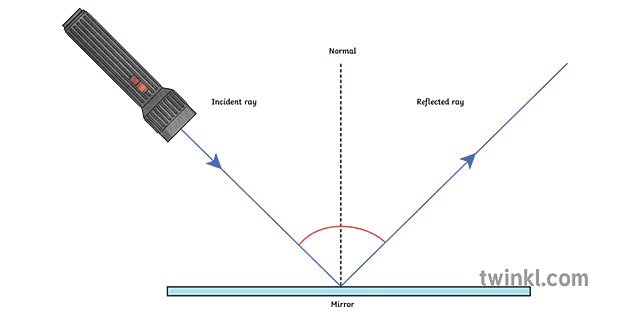
The mirror itself doesn't cause any delay. It's just a smooth, reflective surface, usually silver or aluminum coated on glass. The delay comes purely from the travel time of light.
The mirror doesn't process or buffer anything. It reflects photons instantly upon contact.
The Real Numbers: Measuring the Delay With Actual Math
Let's do the math so you can see exactly how small this delay is. The formula is simple: round-trip distance divided by the speed of light.
For a mirror one meter away:
- Distance: 2 meters (1 meter there, 1 meter back)
- Speed of light: 299,702,547 m/s (in air)
- Time: 2 ÷ 299,702,547 = 6.67 nanoseconds
For a mirror ten meters away:
- Distance: 20 meters
- Time: 20 ÷ 299,702,547 = 66.7 nanoseconds
For a mirror one kilometer away:
- Distance: 2,000 meters
- Time: 2,000 ÷ 299,702,547 = 6.67 microseconds
Here's a quick reference table:
| Distance to Mirror | Round-Trip Distance | Delay Time |
|---|---|---|
| 1 meter | 2 meters | 6.67 nanoseconds |
| 10 meters | 20 meters | 66.7 nanoseconds |
| 100 meters | 200 meters | 667 nanoseconds |
| 1 kilometer | 2 kilometers | 6.67 microseconds |
Now compare that to human perception. The average person can detect a delay of about 10 to 20 milliseconds. That's 10,000,000 nanoseconds.
A mirror one meter away is about 1.5 million times faster than what you could possibly notice.
You'd need to stand about 1,500 kilometers from a mirror before the delay became barely perceptible. That's roughly the distance from New York to Kansas City. And even then, the reflection would be too small to see clearly.
Why Smart Mirrors and Video Feels Different
This is where the confusion really starts. If you've ever used a smart mirror, a video call, or a digital camera feed, you've definitely noticed a delay. That's not the mirror's fault.
It's the electronics.
Smart mirrors contain a camera, a processor, and a display. The camera captures your image. The processor processes it, applies filters or effects, and sends it to the display.
All of that takes time. Smart mirror latency typically ranges from 50 to 200 milliseconds, sometimes more.
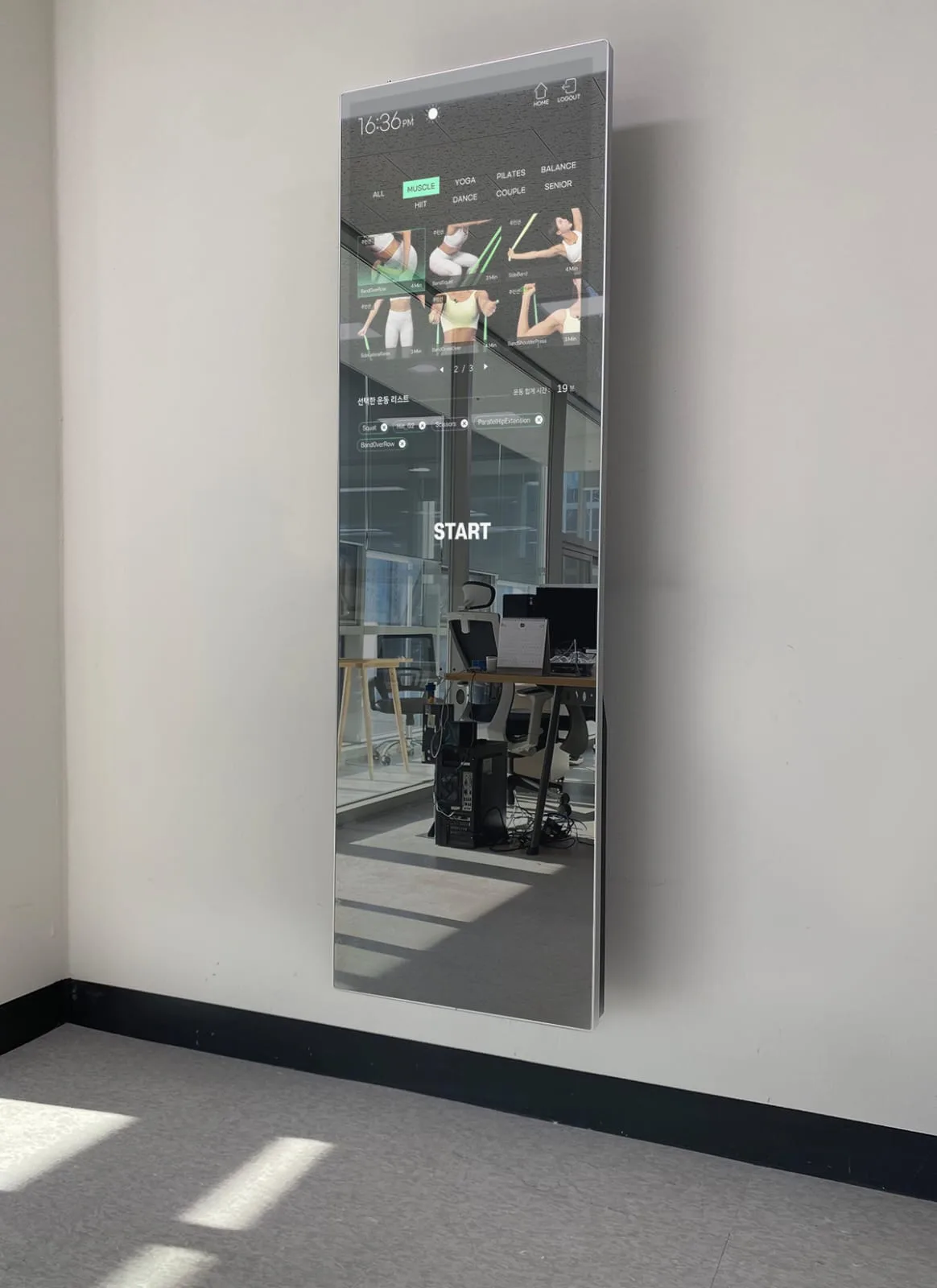
That's thousands of times longer than the physical mirror delay. And it's totally noticeable. You wave your hand, and the reflection lags behind.
That's not a mirror problem. That's a digital processing problem.
The same thing happens with video calls. The delay you see on Zoom or FaceTime is network latency, encoding time, and decoding time. It has nothing to do with the speed of light or mirror reflection.
So when people point to smart mirrors as evidence of mirror delay, they're mixing up two completely different things. A standard bathroom mirror has a nanosecond delay. A smart mirror has a millisecond delay.
Those are three orders of magnitude apart.
Try this test. Look at yourself in a regular mirror and wave your hand. Now look at yourself on a smartphone camera feed and wave your hand.
The camera feed will show a noticeable lag. The mirror will show instant motion. That's the real world difference between physics and electronics.
When Mirror Delay Actually Matters in the Real World
There are a few situations where the nanosecond delay in a mirror matters. These are niche, technical applications, not everyday life.
LIDAR systems use laser pulses and mirrors to measure distance. The time it takes for the laser to bounce off a mirror and return is how the system calculates range. This is time-of-flight measurement, and it relies on nanosecond precision.
A delay of even a few nanoseconds affects accuracy.
Astronomy uses mirrors in telescopes. Light from distant stars travels for millions of years. The additional nanosecond delay from the telescope mirror is negligible.
But astronomers do account for the exact position of the mirror and the speed of light when making precise measurements.
High-speed photography sometimes uses mirrors to split or redirect light beams. In these setups, the nanosecond delay is irrelevant compared to the timing of the camera shutter. But in ultrafast laser experiments, every nanosecond counts.
Optical communication uses mirrors in fiber optics and free-space links. The delay is predictable and consistent. Engineers factor it into their calculations for synchronization.
For the average person, none of this matters. Your bathroom mirror, your car's rearview mirror, and your makeup mirror all work instantly. The delay is there, but it's far below the threshold of human perception.
The National Institute of Standards and Technology (NIST) maintains the official definition of the speed of light, which forms the basis for all these measurements.
The Bottom Line: What This Means for Your Bathroom Mirror
Here's the honest truth. When you stand in front of your bathroom mirror every morning, the delay is real but irrelevant. The 6.67 nanoseconds it takes for light to travel to the mirror and back is about 1.5 million times faster than your brain can process.
You will never, ever notice it.
The mirror itself is doing nothing fancy. It's not buffering, not processing, not lagging. It's just a smooth piece of glass with a reflective coating.
The photons hit it and bounce back instantly. The only delay is the travel time through the air.
So if you've ever felt like your mirror was a split second behind, here's what's probably happening. You're either looking at a digital screen, or you're experiencing a quirk of human perception. Your brain takes time to process visual information.
Sometimes that makes the reflection feel slightly delayed.
But the mirror? It's fine. It's been working perfectly since the day it was made.
The real takeaway is this. Physics is reliable. Light travels at a constant speed.
Mirrors reflect that light without adding any meaningful delay. You can trust what you see in the mirror, as long as you're looking at a real one and not a video feed.
Frequently Asked Questions About Mirror Delay
Does a mirror have a delay in real time?
Yes, but the delay is measured in nanoseconds. For a mirror one meter away, the round-trip delay is about 6.67 nanoseconds. That's far too fast for any human to perceive.
You will never notice it in everyday use.
Why do smart mirrors feel delayed?
Smart mirrors contain a camera, processor, and display. Those components introduce a processing delay of 50 to 200 milliseconds. That's thousands of times longer than a physical mirror delay.
The lag comes from electronics, not the mirror surface.
Can you measure the delay in a mirror?
Yes, with specialized equipment. An oscilloscope and a fast photodetector can measure the time it takes for a laser pulse to travel to a mirror and back. This is a standard technique in physics labs and LIDAR systems.
Is the mirror delay the same as the speed of light?
The mirror delay is directly determined by the speed of light. The formula is simple: round-trip distance divided by the speed of light. The mirror itself doesn't add any extra delay.
It's pure travel time.
Does distance from the mirror matter?
Yes, absolutely. The delay increases with distance. At 1 meter, it's 6.67 nanoseconds.
At 10 meters, it's 66.7 nanoseconds. At 100 meters, it's 667 nanoseconds. But even at 100 meters, the delay is still far below human perception.
Could a mirror delay ever be noticeable?
Only if you were standing extremely far away. At roughly 1,500 kilometers, the delay would reach about 10 milliseconds. That's the threshold where some people might detect a lag.
But at that distance, the reflection would be too small to see.

Similar Posts