What Does Through the Looking Glass Mean?
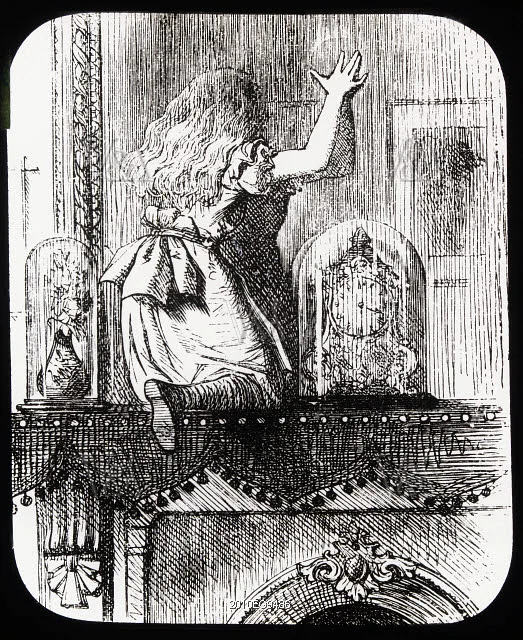
You've heard someone say "it's like stepping through the looking glass" when describing a weird situation. But the meaning is more specific than most people realize. It comes from Lewis Carroll's 1871 novel, the sequel to Alice's Adventures in Wonderland.
It describes a world where everything is reversed. Logic, time, and the rules of cause and effect are all flipped.
The book sold over 10 million copies worldwide as of 2026. Its phrases have seeped into science, business, and everyday speech. But here is the thing.
Most people use the phrase wrong. Let's fix that.
The phrase "through the looking glass" refers to entering a mirror-reversed world where the normal rules do not apply. In Carroll's book, Alice steps through a mirror into a chessboard land. Walking away from something gets you closer.
Running in place keeps you moving. The future is remembered before the past.
This is not the same as "down the rabbit hole." That is from the first Alice book. It means falling into a strange or confusing situation. The looking glass world is specifically about reversal.
Left is right. Forward is backward. Logic is turned inside out.
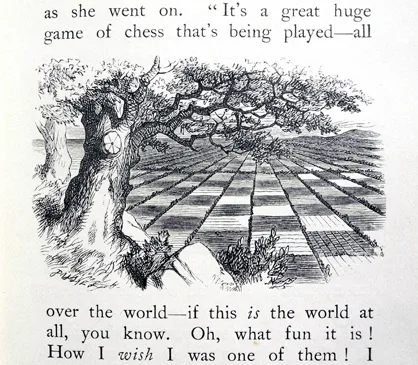
The core of the book is structured as a chess game. Alice starts as a pawn and moves across the board. She eventually becomes a queen.
Every character and encounter ties back to that chess framework. The Red Queen tells Alice, "Now, here, you see, it takes all the running you can do to keep in the same place." That line alone captures the entire theme.
So when you hear someone say "through the looking glass," they are describing a world where the familiar is flipped. It is not just weird. It is deliberately reversed.
Quick Answer: What "Through the Looking Glass" Actually Means
It means entering a mirror-reversed reality. The rules are flipped. Logic is inverted.
Cause and effect work backward.
The phrase comes from Lewis Carroll's 1871 novel. In the story, Alice steps through a mirror into a chessboard world. She must move from pawn to queen across the board.
The key idea is reversal. Walking away from something gets you closer. Running in place keeps you from falling behind.
The future is remembered before the past.
This is not the same as "down the rabbit hole." The rabbit hole is about falling into a strange situation. The looking glass is about a world where everything is deliberately upside down.
The One Mistake Almost Everyone Makes
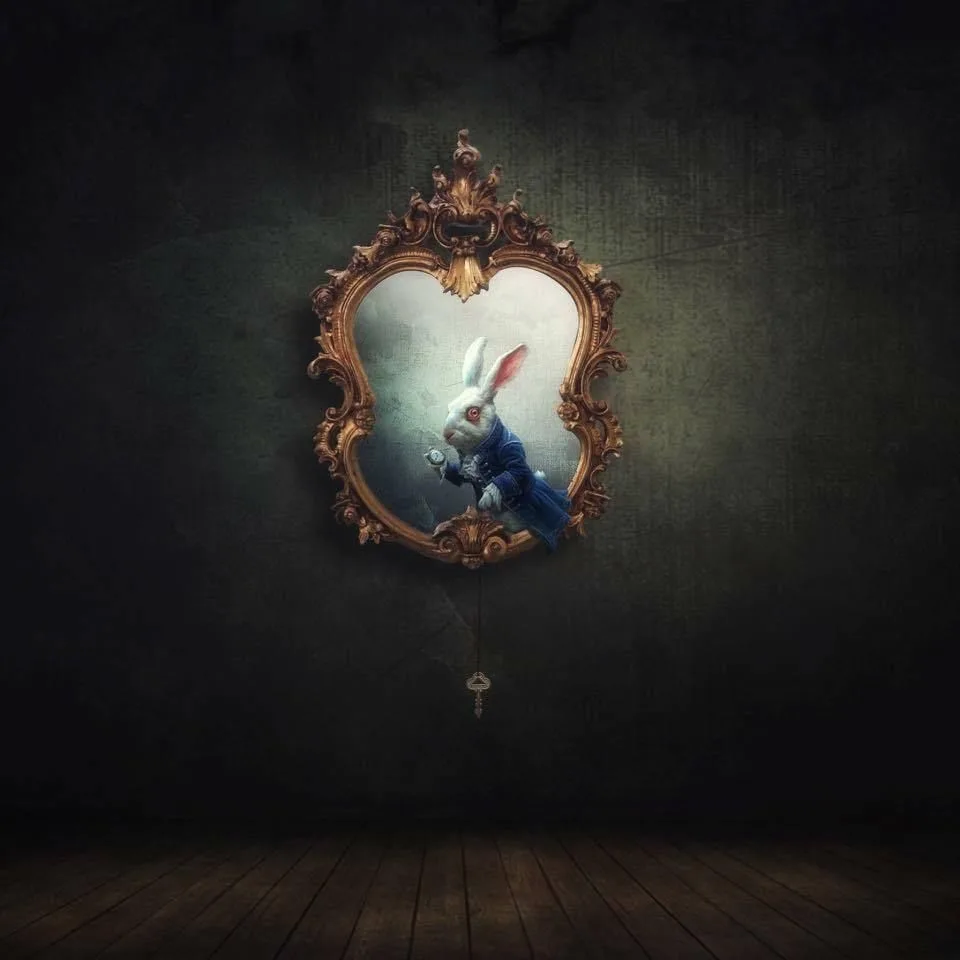
The biggest mistake people make is confusing "through the looking glass" with "Alice in Wonderland." They use the phrases interchangeably. But they refer to two different books with two different meanings.
Alice's Adventures in Wonderland (1865) is the first book. Alice falls down a rabbit hole into a strange world. The rules there are bizarre but not systematically reversed.
The Queen of Hearts yells "Off with their heads," but nothing follows a consistent pattern.
Through the Looking-Glass (1871) is the sequel. The entire world is structured as a chess game. The reversal is the point.
The Red Queen is not the Queen of Hearts. Humpty Dumpty appears here, not in the first book. The Jabberwocky poem is in this book.
So when someone says "it is like Alice in Wonderland" to describe a reversed situation, they are technically wrong. They should say "it is like through the looking glass." The first book is about chaos. The second is about a deliberate, mirror-flipped logic.
Another common mistake is thinking "down the rabbit hole" and "through the looking glass" mean the same thing. They do not. The rabbit hole is about going deeper into a strange topic.
The looking glass is about a world where the rules are inverted.
If you remember nothing else, remember this. Wonderland is chaotic. Looking glass is reversed.
The Red Queen Effect: Running Just to Stay in Place
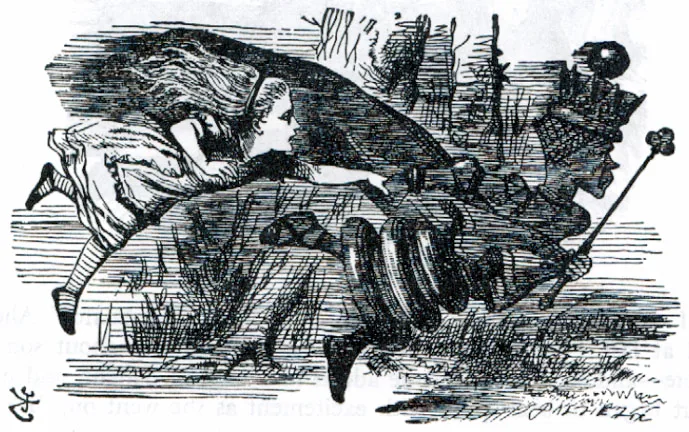
The Red Queen's line from the book is one of the most quoted phrases in literature. "Now, here, you see, it takes all the running you can do to keep in the same place." In the story, Alice runs with the Red Queen. The landscape moves with them.
They never get anywhere.
This concept has been borrowed by science and business. In evolutionary biology, it is called the Red Queen hypothesis. Leigh Van Valen proposed it in 1973.
Species must constantly adapt and evolve just to survive. Their competitors are also evolving. Standing still means falling behind.
In business, the Red Queen effect describes companies that must keep innovating to maintain their market position. Competitors copy your improvements. Customers expect more.
If you stop running, you lose ground.
But here is the nuance that gets lost. The Red Queen's race is not about progress. It is about maintenance.
Alice runs as hard as she can, but she is not moving forward. She is just keeping up with a world that moves around her.
That is a different feeling from the classic "rat race" idea. The rat race implies you are running toward something you never reach. The Red Queen effect says you are running just to stay exactly where you are.
This is the most practical takeaway from the book. If you have ever felt like you are working harder than ever but not getting ahead, you are experiencing the Red Queen effect. The world is moving.
You are running to stay in place.
How the Phrase Actually Gets Used (In Pop Culture, Science, and Everyday Speech)
The phrase "through the looking glass" shows up in three main contexts. Each one takes a slightly different angle on the original meaning.
Pop culture and media. Movies, TV shows, and books use the phrase to describe a world that feels familiar but wrong. The 1999 film The Matrix is a modern example. The real world is a simulation.
The rules are fake. Characters wake up to a reversed reality. The 2010 Tim Burton film blends both Alice books but leans heavily on the looking glass chessboard structure.
Science and technology. Computer scientists use "mirror world" or "looking glass" to describe digital twins or simulated environments. The "mirror test" in psychology measures self-awareness. The Red Queen hypothesis appears in evolutionary biology and medicine.
Cancer research uses the Red Queen model to explain how tumors evolve resistance to treatment.
Everyday speech. Most people use the phrase casually to describe a situation that feels upside down. "After the merger, the whole office felt like through the looking glass." That is not technically accurate. The office is not mirror-reversed, just confusing.
But the meaning is understood. The phrase has become shorthand for "things are not as they seem."
Here is a quick breakdown of how the phrase is used across these contexts:
| Context | How the phrase is used | What it emphasizes |
|---|---|---|
| Pop culture | A world that is familiar but wrong | Reversal of expected norms |
| Science | A system where rules are inverted | The Red Queen effect, adaptation |
| Everyday speech | A confusing or strange situation | General disorientation |
The most accurate usage is the scientific one. When biologists talk about the Red Queen effect, they are directly referencing the book's core idea. When people say "it is like through the looking glass" to describe a confusing day at work, they are stretching the metaphor.
But language evolves. The phrase now carries a broader meaning. That is fine.
Still Confused? Here's the FAQ
Is "through the looking glass" the same as "Alice in Wonderland"?
No. They are two different books. Alice's Adventures in Wonderland (1865) is about falling into a chaotic world. Through the Looking-Glass (1871) is about entering a mirror-reversed world with chess logic. The Queen of Hearts is from the first book.
The Red Queen is from the second.
What does "through the looking glass" mean in modern slang?
It means entering a situation where everything feels reversed or upside down. People use it to describe a confusing shift in reality. For example, "After the election, the political landscape felt like through the looking glass." It is shorthand for disorientation.
What is the Red Queen effect in simple terms?
It means you have to keep running just to stay in place. In biology, species must keep evolving because their competitors keep evolving too. In life, it means working harder just to maintain your position.
The goal is not progress. It is survival.
Why is the story structured like a chess game?
Carroll was a mathematician. He built the entire book around a chessboard. Alice starts as a pawn and moves across the board.
Each encounter corresponds to a chess move. The final chapter is checkmate. The structure is deliberate and systematic.
What is the point of the Jabberwocky poem?
The poem shows the nonsense logic of the looking glass world. It uses invented words like "brillig," "slithy," and "mome raths." Humpty Dumpty later explains the meaning of each word. The poem proves that meaning can exist even when language is flipped on its head.
Final Verdict: What It Really Means
The phrase "through the looking glass" describes a deliberate reversal of reality. It is not just chaos. It is a mirror world where the rules are inverted and the logic is backward.
Carroll built that world using chess, nonsense, and a Red Queen who runs forever.
When you use the phrase correctly, you are referencing a specific literary concept. You are not just saying "things are weird." You are saying the normal rules have been systematically flipped. Left is right.
Forward is backward. Running keeps you in place.
That is the real meaning. Use it well.

Similar Posts