ADAS Calibration and Windshield Replacement Explained
Quick answer: On most modern cars, a camera that feeds the safety systems sits behind the windshield. When the old glass comes out and new glass goes in, that camera's aim shifts slightly, and it has to be recalibrated before the safety features can be trusted again. That recalibration is a separate procedure with its own equipment, its own trained labor, and its own line on your invoice. It is the main reason a windshield job today costs more than the same job on the same car ten years ago. It is not an upsell, and no shop can waive it for you.
If you replaced a windshield years ago and remember it as a straightforward swap, the quote in front of you now probably looks wrong. The glass line alone may be higher than the whole job used to be, and underneath it sits a second line you have never seen before. This page explains what actually changed, where each part of the money goes, and how to read your quote with enough confidence to tell a fair one from a padded one.
What changed: the windshield stopped being just glass
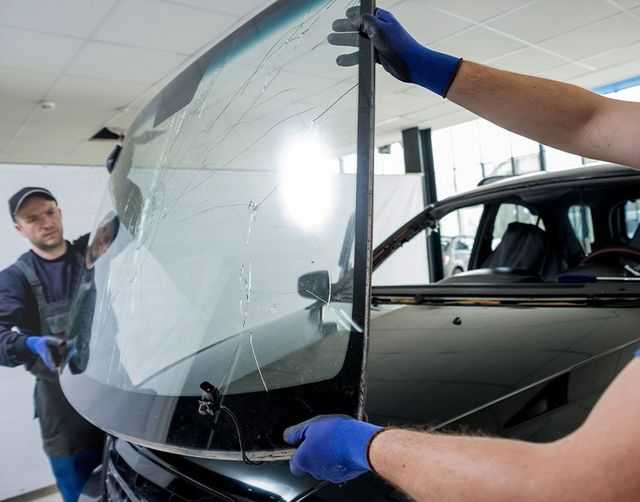
For most of automotive history a windshield did three jobs. It kept the weather out, it took the wind, and it contributed to the structure of the roof. Replacing one was a matter of removing the old glass, preparing the pinchweld, and bonding in a new piece.
Somewhere in the last decade the windshield picked up a fourth job. It became the mounting point and the optical window for a forward-facing camera, the sensor behind lane departure warning, lane keep assist, forward collision warning, automatic emergency braking, adaptive cruise control, and traffic sign recognition. On most cars that camera sits at the top center of the glass, tucked behind the rearview mirror.
That single change is the whole story. The glass is now a precision optical component in front of a safety sensor, and the sensor has to be re-aimed whenever the component behind it is disturbed. Everything else on your invoice follows from that one fact.
What recalibration actually does
Calibration is not a software update and it is not a reset. It is a measurement procedure that re-teaches the camera exactly where "straight ahead" and "level" are, relative to the car's centerline.
The reason it is necessary after a glass job is geometry. A new windshield does not sit in exactly the same plane as the one it replaced, down to fractions of a degree. Thickness, curvature, and the optical properties of the bracket area all vary slightly between one piece of glass and another. The camera has not moved much in absolute terms, but a fraction of a degree of aim error at the sensor becomes a large error in where the system believes an object sits far down the road.
So the technician sets up a known reference, either physical targets at measured distances or a controlled drive, and uses a scan tool to tell the vehicle to align itself to that reference. When it completes, the car has a corrected idea of where the road is. Until it completes, the car is making safety decisions from a slightly wrong map.
Where the extra money goes
An ADAS windshield quote has two distinct cost centers, and a good shop will show you both.
The glass itself is a more expensive part. It carries a molded bracket for the camera, and the section in front of the lens has to meet tighter optical standards so it does not distort what the camera sees. Many of these windshields stack on additional features as well: acoustic interlayers, heating elements, solar coatings, or a heads-up display area, each adding cost.
The calibration is separate labor with dedicated equipment. A shop performing it needs manufacturer target sets, a level and controlled space or an approved road route, a capable scan tool with current software, and a technician trained on the procedure. That capability is expensive to acquire and maintain, and it is priced accordingly.
AAA's 2023 study of ADAS repair costs measured the split directly. Across the three 2023 model-year vehicles it examined, the ADAS parts and calibration work accounted for an average of 25.4 percent of the total windshield replacement cost, as reported. Roughly a quarter of an ADAS glass bill, in other words, is not the glass.
How common this has become
This is no longer an edge case affecting a handful of luxury cars. The collision repair trade press reported in 2025 that around 89 percent of model-year 2023 and newer vehicles require a calibration following a windshield replacement, up sharply from roughly 25 percent of model-year 2016 vehicles. The Auto Glass Safety Council puts it more plainly still, noting that almost every new vehicle now available is equipped with advanced driver assistance systems.
Two things follow from that. If your car is recent, assume calibration is in scope until a shop demonstrates otherwise. And if your car is older, do not assume it is exempt, because trim level decides this more reliably than model year does. A loaded trim from several years back may carry a forward camera that a base trim from a more recent year does not.
If you want to check your own vehicle before anyone quotes you, the fastest test is to look at the top center of the glass behind the mirror for a camera housing, then look at your steering wheel for adaptive cruise or lane keeping controls. Our guide to working out whether your car actually needs calibration covers the full self-check.
Static, dynamic, or both
There are two calibration methods, and which one your car gets is not a choice you or the shop makes.
Static calibration happens with the car parked. The technician places manufacturer-specified targets at exact heights, angles, and distances, then uses a scan tool to have the camera reference them. It needs a level floor, controlled lighting, and clear space.
Dynamic calibration happens by driving. The vehicle is taken out under specified conditions, typically a speed range with clear lane markings and decent visibility, and the system aligns itself against the real road.
Some vehicles require both, static first to establish the baseline aim, then dynamic to fine-tune it against live road data. The vehicle manufacturer's service procedure specifies which applies to your exact make, model, year, and repair. Our side-by-side comparison of static and dynamic calibration covers what each requires and why two shops can quote differently for the same method.
The honest part: this is permanent
Most cost articles end by telling you how to shop around. Here is the part they leave out.
This is not a temporary surcharge that will settle back down. It is a structural change in what a modern car costs to own. Every windshield replacement for the life of an ADAS-equipped vehicle carries a calibration, and every future vehicle you buy is more likely to need one than the last. Shopping around can move the number some. It cannot make the requirement go away.
The second honest point is harder. No shop has the authority to waive calibration on your behalf, and a shop that offers to is not doing you a favor. Neither is a quote that comes in noticeably under the others because the calibration line was quietly left off. That is not a cheaper job. It is an incomplete one, and the difference does not show up until the moment a safety system needed to be right.
What you can reasonably do is make sure you are paying for work that was actually performed, to the manufacturer's procedure, by someone equipped to do it. That is a solvable problem, and the next section is how you solve it.
What a complete ADAS quote looks like
| Line item | What it should say | What to watch for |
|---|---|---|
| Glass | The part, and whether it is OEM or aftermarket, with the features it carries | A part that does not support your camera or feature set |
| Adhesive and labor | The bonding materials and installation labor | Nothing unusual here; this is the traditional part of the job |
| Calibration | Listed as its own line, with the method named | Missing entirely, or bundled invisibly into "labor" |
| Calibration method | Static, dynamic, or both, matching the manufacturer procedure | A method chosen for shop convenience rather than by procedure |
| Sublet | Named, if the calibration is sent to a specialist | An unexplained third-party charge |
| Documentation | A calibration record you keep | A verbal "it's done" with nothing on paper |
Ask for the calibration to appear as its own line even when the shop quotes a single total. A shop that can break the number down that way is a shop that knows what it is charging you for. For the underlying detail on what moves that line up and down, see our breakdown of what ADAS calibration costs and why quotes vary, and for how much of the total gap between an ADAS and a non-ADAS job is glass versus electronics, see windshield replacement cost with versus without ADAS. If your replacement is going through a claim, insurance coverage for ADAS calibration covers how insurers generally treat the line. For the procedural side of what the technician is actually doing, our older guide to calibrating sensors after a windshield replacement walks through the steps.
Frequently asked questions
Is ADAS calibration just an upsell?
No. It is the step that makes a new windshield safe to drive behind on a car with a forward camera, and it is specified by the vehicle manufacturer, not by the shop. What can legitimately be questioned is whether your specific vehicle requires it and whether the method billed matches the procedure. Both are fair questions to ask, and a good shop will answer them.
Can I decline the calibration to save money?
A shop can refuse to release the car without completing the manufacturer's procedure, and many will. Beyond that, declining leaves you driving with safety systems acting on incorrect geometry, usually with no warning light to tell you so. The saving is real and small. What you give up for it is not small.
Does insurance pay for it?
Generally, when the windshield replacement itself is covered, the required calibration is covered as part of a proper repair, though a deductible may apply and coverage varies by insurer and policy. Confirm it with your own insurer in writing rather than assuming.
My car is ten years old. Does this apply to me?
Possibly. Model year is a weak test. Look for a camera housing at the top center of the glass and for lane keeping or adaptive cruise controls on the steering wheel. If those are absent, calibration is very likely not in scope for your vehicle.
Who is allowed to perform the calibration?
A dealer service department or a properly equipped independent shop, provided either one follows the vehicle maker's exact procedure with the correct targets and current software. AAA notes that while replacing an ADAS sensor is relatively straightforward work most mechanics can handle, calibrating it afterward requires special training, tools, and manufacturer information, as reported. Capability is what matters, not the sign on the building.

Similar Posts