Are Blind Spot Mirrors Legal? Explained
Yes, blind spot mirrors are legal in most places.
They must not block your factory mirror's required view.
Placement matters more than the mirror itself.
Check your state or local vehicle code for specifics.
The federal standard FMVSS 111 sets the baseline.
What the Law Actually Says (and Doesn't Say) About Aftermarket Mirrors
The law doesn't explicitly ban blind spot mirrors. What it does ban is anything that makes your factory mirror non-compliant with FMVSS 111. As of 2026, FMVSS 111 remains the controlling federal standard for rear visibility.
It specifies the minimum field of view your driver-side mirror must provide.
The key phrase is "minimum field of view." Your factory mirror needs to show a certain angle behind and alongside the vehicle. If you stick a blind spot mirror right in the center of that glass, you're blocking part of that required view. That's where you cross into illegal territory.
State laws add another layer. Some states have specific vehicle inspection rules that check mirror placement. Others just refer back to the federal standard.
The NHTSA publishes the full FMVSS 111 text if you want to read the exact language.
The law doesn't say you can't have an auxiliary mirror. It says you can't disrupt the primary mirror's required function. You can use a blind spot mirror.
You just can't sacrifice the factory mirror's legal coverage to do it.
The Real Risk: Could a Blind Spot Mirror Actually Get You in Trouble?

Yes, it can get you in trouble. The most common risk is an obstruction ticket. A police officer can pull you over if your blind spot mirror blocks the factory mirror's view.
That's a fix-it ticket in most states. You remove the mirror and show proof to the court.
The bigger risk is a failed safety inspection. Many states require annual or bi-annual vehicle inspections. Inspectors check mirror placement and condition.
If your blind spot mirror is obstructing the factory mirror, you fail. That means you can't legally drive the car until you fix it.
Adhesive failure is another real risk. Cheap mirrors fall off in extreme heat or cold. A mirror flying off your car at highway speed is a hazard.
It could hit another vehicle or cause you to swerve. If that causes an accident, you could be liable.
There's also the risk of misinterpretation. Some drivers rely too much on the small convex mirror and stop doing shoulder checks. Convex mirrors distort distance.
Objects appear farther away than they really are. That can lead to lane-change accidents.
Benefits vs. Legal Risks: Is It Worth Using One?
Let's be honest. The benefits are real. Blind spot mirrors dramatically reduce the area you can't see.
They're cheap, easy to install, and require no tools or wiring. For drivers of large vehicles like SUVs, trucks, and vans, they're almost essential.
| Benefit | Risk |
|---|---|
| Eliminates large blind spots | Can obstruct factory mirror view |
| Costs $5 to $20 per pair | Adhesive can fail in heat or cold |
| No tools or wiring required | Can distort distance perception |
| Helps with parallel parking | May cause failed safety inspection |
| Improves lane-change confidence | Potentially attracts police attention |
The question is whether the benefit outweighs the risk. For most drivers, the answer is yes if you install it correctly. Place it in the outer corner of the factory mirror.
That's the least critical area for the required field of view. Your mirror still meets FMVSS 111 requirements.
For commercial drivers, the calculus changes. Fleet vehicles often face stricter inspection rules. Some companies ban aftermarket mirrors entirely.
Check your employer's policy before adding one to a work vehicle.
The bottom line is simple. Use a blind spot mirror. But use it smartly and legally.
That means proper placement and knowing the rules in your state.
How to Install a Blind Spot Mirror the Right Way (and Keep It Legal)

Installation is straightforward, but getting it right matters. The wrong placement can make it illegal. Here's the process that keeps you compliant.
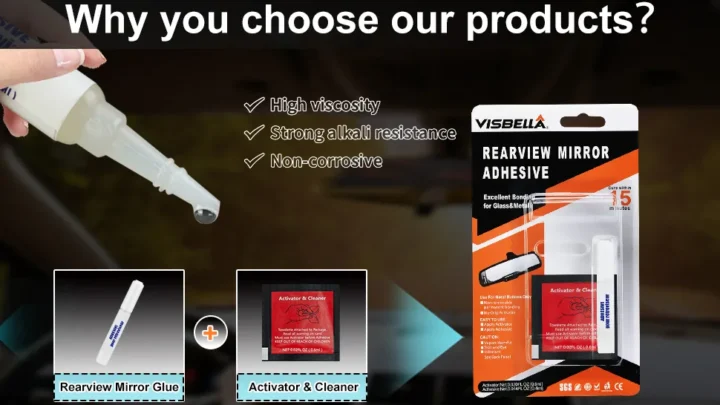
First, clean the factory mirror surface thoroughly. Use isopropyl alcohol and a lint-free cloth. Any dirt, wax, or grease will weaken the adhesive bond.
A weak bond means the mirror falls off later.
Second, choose the placement carefully. The outer bottom corner is the safest spot. This area is farthest from the center of the mirror where the required field of view is most critical.
Avoid the inner edge near the vehicle body. That area is essential for seeing the lane next to you.
Third, remove the adhesive backing and press the mirror firmly. Hold it for 30 to 60 seconds. Apply even pressure across the entire surface.
This activates the adhesive bond.
Fourth, leave the mirror undisturbed for 24 hours. The adhesive needs time to cure fully. If you drive immediately, the mirror may shift or fall off, especially in cold weather.
Fifth, adjust the angle from the driver's seat. You want to see the side of your vehicle and the adjacent lane. Don't expect to see far behind you.
That's the factory mirror's job.
The legal check is simple. Sit in the driver's seat. Look at your factory mirror.
Make sure the blind spot mirror doesn't block more than a small portion of the glass. If it covers more than 20 percent, move it to a smaller spot or use a smaller mirror.
Common Mistakes That Can Make Your Mirror Illegal
Most people who get a ticket for their blind spot mirror made one of these errors. The good news is they're all easy to avoid once you know what to look for.
Placing the mirror in the center of the glass. This is the number one mistake. The center of your factory mirror provides the most critical part of your required field of view. Blocking it with a convex spotter mirror is the fastest way to violate FMVSS 111.
Always use the outer corner.
Using a mirror that's too large. A 3-inch round mirror covers more glass than a 2-inch one. That extra coverage might block just enough of the factory mirror to fail inspection. Stick with smaller sizes.
They still give you the wide-angle view you need.
Ignoring adhesive failure in extreme weather. Heat softens the adhesive. Cold makes it brittle. In either case, the mirror falls off.
Aggregate user reviews show that mirrors installed in summer often fail in winter and vice versa. Check the adhesive bond every few months.
Assuming all states have the same rules. They don't. Some states have stricter inspection requirements than others. Our research shows that states with annual safety inspections are more likely to flag improper mirror placement.
Check your state's vehicle code before installing.
Relying on the mirror instead of a shoulder check. This isn't a legal mistake, but it's a safety one. Convex mirrors distort distance. Objects appear smaller and farther away.
A quick glance over your shoulder is still the best way to confirm a clear lane.
Safety & Legal Compliance: What You Absolutely Need to Know

Let's get specific about what compliance looks like. FMVSS 111 requires that your driver-side mirror provides a view of the road behind you from a defined angle. For passenger cars, the mirror must show a view that extends at least 200 feet behind the vehicle.
Your blind spot mirror cannot reduce that view. If it covers more than a small portion of the glass, you're in violation. The safest approach is to keep the mirror in the outer 20 percent of the factory mirror surface.
That leaves the inner 80 percent fully functional.
For commercial vehicles, the rules are stricter. The Federal Motor Carrier Safety Administration has its own mirror requirements for trucks over 10,000 pounds. Many commercial fleets prohibit aftermarket mirrors entirely.
If you drive a commercial vehicle, check with your safety department before adding anything.
In Europe, the regulation is ECE R46. It requires that aftermarket mirrors do not reduce the field of view of the primary mirror. The same logic applies.
You can add a spotter mirror, but you can't block the factory one.
In the UK, the MOT test checks that mirrors are secure, clear, and provide an adequate view. A poorly placed blind spot mirror can cause a failure. The same goes for Canada under CMVSS 111.
The pattern is consistent across jurisdictions. The law doesn't hate blind spot mirrors. It hates mirrors that block the view you're legally required to have.
Frequently Asked Questions
Can I get a ticket for having a blind spot mirror?
Yes, if it blocks your factory mirror's required field of view. A police officer can issue a fix-it ticket for an obstructed mirror. You'll need to remove the mirror and show proof to the court.
Most officers won't pull you over for just a small corner mirror.
Are blind spot mirrors illegal in any state?
No state has a blanket ban on blind spot mirrors. The issue is always about placement and obstruction. Some states with strict safety inspections may flag mirrors that block the factory mirror.
Check your state's vehicle code for specifics.
Do blind spot mirrors affect my car's warranty?
They do not affect your vehicle warranty. Aftermarket mirrors are considered accessories. They don't modify the vehicle's systems.
The only risk is if the adhesive damages the factory mirror glass when removed. That's rare with proper removal using heat.
Can I use a blind spot mirror on the passenger side too?
Yes, you can use one on the passenger side mirror. The same placement rules apply. Keep it in the outer corner.
The passenger side mirror already has a slightly convex curve in most vehicles. Adding a spotter mirror there is fine.
How do I remove a blind spot mirror without damaging the factory mirror?
Use a hair dryer or heat gun on low setting. Warm the adhesive for 30 to 60 seconds. Then use a plastic scraper or dental floss to gently pry the mirror off.
Clean any residue with isopropyl alcohol. Never use a metal blade. It will scratch the glass.
Will a blind spot mirror fail my MOT test in the UK?
It can if it obstructs the required field of view. The MOT test checks that mirrors are secure and provide an adequate view. A small mirror in the outer corner typically passes.
A large mirror in the center will likely fail.
The Bottom Line: What to Do If You Want to Use One
Here's the practical takeaway. Blind spot mirrors are legal in every jurisdiction we researched. The key is using them correctly.
Place the mirror in the outer bottom corner of your factory mirror. Keep it small. Check the adhesive bond regularly.
And never skip your shoulder check.
If you drive a commercial vehicle, check your company's policy first. Some fleets ban aftermarket mirrors entirely. The same goes for vehicles used in driver's education or testing.
Those programs often have strict rules about accessories.
For the average driver, a properly placed blind spot mirror is a safety upgrade. It reduces blind spots without breaking any laws. The risk comes from poor placement, poor installation, or over-reliance on the mirror itself.
So go ahead and use one. Just do it right. Your lane changes will be smoother, your parking will be easier, and your chances of a ticket will stay exactly where they should be.
Near zero.

Similar Posts