How to Know What Strength Reading Glasses to Get
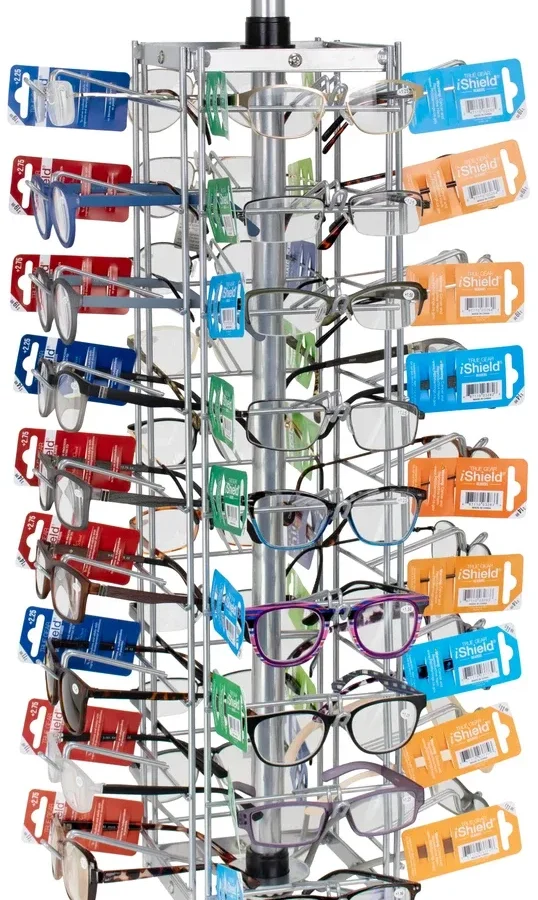
If you've ever stood in a drugstore aisle wondering how do you know what strength reading glasses to get, you're not alone. It's one of the most common questions we hear from people over 40. The answer comes down to a simple test, but there are a few important details that keep you from guessing wrong.
Here's a quick reality check. The American Optometric Association says presbyopia, the natural loss of near vision, affects nearly everyone by age 40. As of 2026, roughly 128 million Americans use reading glasses.
Many of them bought the wrong strength first, and that's exactly what we're going to help you avoid.
The Problem: Why Guessing Your Reading Strength Is Risky
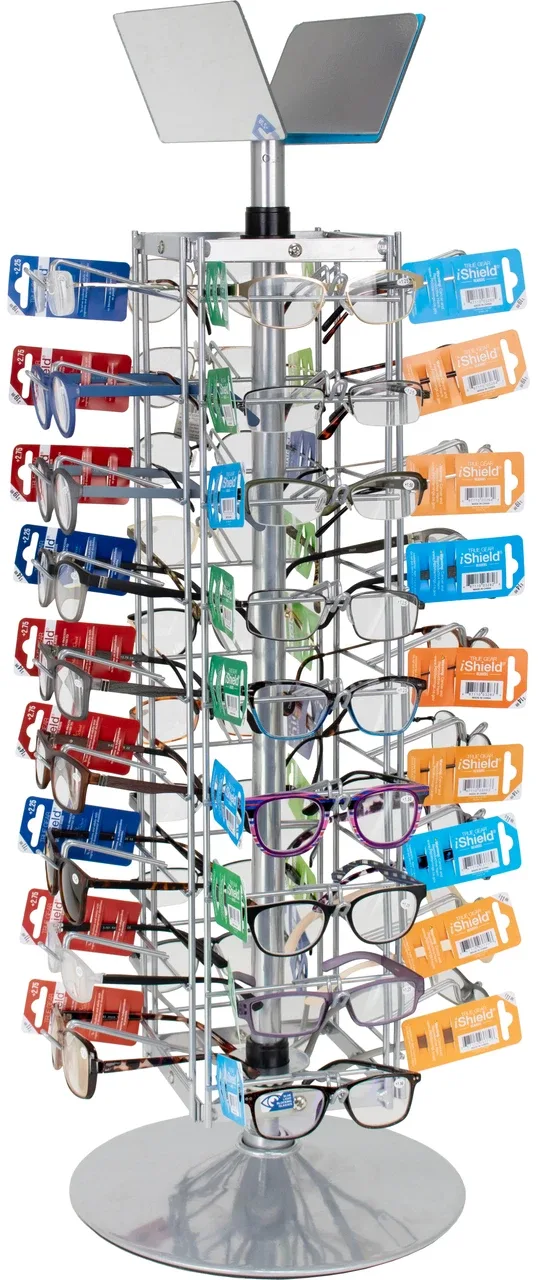
Choosing reading glasses by how they look on the shelf feels easy. Slip on a pair, hold a menu at arm's length, and decide. That approach fails more often than it works.
Your eyes aren't simple lenses. Each eye can require a different correction. Your reading distance matters, your arm length matters, and any underlying condition like astigmatism completely changes the equation.
Grab a pair with too little magnification and you'll squint. Too much and you'll get headaches, nausea, and a weird fishbowl feeling when you walk.

There's a bigger risk too. Several serious eye conditions mimic the symptoms of presbyopia. Cataracts, macular degeneration, and diabetic retinopathy can all blur near vision.
If you skip an eye exam and jump straight to drugstore readers, you could be masking something far more serious. The National Eye Institute recommends comprehensive dilated eye exams for everyone over 40, even without symptoms.
Over-the-counter readers follow FDA regulations for Class I medical devices. They're tested for basic durability. But they're designed as a temporary convenience, not a precise prescription.
Their lenses sit at a fixed focal length. That's fine for standard reading distance, but not for computer work or crafting. You need to know your exact needs before you buy.
The Quick Answer: How to Narrow Down the Right Strength Safely
Print a diopter test card. Hold it at your normal reading distance. Start with the lowest magnification.
Drop the readers over your eye and compare. That simple test gets most people within the correct range.
Start with age. The chart below gives you a rough starting point. It's a guide, not a diagnosis.
Age-Based Diopter Reference Chart
| Age Range | Typical Reading Strength |
|---|---|
| 40–44 | +1.00 to +1.25 |
| 45–49 | +1.50 to +1.75 |
| 50–54 | +2.00 to +2.25 |
| 55–59 | +2.50 to +2.75 |
| 60–64 | +3.00 to +3.25 |
| 65+ | +3.50 to +4.00 |
Age only works as a starting point. Your actual strength depends on how far you hold things and how your eyes naturally change. Some 55-year-olds need +2.00.
Others need +3.00. The test card fills in the gaps.
If you're between powers, pick the weaker option. Your eye muscles can compensate for a slightly weak lens. They can't compensate for an overly strong one, and you'll feel it fast.
Dizziness, eyestrain, and blur are common complaints. Always side on the gentler strength when you're torn.
For people with a significant prescription for nearsightedness or astigmatism, drugstore readers won't cut it. These are made for eyes that need only magnification. You need to see an optometrist.
Put down the test card and book an appointment.
Core Facts: How Diopters, Reading Distance, and Age Connect
You've seen +2.00 on the packaging. Diopters measure lens power. A +1.00 diopter lens provides low magnification.
A +4.00 diopter lens is the strongest common over-the-counter option. Each 0.25 increment is a meaningful step in focusing power.
Your reading distance is the variable most people overlook. Over-the-counter readers are calibrated for a working distance of about 14 to 16 inches. That's standard print distance, roughly from your elbow to your palm.
If you hold books farther away, you need less power. If you hold everything closer, you'll step up.

Here's a real-world example. A 52-year-old woman who reads at 12 inches might comfortably use +2.25. Another woman the same age with longer arms reading at 18 inches could feel better at +1.75.
Same age, different strengths. The distance between your eyes and the page decides.
Presbyopia keeps progressing too. Your lens loses flexibility as you age. The strength that feels perfect today will feel weak in two to three years.
That's normal. Plan to re-test annually, and never assume your old pair still works at full clarity.
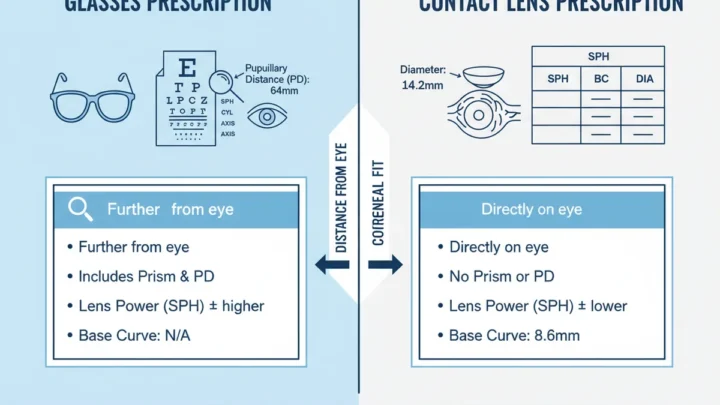
Pupil distance, the space between your eyes, also matters for prescription readers. It affects where the optical center sits in each lens. Drugstore readers have a fixed optical center built for an average face.
If your pupillary distance is wider or narrower than average, you'll get prism effect, which causes eyestrain and double vision. Another reason why a professional exam is the gold standard.
The shape of frames matters too. Wrapped or curved readers put the lens at an angle, which shifts the focal point. That's why half-frame readers work so well.
They sit low on your nose, letting you glance over the top for distance vision and drop your eyes for reading.
Step-by-Step: How to Find Your Reading Glasses Strength at Home
Testing your own strength is straightforward if you follow a consistent process. Print a diopter test card before you start. Many optometry offices offer free printable cards online.
The card shows paragraphs of text in different font sizes, labeled by diopter strength.
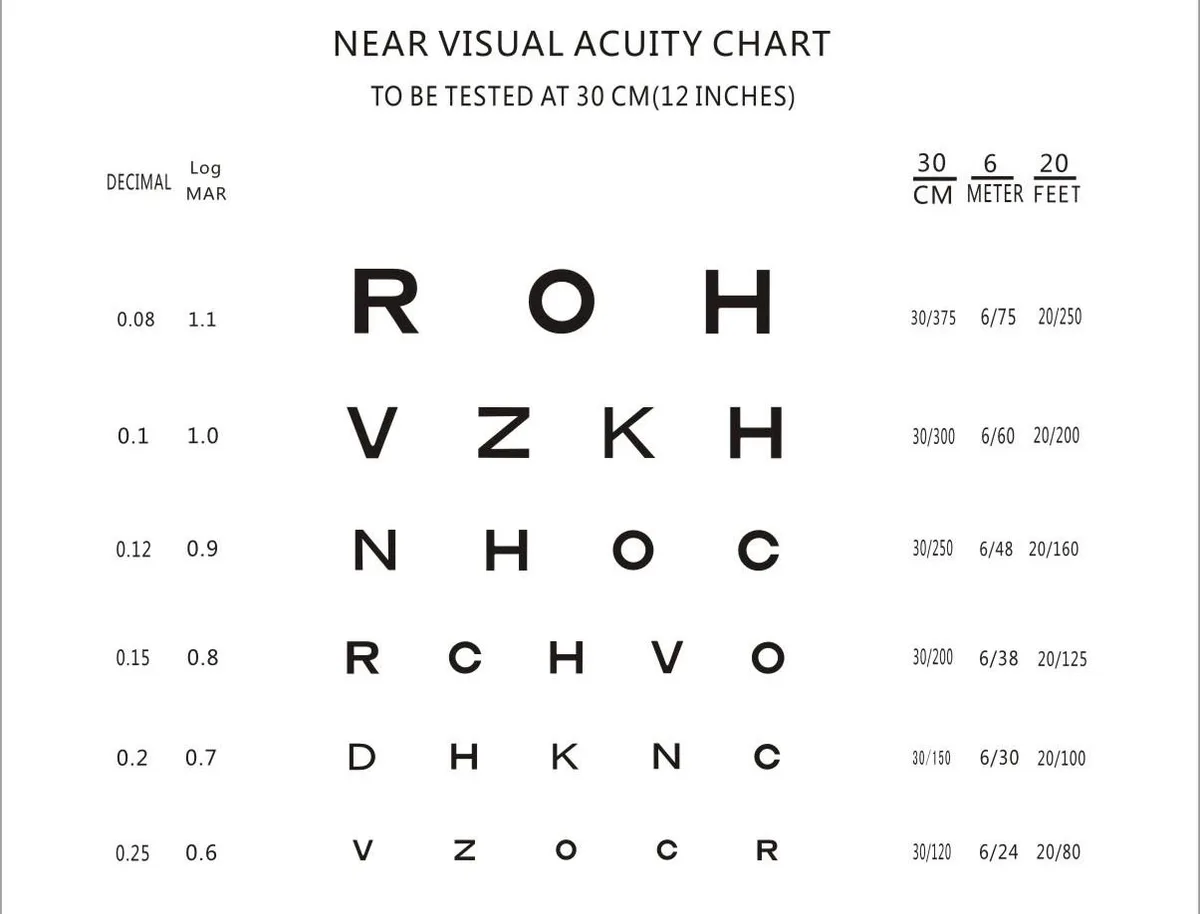
Step 1: Find your normal reading distance. Hold a book, phone, or label at the distance you naturally read. Most people settle at 14 to 16 inches. Measure that distance with a ruler.
Write it down.
Step 2: Tape the card to a wall. Use good lighting. The card sits at the exact distance you measured from your face. Keep your head level and your eyes straight ahead.
Step 3: Look at the smallest line you can read clearly. Start at the top and move down. Mark the line where text becomes noticeably blurry. The number next to that line tells you your starting magnification.
Step 4: Compare two strengths side by side. This is the trick that works best. Hold a +1.50 pair over one eye and a +1.75 pair over the other. Look at the same text.
The clearer side generally wins. It's a method optometrists recommend for quick comparison.
Step 5: Check the full page, not just one word. Blurry edges mean the lens has poor optical quality. Walk that strength back. Sharpness across the whole line is your goal.
Step 6: Wear them for 15 minutes. Don't buy on the spot. Walk around the store, read your phone, and look at a sign across the aisle. If you feel dizzy or your eyes ache, go down half a step.
Here's what the perfect fit feels like. Text snaps into focus within a second. Your eyes feel relaxed.
You don't have to pull the glasses down your nose to see better. No straining, no headaches, no recoil. Try the online charts first, then confirm with a local optometrist.
That's the safest combo for your eyes.
Common Mistakes People Make (And How to Avoid Them)
The biggest error is buying the strongest pair you can find. Stronger isn't better. Your eyes work hardest when the lens does too much.
Many people experience vertigo for days because they jumped from +1.50 to +2.50. Your prescription should be the smallest amount that makes reading comfortable.
Mistake 1: Guessing from the age chart alone.
Age charts are starting points, not final answers. They ignore your actual eye health, distance, and existing prescriptions. Use the chart as a rough baseline but never as your only resource.
Mistake 2: Assuming both eyes need the same power.
Anisometropia, a difference in refractive power between your eyes, is common. One eye might need +1.75 while the other needs +2.25. Drugstore readers use the same power in both lenses.
That's why you feel strain in one eye. If you notice this, you're in prescription territory.
Mistake 3: Testing at the wrong distance.
Hold the card too close and you'll overestimate your strength. Hold it too far and you'll underestimate. Measure the distance.
Write it down. Test at exactly that number.
Mistake 4: Giving up after one painful pair.
Lens quality varies wildly between cheap manufacturers. A poorly ground lens causes distortion, headaches, and blurry edges. A different brand with the same marked strength can feel drastically different.
Try another pair before abandoning your power. Aggregate reviews of OTC readers show that the number one complaint is inconsistent lens quality between pairs of the same marked strength.
Mistake 5: Ignoring red flags.
Sharp eye pain, sudden vision changes, headaches in the morning, and seeing halos around lights are not normal. Those are signs of conditions like glaucoma. No drugstore reader will fix that.
See a professional promptly. The American Optometric Association recommends that anyone experiencing these symptoms receives an eye exam as soon as possible.
When to See an Optometrist (Not Just the Drugstore)
Drugstore readers work fine for simple presbyopia. But the moment you have other vision issues, you need a professional. Here are the clear signs that tell you to book an exam.
You have astigmatism. OTC readers only correct magnification. They don't fix the irregular curve of your cornea. You'll see blurring at the edges of text.
Your eyes will feel tired after 20 minutes. A prescription lens with cylinder correction solves this entirely.
One eye is noticeably weaker than the other. This is anisometropia. OTC readers deliver the same power to both lenses. That forces your stronger eye to compensate.
You'll feel strain and tension. It's not normal. An optometrist will measure each eye separately and write two different prescriptions.
You need reading glasses plus distance correction. If you already wear glasses for nearsightedness, single-vision readers won't cut it. Progressive lenses or bifocals are the better choice. They blend distance and near correction into one pair.
Drugstore readers can't do that.
Your near vision changes suddenly. Presbyopia develops gradually over years. If your vision blurs overnight or over a week, that's a red flag. Cataracts, macular degeneration, and diabetic retinopathy all cause similar symptoms.
Only a dilated eye exam confirms the cause.
You experience headaches, double vision, or eye pain. These are not normal signs of aging. They signal strain or an underlying condition. The American Optometric Association recommends an immediate exam for anyone with persistent headaches or double vision.
Don't wait for it to pass.
What to Expect During an Eye Exam
A comprehensive exam for presbyopia takes about 30 minutes. The optometrist will measure your refraction, check your eye health, and test your reading distance. They'll also examine your retina and lens for signs of disease.
The result is a prescription that's unique to your eyes.
Most adults over 40 should have an exam every one to two years. Even if readers feel comfortable, a professional checkup catches early problems. The FDA and National Eye Institute both recommend this schedule.
Skipping it is a gamble with your vision.
FAQs
Can I use my phone's flashlight to test reading glasses strength?
No. A phone flashlight creates glare and shadows. It distorts how text appears.
Use a printable diopter card under consistent, even lighting. Good lighting makes a real difference in accuracy.
What strength reading glasses do I need for computer work?
Computer screens sit at 20 to 24 inches, not the standard 14 to 16 inches. You need about 0.50 to 0.75 diopters less than your reading glasses. Many people buy computer glasses separately.
They're a different category.
How often should I update my reading glasses strength?
Test your vision every year after age 40. Presbyopia progresses slowly but steadily. If you find yourself holding books farther away or squinting at your phone, it's time to move up.
Don't wait for the headaches to start.
Is it bad to wear reading glasses when I don't need them?
Yes. Wearing readers when your eyes can focus fine on their own causes unnecessary strain. The lenses force your eyes to work differently.
Your brain will try to compensate, leading to fatigue and headaches. Only use them when you need the magnification.
Can I buy reading glasses online without a prescription?
Yes, but you take the risk. Online readers use the same fixed diopter as drugstore readers. They don't account for astigmatism, pupillary distance, or prescription differences between eyes.
If you buy online, use a test card first. And only buy from sellers who accept returns.
Why do my reading glasses make me dizzy?
You're likely wearing too strong a power. Step down by 0.25 diopters. Alternatively, the lens quality could be poor.
Cheap lenses produce distortion at the edges. Try a different brand or switch to prescription readers. Dizziness is your body telling you something is wrong.
The Bottom Line: A Balanced Approach to Choosing Your Readers
Start with a printable diopter card. Measure your reading distance. Test the lowest power first.
Confirm that both eyes feel comfortable. Then wear them for 15 minutes before buying. That's the safe home method.
But never skip the bigger picture. A comprehensive eye exam is the only way to rule out serious conditions. The National Eye Institute, the American Optometric Association, and the FDA all agree on this point.
Your vision is worth the 30 minutes and the copay.
If you're between +1.00 and +2.00 with no other symptoms, drugstore readers are a fine solution. If you have astigmatism, different prescription strengths in each eye, or new symptoms, go straight to an optometrist. The wrong pair costs more than money.
It costs your comfort and your health.

Similar Posts