Why Glass Doesn’t Have a Single Melting Point
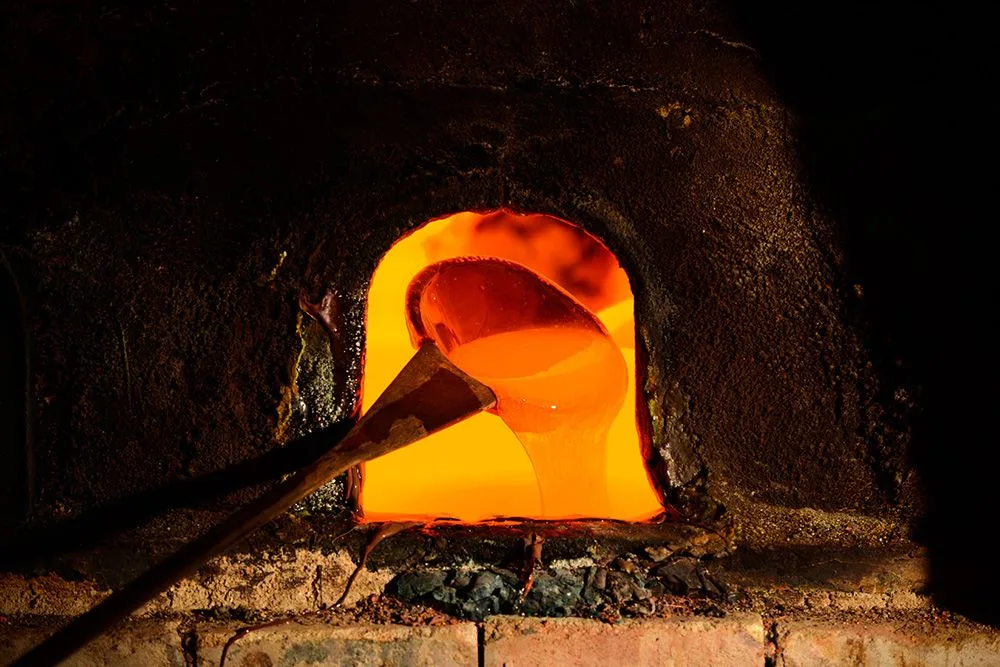
If you've searched for the glass melting point, you probably found a confusing range of numbers. That's because glass doesn't behave like ice or metal. It has no single temperature where it instantly turns liquid.
Instead, glass softens gradually over a wide range. Manufacturer specs for soda-lime glass, the kind used in windows and bottles, list a softening point around 720°C. But the same glass won't flow freely until roughly 1000°C.
Understanding that difference is the key to getting your project right. Let's walk through what those numbers mean and how to find the correct temperature for your glass.
The Problem: Why "Glass Melting Point" Has No Single Answer
Glass is an amorphous solid, not a crystalline one. Crystals like ice or salt melt at a sharp, precise temperature. Glass molecules are arranged randomly, so they soften gradually as heat increases.
Think of cold honey warming up. It gets thinner and thinner, but there's no exact moment it "melts."
This is why you'll see different numbers for the same glass type. The softening point, the working point, and the liquidus temperature are all different. The softening point is when glass starts to sag under its own weight.
The working point is when it's fluid enough to blow or shape. The liquidus temperature is when it's fully liquid and free of crystals.
For a DIY glass fuser, these distinctions matter a lot. Fusing two pieces together requires reaching the softening point at minimum. Casting glass into a mold requires the working point or higher.
Slumping a bottle into a dish only needs the softening range.
The real solution is to identify your glass type first. Then match it to the correct temperature range for your specific project.
Quick Answer: The Temperature Ranges for Every Common Glass Type
Here is the short answer. Soda-lime glass softens around 720°C and works around 1000°C. Borosilicate glass softens around 820°C and works around 1250°C.
Lead crystal softens around 600°C. Fused quartz needs over 1600°C.
These are rough numbers. Exact values vary by manufacturer. But they give you a reliable starting point for planning your kiln schedule.
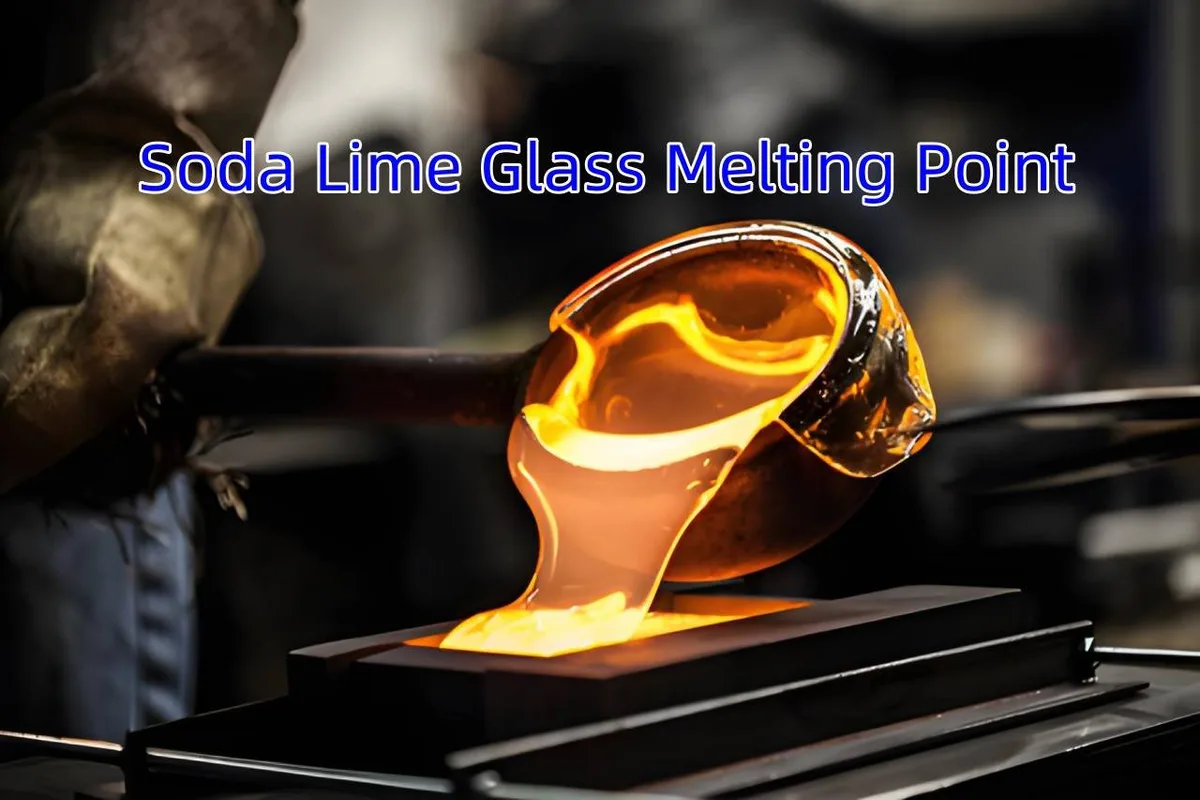
Below is a table that summarizes the key temperature points for the four most common glass types.
| Glass Type | Softening Point | Working Point | Liquidus Temp |
|---|---|---|---|
| Soda-lime (window, bottle) | 720°C | 1000°C | 1400°C |
| Borosilicate (Pyrex, lab glass) | 820°C | 1250°C | 1650°C |
| Lead crystal (decorative glass) | 600°C | 900°C | 1100°C |
| Fused quartz (high-temp lab) | 1600°C | 1700°C | 1800°C+ |
For most home kiln work, you'll use soda-lime or borosilicate. Lead crystal requires extra safety precautions due to lead content. Fused quartz is only used in specialized industrial or scientific settings.
Core Explanation: How Glass Softens, Works, and Actually Melts
To understand glass melting, think about viscosity. Viscosity is how thick or runny a liquid is. Cold honey is high viscosity.
Hot water is low viscosity. Glass at room temperature is incredibly thick, essentially a solid. As you heat it, the viscosity drops.
The softening point is the temperature where glass has a viscosity of about 10^7.6 poise. That's a fancy way of saying it's soft enough to sag under its own weight. If you've seen a glass bottle slump into a flat disk in a kiln, that's the softening point at work.
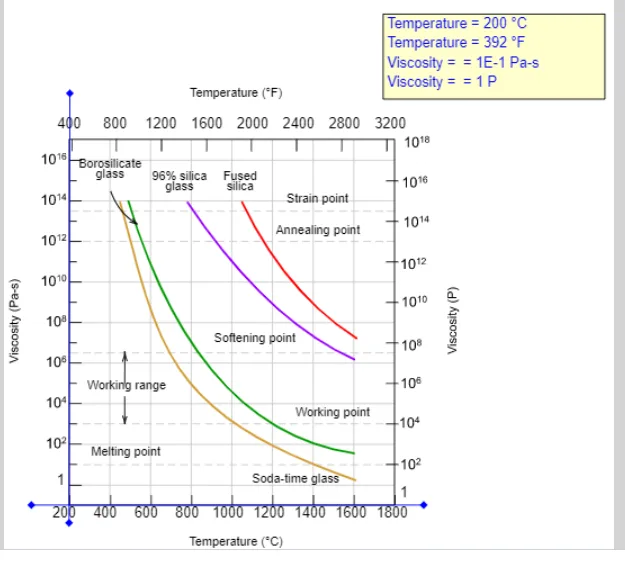
The working point is around 10^4 poise. At this temperature, glass is fluid enough to blow into shapes or pull into fibers. Glassblowers work in this range.
The liquidus temperature is the point where the glass is completely free of any unmelted crystals. For most practical purposes, you don't need to reach liquidus unless you're casting thick pieces.
Different glass types have different viscosity curves. Borosilicate glass stays stiffer at higher temperatures compared to soda-lime. That's why it's better for cookware and lab equipment.
It resists thermal shock because it doesn't soften as easily.
When you plan a firing schedule, you're controlling the viscosity over time. You heat the glass slowly so it softens evenly. You hold it at the target temperature for a specific time.
Then you cool it slowly through the annealing range to prevent stress fractures. That cycle is the heart of every glass project.
Step-by-Step: How to Identify Your Glass and Find Its Correct Firing Temperature
The first step is always to identify your glass. Check for a label or stamp. Many commercial glass products have a manufacturer code.
If you're using scrap glass from a window or bottle, you may not know the exact type. Here's how to figure it out.
- Look for a label. Pyrex and other borosilicate brands often have a label. Soda-lime glass rarely does. If it's a clear bottle or window, assume soda-lime.
- Check the color. Lead crystal is often clear and heavy. It has a high refractive index. Soda-lime glass is slightly greenish on the edge. Borosilicate is very clear and lightweight.
- Do a COE test. The coefficient of thermal expansion tells you how much glass expands with heat. You can buy a COE test kit or use a known reference. If you're fusing different colors, they must have matching COE.
- Use a known source. If you bought glass from a craft store, it's likely soda-lime with a known COE like 90. Bullseye and Spectrum are common brands with published firing schedules.
Once you know the glass type, find the manufacturer's firing schedule. Most reputable glass brands publish these online. For soda-lime glass, a typical full fuse schedule is:
- Ramp at 200°C per hour to 540°C.
- Hold for 10 minutes.
- Ramp at 150°C per hour to 815°C.
- Hold for 10 to 15 minutes.
- Anneal at 500°C for 30 minutes.
- Slow cool at 50°C per hour to room temperature.
For borosilicate, the numbers are higher. A typical full fuse schedule might be:
- Ramp at 200°C per hour to 650°C.
- Hold for 10 minutes.
- Ramp at 100°C per hour to 950°C.
- Hold for 15 to 20 minutes.
- Anneal at 560°C for 45 minutes.
- Slow cool at 40°C per hour to room temperature.
Always follow the manufacturer's schedule for your specific glass. Using a generic schedule can lead to cracks, devitrification, or incomplete fusing.
Mistakes to Avoid: Thermal Shock, Devitrification, and the Tempered Glass Trap
Three mistakes ruin more glass projects than anything else. Thermal shock, devitrification, and trying to melt tempered glass.
Thermal shock happens when glass heats or cools too fast. The surface expands or contracts faster than the core. This creates stress that causes cracks.
The fix is simple. Use slow ramp rates. Never open a hot kiln.
Always let the glass cool naturally to room temperature.
Devitrification is when glass develops a cloudy, crystalline surface. It happens when you hold glass at high temperatures too long. The glass atoms rearrange into crystals.
It's often irreversible. To prevent it, avoid long soaks at the softening point. Use a clean kiln shelf.
Some glass brands add stabilizers to resist devitrification.
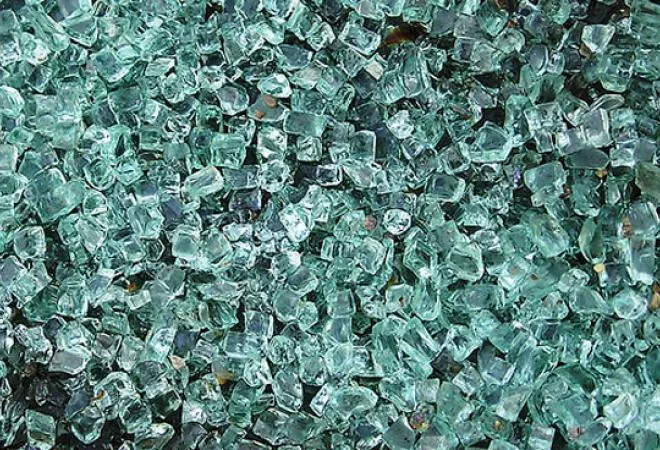
Tempered glass is a special case. It's heat-treated to be stronger and safer. When you try to melt it, it shatters violently.
Tempered glass is used in car windows, shower doors, and some oven doors. If you're not sure if a piece is tempered, assume it is. Do not put it in a kiln.
There is no safe way to melt tempered glass at home.
Other common mistakes include:
- Not annealing properly. Annealing removes internal stress. Skipping it or cooling too fast causes delayed cracks.
- Using incompatible glass. Mixing glass with different COE values causes stress and cracking.
- Overheating. Glass can boil or bubble if you go too high. This ruins the surface.
Avoid these mistakes by planning your schedule carefully and using known materials. A test tile is always worth the extra time.
Safety First: Kiln Ventilation, Lead Hazards, and Proper Handling
Working with hot glass involves real risks. Kilns reach temperatures above 800°C. That's hot enough to cause severe burns instantly.
Proper safety practices are not optional.
Kiln ventilation is critical. Glass releases fumes when heated. Soda-lime glass can release sulfur dioxide and other compounds. Lead crystal releases toxic lead fumes.
Borosilicate glass is generally safer but still produces some off-gassing. Always use your kiln in a well-ventilated area. A dedicated exhaust hood or vent system is best.
If you're working indoors, open windows and use fans. Never operate a kiln in a closed garage or basement without proper ventilation.
Lead hazards require special attention. Lead crystal contains lead oxide. When you heat it, lead can vaporize and enter the air. Inhaling lead fumes is dangerous.
Lead accumulates in the body over time. It affects the nervous system and is especially harmful to children and pregnant women. If you plan to melt lead crystal, use a respirator rated for lead fumes.
Do not use lead crystal for food containers or drinkware after melting. The lead can leach out.
Personal protective equipment matters. Safety glasses protect your eyes from hot glass shards. Heat-resistant gloves are essential for handling hot kiln shelves or molds. Long sleeves and closed-toe shoes prevent burns from accidental contact.
Keep a fire extinguisher rated for electrical fires near your kiln.
Kiln electrical safety is often overlooked. Kilns draw a lot of power. They should be on a dedicated circuit. Check your kiln's power cord for damage regularly.
Do not use extension cords. Follow the manufacturer's installation instructions. A kiln that trips breakers or runs hot is a fire risk.
Frequently Asked Questions
Can I melt glass in a microwave kiln?
Yes, but only for small pieces. Microwave kilns reach about 900°C. They work well for small fusing projects like jewelry or beads.
They are not suitable for larger pieces or thick glass. The heating is uneven, and temperature control is limited.
What is the melting point of glass in Celsius?
There is no single answer. Soda-lime glass softens at 720°C and works at 1000°C. Borosilicate glass softens at 820°C and works at 1250°C.
Lead crystal softens at 600°C. Fused quartz needs over 1600°C. The exact number depends on the glass type.
Can I melt glass bottles in a regular oven?
No. Standard home ovens reach about 260°C at most. Glass needs at least 600°C to soften.
You need a kiln or a torch designed for glasswork. Attempting to melt glass in a home oven will damage the oven and may cause a fire.
How do I know if glass is tempered?
Look for a stamp or label. Tempered glass often has a small mark in the corner. It usually says "Tempered" or "Safety Glass." If you break tempered glass, it shatters into small cubes.
Annealed glass breaks into sharp shards. When in doubt, assume it is tempered.
What happens if I mix different glass types?
The glass will likely crack. Different glass types have different coefficients of thermal expansion. When they cool, they expand and contract at different rates.
This creates stress that causes cracks. Always use glass with matching COE values for fusing.
Can I melt glass at home without a kiln?
You can use a torch for small pieces like beads. But you cannot melt larger pieces evenly without a kiln. Torches create hot spots that cause thermal shock.
For flat pieces, bowls, or sculptures, a kiln is the only reliable tool.
Final Decision Guide: Which Glass Type Matches Your Project?
Choosing the right glass type depends on your project and your equipment. Use this guide to match your situation.
| Your Project | Recommended Glass | Why |
|---|---|---|
| Fusing small jewelry or coasters | Soda-lime (Bullseye, Spectrum) | Low cost, easy to find, works in most home kilns |
| Making cookware or bakeware | Borosilicate (Pyrex, Simax) | Thermal shock resistant, safe for food contact |
| Glassblowing (small pieces) | Borosilicate | Works well with a torch, stiff at high temps |
| Glassblowing (large pieces) | Soda-lime | More fluid, easier to shape in a furnace |
| Decorative art glass | Lead crystal | High refractive index, brilliant shine |
| Scientific or high-temperature use | Fused quartz | Withstands extreme heat, chemically inert |
| Recycling bottles into art | Soda-lime (bottles) | Free material, but check for coatings |
If you have a home kiln that reaches 1000°C, soda-lime glass is your best bet. It's affordable, widely available, and well-documented. Start with a known brand like Bullseye or Spectrum.
Follow their published firing schedules.
If you need thermal shock resistance, go with borosilicate. It costs more but handles rapid temperature changes better. It's the standard for lab glass and cookware.
If you are a beginner, start with soda-lime. It's more forgiving. Mistakes are less expensive.
As you gain experience, you can experiment with other types.
If you are working with recycled glass, test a small piece first. Not all bottles are the same. Some have coatings that cause bubbling or devitrification.
A test tile saves you from ruining a whole project.
The key takeaway is this. Know your glass type. Match it to your kiln.
Follow the manufacturer's schedule. With the right preparation, you can create beautiful, durable glass pieces every time.

Similar Posts