Red vs Blue Light Speed in Crown Glass
If you've ever wondered which color of light red or blue travels faster in crown glass, the answer might surprise you. Red light moves faster through crown glass than blue light does. Crown glass has a higher refractive index for shorter wavelengths like blue, which means it slows down more.
In fact, standard BK7 crown glass has a refractive index of about 1.514 for red light at 656 nanometers. For blue light at 486 nanometers, it is about 1.528. The difference is small, but it is enough to make red light pull ahead by roughly 0.02 x 10⁸ meters per second.
Let's break down why this happens and what it means for optics.
Quick Answer
Red light travels faster than blue light in crown glass. The refractive index for red light is lower. Blue light has a higher refractive index and gets slowed more.
The speed difference is about 2 percent in crown glass.
The Short Answer: Red Light Wins in Crown Glass
Let's get straight to the point. In crown glass, red light travels faster than blue light. Every time.
This is not a close call. The physics is consistent and well documented.
The reason comes down to a property called dispersion. Dispersion describes how a material's refractive index changes with the wavelength of light. In crown glass, the refractive index decreases as the wavelength gets longer.
Red light has a longer wavelength, so it experiences a lower refractive index. Blue light has a shorter wavelength, so it sees a higher one.
A lower refractive index means less slowing. In BK7 crown glass, red light at 656 nanometers travels at roughly 1.98 x 10⁸ meters per second. Blue light at 486 nanometers moves at about 1.96 x 10⁸ meters per second.
The difference is about 0.02 x 10⁸ meters per second, or roughly 2 percent.
That might not sound like much, but it has real consequences for lenses and prisms. We'll get to those in a moment.
Why Speed Changes in Glass: The Refractive Index Effect
To understand why red light outruns blue light in crown glass, you need to understand what happens when light enters a material. Light travels at its maximum speed in a vacuum. That is about 300,000 kilometers per second.
The moment it enters glass, it slows down.
The amount of slowing depends on the refractive index of the material. The refractive index tells you how much slower light moves in that medium compared to a vacuum. A refractive index of 1.5 means light travels at 1/1.5 of its vacuum speed, or about 200,000 kilometers per second.
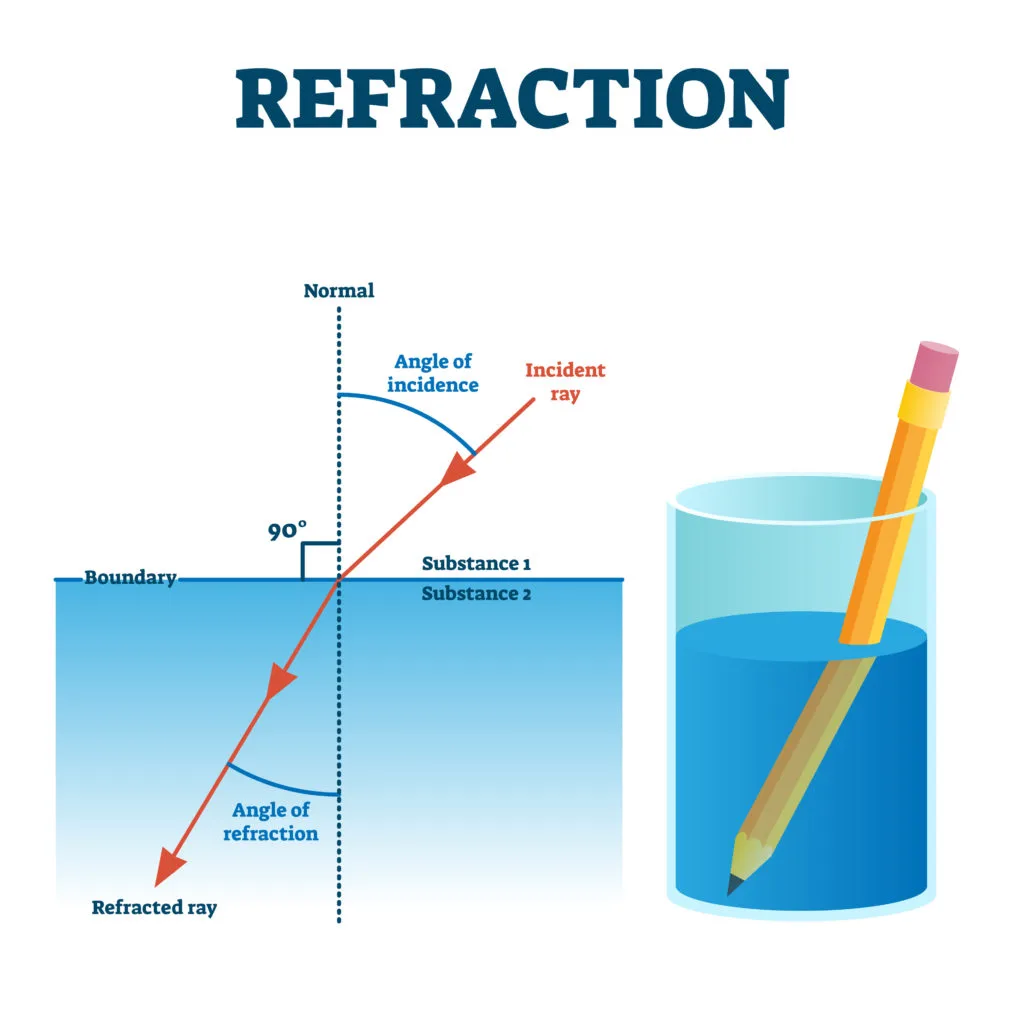
But here is the key point. The refractive index is not a fixed number for a given material. It changes with the wavelength of light.
This is called dispersion. In crown glass, the refractive index is higher for shorter wavelengths like blue and lower for longer wavelengths like red.
Think of it like running through water. Red light moves through crown glass like running through ankle-deep water. Blue light moves through like running through knee-deep water.
Both get slowed, but blue gets slowed more. That extra resistance comes from the way the glass atoms interact with the shorter wavelengths of blue light.
The National Institute of Standards and Technology maintains refractive index data for common optical glasses. The pattern is consistent across all normal crown glasses. Red always has the lower index and the higher speed.
Red vs. Blue: Side-by-Side Speed Comparison
Let's put the numbers side by side. We will use standard BK7 crown glass. This is one of the most common optical glasses used in lenses and prisms.
The values come from manufacturer published data.
| Property | Red Light | Blue Light |
|---|---|---|
| Wavelength | 656 nm (hydrogen-alpha line) | 486 nm (hydrogen-beta line) |
| Refractive index in BK7 | 1.514 | 1.528 |
| Speed in BK7 | 1.98 x 10⁸ m/s | 1.96 x 10⁸ m/s |
| Speed relative to vacuum | 66.1% of vacuum speed | 65.5% of vacuum speed |
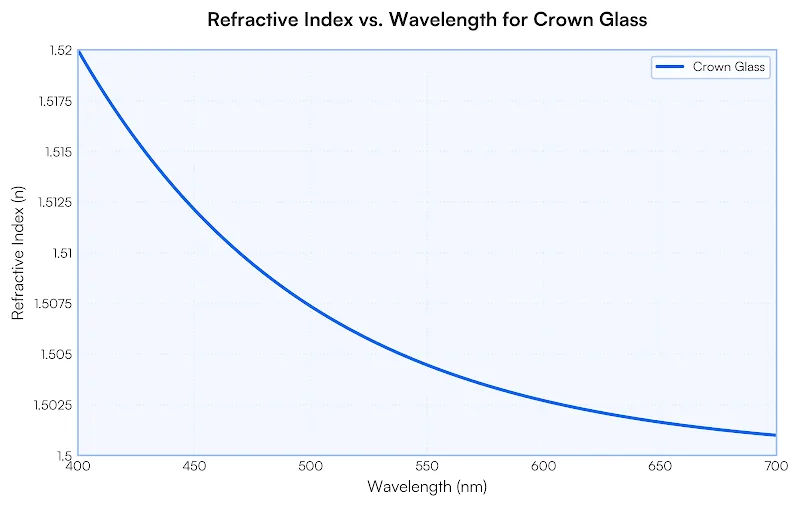
The difference in refractive index is only 0.014. That translates to a speed difference of about 0.02 x 10⁸ meters per second. That is roughly 45,000 kilometers per hour faster for red light.
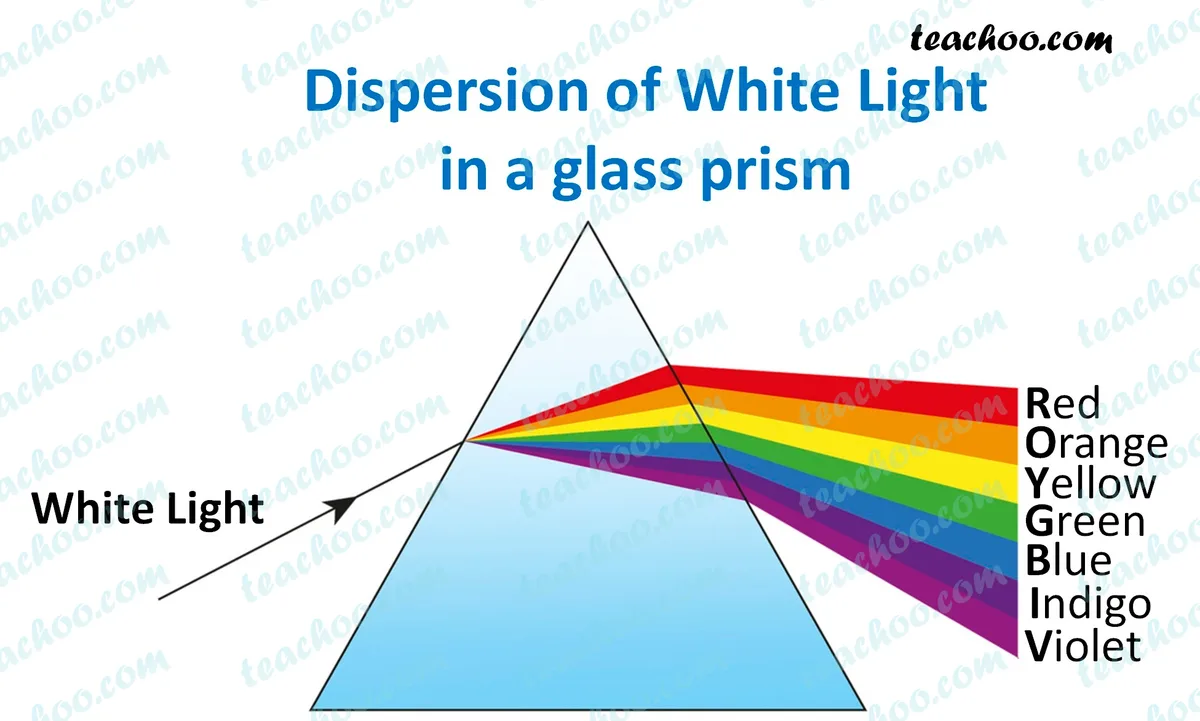
To see this effect in action, look at a prism splitting white light into a rainbow. The red band bends the least because it slows down the least. The blue band bends the most because it slows down the most.
That bending is called refraction, and it is tied directly to the speed of light in the glass.
If you were to run a race with red and blue light beams through a 1 meter block of BK7 crown glass, red light would finish about 0.05 nanoseconds ahead of blue light. That is fast, but it is a measurable difference.
Why This Matters for Lenses, Prisms, and Real Optics
This speed difference is not just a physics curiosity. It has real consequences for anyone designing or using optical systems. The most common problem is called chromatic aberration.
Chromatic aberration happens because different colors of light focus at different points after passing through a lens. Blue light slows down more, so it bends more. That means blue light focuses closer to the lens than red light does.
The result is color fringing around objects in the image.
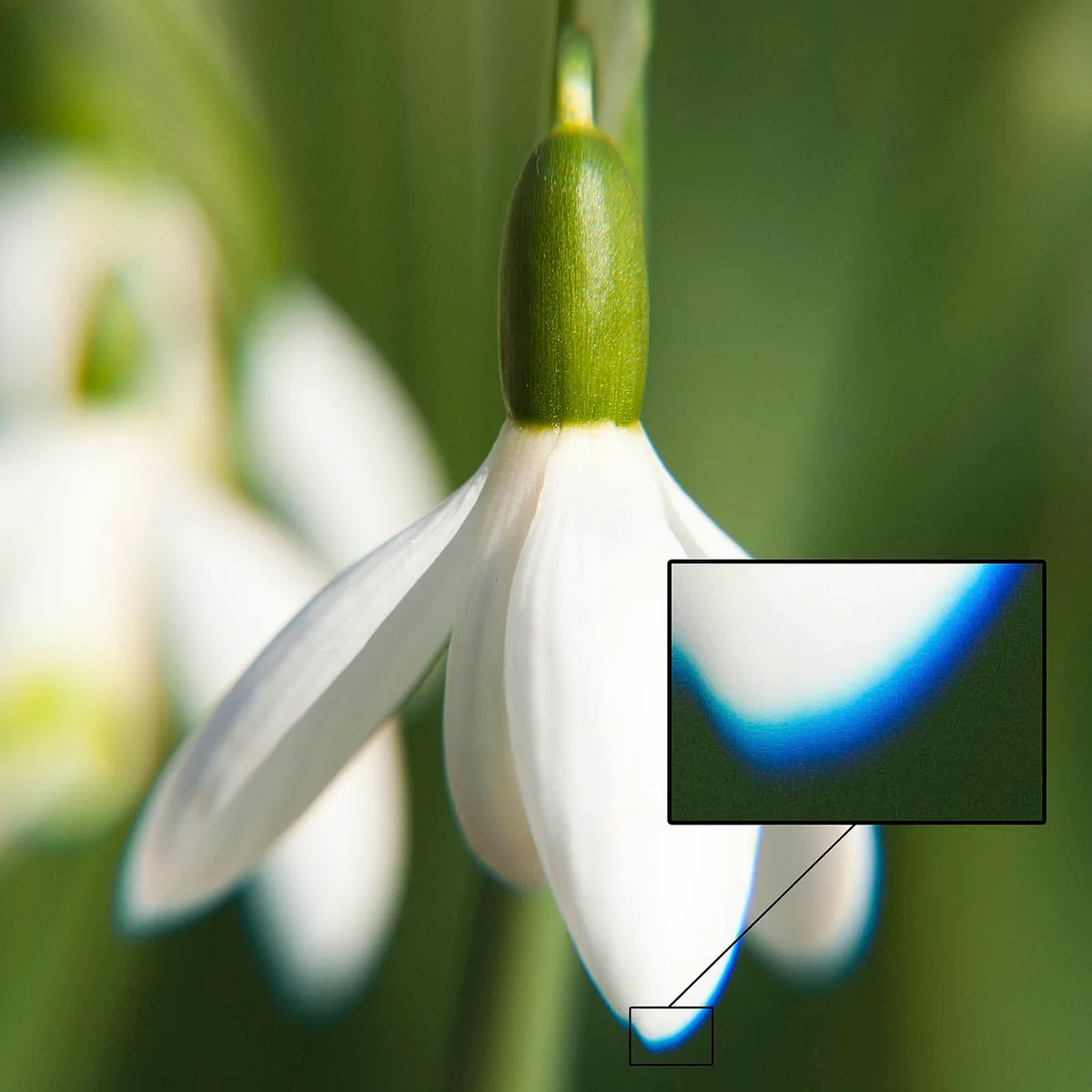
If you've ever seen purple or blue fringes around the edges of a photo taken with a cheap lens, you've seen chromatic aberration. It is a direct result of the speed difference between red and blue light in the glass.
Lens designers fix this problem by combining two different types of glass. They pair crown glass with flint glass, which has higher dispersion. The crown glass and flint glass cancel out each other's chromatic aberration.
This is called an achromatic doublet. It is standard in everything from binoculars to microscope objectives.
Prisms also rely on this speed difference. When you use a prism to separate white light into its component colors, you are using the dispersion of the glass. The red light bends the least, and the blue light bends the most.
The colors spread out in order from red to violet.
This is also how spectrometers work. They use a prism or a diffraction grating to spread out light into its component wavelengths. The speed difference between colors is what makes the separation possible.
Common Mistakes People Make About Light Speed in Glass
The most common mistake is assuming that blue light always travels faster than red light. This is true in a vacuum. There is no material to slow either color down.
In a vacuum, all colors of light travel at the same speed, about 300,000 kilometers per second.
But the moment you introduce glass, the situation flips. Blue light slows down more than red light. The confusion comes from mixing up behavior in a vacuum with behavior in a material.
Another mistake is thinking the speed difference is large enough to see with the naked eye. It is not. The difference is about 2 percent in crown glass.
You cannot see light traveling through glass. The effect shows up in the bending and focusing, not in the speed itself.
Some people assume all types of glass behave the same way. They do not. Crown glass and flint glass have different dispersion profiles.
Some glasses even have anomalous dispersion. In those cases, the refractive index increases with wavelength for certain colors. That is rare, but it exists.
Finally, a common misunderstanding is that the color of the light changes its speed because of some property of the color itself. That is not right. The material changes how much it slows the light.
The material's refractive index is different for different wavelengths. That is what causes the speed difference.
Frequently Asked Questions
Does blue light always travel slower than red light in any glass?
Not always. In normal dispersion glasses like crown glass, blue light travels slower. Some specialty glasses and materials exhibit anomalous dispersion.
In those cases, the refractive index can be higher for red light. That would make red light slower. Those materials are rare and not used in everyday optics.
Why does blue light bend more than red light in a prism?
Blue light bends more because it slows down more when it enters the glass. The slower speed causes a sharper change in direction at the air-glass boundary. Red light slows down less, so it bends less.
This bending difference is what spreads white light into a rainbow spectrum.
How does the speed difference affect camera lenses?
The speed difference causes chromatic aberration in simple lenses. Blue light focuses closer to the lens than red light does. This creates purple or green fringing around objects in photos.
Lens makers fix this by pairing crown glass with flint glass in an achromatic doublet. The two glasses cancel out the color fringing.
Do all types of crown glass have the same speed difference?
No. Different crown glass formulations have slightly different dispersion properties. BK7 glass is the most common standard.
Other crown glasses like K5 or N-BK10 have different refractive index values. The speed difference between red and blue light varies by about 0.01 to 0.02 in refractive index. The direction is always the same though.
Red always wins.
Can you see the speed difference with your eyes?
You cannot. The speed difference is about 2 percent. That works out to roughly 0.05 nanoseconds per meter of glass.
Your eyes cannot detect that. What you see is the effect of the speed difference. You see the bending.
You see the color separation. The speed itself is invisible.
The Bottom Line: What to Remember
Here is the simple takeaway. Red light travels faster than blue light in crown glass. Every time.
The reason is the refractive index. Crown glass has a higher refractive index for blue light, which slows it down more. The difference is small, about 2 percent, but it has real consequences.
If you are designing lenses, you need to account for this. If you are using a prism, this is what creates the rainbow. If you are choosing a camera lens, the chromatic aberration you see in cheap lenses comes directly from this speed difference.
Better lenses use a combination of crown and flint glass to cancel it out.
The rule is consistent across all normal dispersion glasses. Longer wavelengths travel faster. Shorter wavelengths travel slower.
That is the opposite of what happens in a vacuum, but it is the reality inside glass.
So when someone asks which color of light red or blue travels faster in crown glass, you have the answer. Red light. It is slower to bend, faster to move, and easier to remember.

Similar Posts