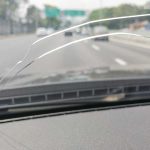
Will a Cracked Windshield Pass Inspection in NC?
Senior Automotive Glass Diagnostic Specialist & Master Technician at CarGlassFix · AGSC Master Certified Auto Glass Technician, NGA Certified Installer, I-CAR Automotive Safety Specialist · 12+ Years in Automotive Glazing, Windshield Structural Bonding, ADAS Camera Calibration & Precision Chip Restoration
A cracked windshield usually passes the North Carolina safety inspection. NC’s inspection rules set no crack size limit, and the windshield glass is not on the checklist. A crack can cause a failure only through the wiper check, when it keeps the wipers from moving freely or from cleaning rain and snow off the glass.
Does a cracked windshield fail NC inspection?
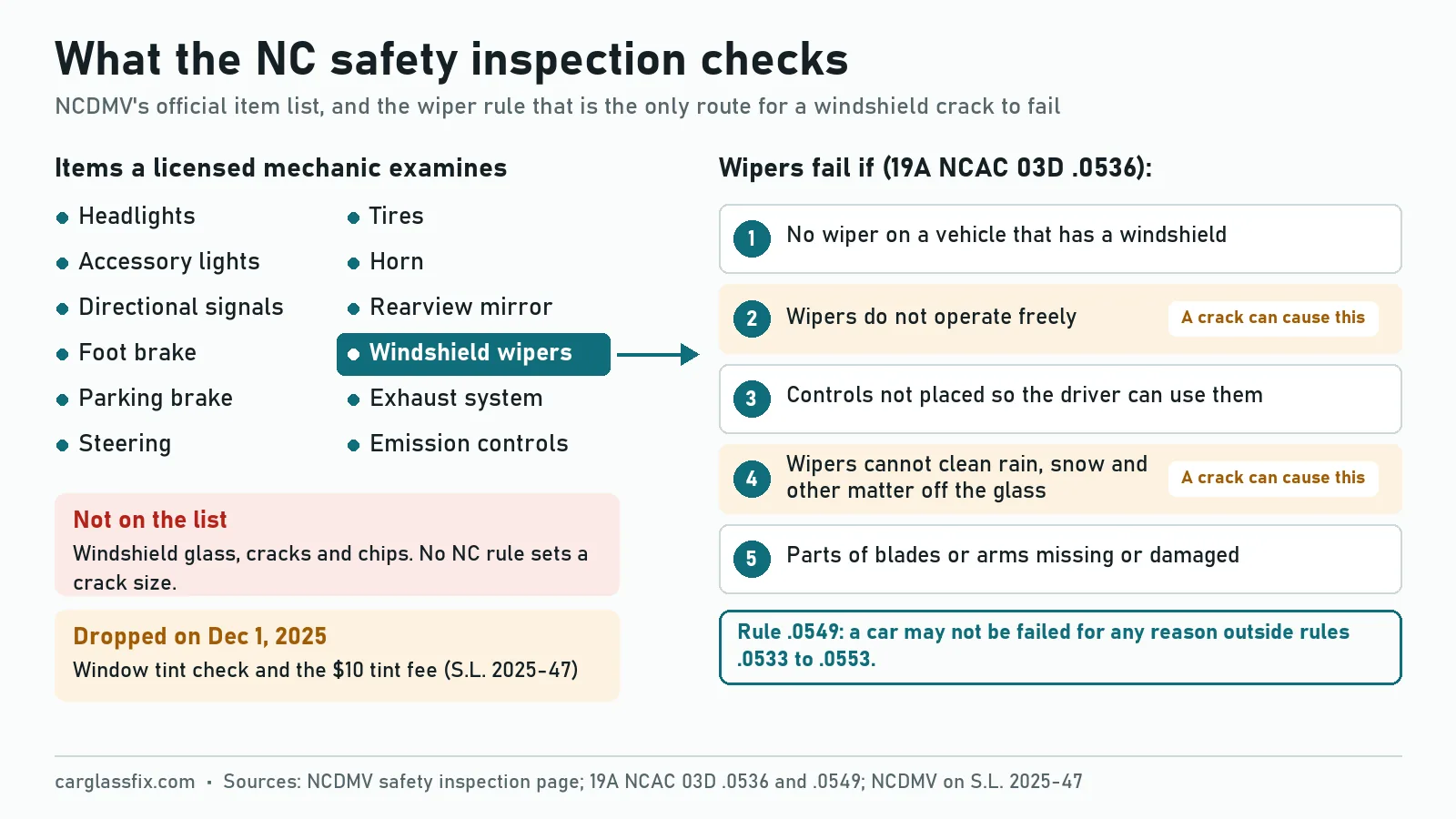
A cracked windshield does not fail the North Carolina safety inspection on its own. The inspection covers a fixed list of equipment in the N.C. General Statutes, section 20-183.3(a). The only windshield item on that list reads “Windshield wipers, as required by G.S. 20-127(a).” The glass itself is not a listed item.
The inspection rules also limit what a station can fail. Rule 19A NCAC 03D .0549 says vehicles shall not be disapproved for any reason other than those in rules .0533 through .0553. Those rules cover equipment such as lights, horn, steering, wipers, directional signals, tires, mirrors and emissions. None of them covers windshield glass or cracks.
Under G.S. 20-183.8(c)(5), a person who fails a vehicle for any reason not authorized by law commits a Class I felony.
A crack still matters in one situation. If it gets in the way of the wipers, the car can fail the wiper item. A crack that does not affect the wipers has no inspection item to fail.
What the NC safety inspection checks
The NC safety inspection checks a fixed list of equipment, and the windshield glass is not on it. NCDMV says a licensed mechanic examines each item at an inspection station. The inspection is required every year before you can renew your registration. You can have it done up to 90 days before your plate expires. NCDMV says vehicles more than 30 years old are exempt from the annual safety inspection.
| Item | Checked in the NC safety inspection? | Can a windshield crack cause a fail? |
|---|---|---|
| Headlights and accessory lights | Yes | No |
| Directional signals | Yes | No |
| Foot brake and parking brake | Yes | No |
| Steering | Yes | No |
| Tires | Yes | No |
| Horn | Yes | No |
| Rearview mirror | Yes | No |
| Windshield wipers | Yes | Yes, if the crack keeps the wipers from working |
| Exhaust system and emission control components | Yes | No |
| Window tint | No, since December 1, 2025 | Not applicable |
| Windshield glass, cracks and chips | Not a listed item | Not on its own |
Vehicles in 19 counties also need an emissions inspection at the same visit. The windshield plays no part in the emissions test. NCDMV’s help page for stations says rear-window wipers are not part of the safety inspection. Stations enter the result into the NCDMV database electronically, and North Carolina puts no inspection sticker on the windshield.
How a crack can fail the wiper check
A crack can fail the NC inspection only by causing one of the five wiper failures in rule 19A NCAC 03D .0536. The rule was readopted on October 1, 2021. Its text does not mention cracks.
| Wiper fail criterion (19A NCAC 03D .0536) | Can a windshield crack cause it? |
|---|---|
| 1. The vehicle has a windshield but no wiper | No |
| 2. The wipers do not operate freely | Yes, if the crack interferes with the blade’s movement |
| 3. The wiper controls are not placed so the driver can operate them | No |
| 4. The wipers are not adequate to clean rain, snow and other matter from the windshield | Yes, if the crack keeps the blades from clearing the glass |
| 5. Parts of the blades or arms are missing or show damage | The blade or arm fails on its own condition, whatever caused the damage |
An NCDMV help page for inspection stations lists a sixth wiper item: “Windshields that are cracked and impedes wiper blade operation.” That page cites the 2012 version of the regulations. The 2021 rule text does not include the line. Both versions lead to the same test. A crack fails the car only when it affects the wipers.
Location decides most cases. A crack outside the wiper sweep cannot affect the blades. A crack across the wiper path is the case to watch. Worn or torn blades fail under criterion 5 whether or not the glass is cracked. If your blades are worn, see how to replace windshield wiper blades before the test.
Where the crack-size numbers online come from
No North Carolina statute or inspection rule sets a crack size limit. Pages about NC inspection still quote sizes from 1/4 inch to 6 inches. None of those pages cites a statute or rule for its number. The table traces each number to the closest official rule that uses it.
| Size quoted online | How pages use it | Official rule that uses this number | Applies to NC cars? |
|---|---|---|---|
| 1/4 in | Cracks under this size pass | Virginia, 19VAC30-70-210: a scratch more than 1/4 in wide and 6 in long in the driver’s wiper area fails | No |
| 1/2 in | Cracks under this size pass | None found | No |
| 3/4 in | Said to be NC’s crack limit in the critical viewing area | Federal truck and bus rule, 49 CFR 393.60: damage a 3/4-in (19 mm) disc can cover is allowed, 3 in from other damage | No. It covers commercial motor vehicles. |
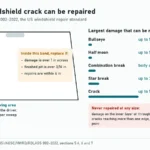
| 1 in | Chips under this size pass | ROLAGS 002-2022 repair standard: 1 in is the bullseye repair limit and the replacement point for damage in the driver’s viewing area | No. It is a repair standard. |
| 1-1/2 in | Damage over this size in the wiper path fails | Virginia, 19VAC30-70-210: a chip or star crack over 1-1/2 in, or several cracks from one point with one over 1-1/2 in, fails above the 3-in line | No. It is Virginia’s rule. |
| 6 in | Cracks over this size likely fail | Safelite and Progressive use 6 in as a usual crack repair limit; Virginia’s scratch rule also uses 6 in | No |
The 3/4-inch figure matches the federal rule for trucks and buses. The 1-1/2-inch figure matches Virginia’s inspection rule. Neither rule applies to a passenger car inspected in North Carolina. Repair limits are a separate question; see how big a windshield crack can be repaired.
Virginia shows what a written state crack rule looks like. Its rule rejects a pit, chip or star crack larger than 1-1/2 inches above the 3-inch line at the bottom of the windshield. It also rejects any crack that lets one piece of glass move against another. For other states, see will a car pass inspection with a cracked windshield.
What changed on December 1, 2025
Window tint has not been checked in the NC safety inspection since December 1, 2025. NCDMV says the change comes from Session Law 2025-47. The same law eliminated the extra $10 tint inspection fee.
Tint limits still apply on the road. G.S. 20-127(b) allows windshield tint only along the top, down to 5 inches below the top or to the AS1 line, whichever is longer. The 2025 law also added a duty for drivers. A driver of a vehicle with tinted windows must roll down the driver side window when a law enforcement officer approaches.
Emissions testing is also set to end. NC DEQ says S.L. 2023-134 removes the test in 18 counties and S.L. 2026-41 removes it in Mecklenburg County. The change needs approval from the US EPA first. EPA proposed approval on May 8, 2026. No final EPA rule had been published as of October 22, 2026. Until then, emissions testing continues in all 19 counties, including Wake, Mecklenburg and Guilford. NC DEQ says all counties will still require the annual safety inspection, so the wiper check stays.
What to do if your car fails for windshield damage
A car that fails can be reinspected at the same station within 60 days without a new inspection fee. Under G.S. 20-183.3(c), that reinspection covers only the equipment that failed. After 60 days, the car needs a full inspection again. Under rule 19A NCAC 03D .0530, the inspector must tell you the defects. The station repairs the car only at your request, and you can use any shop.
Follow these steps after a failed inspection.
What to do if your car fails NC inspection for windshield damage
Get the defect in writing
Ask which wiper criterion in 19A NCAC 03D .0536 the car failed. The station gives you a signed receipt that shows the failure.
Check the blades and arms
If the blades or arms are damaged, new parts may clear the failure without any glass work.
Decide on repair or replacement
A crack that stops the wipers working may need a repair or a new windshield. A shop judges the crack by its size, type and location.
Pick any shop
You can have the work done anywhere. The inspection station repairs the car only if you ask it to.
Return within 60 days
Go back to the same station within 60 days. You pay no new inspection fee, and only the failed equipment is checked again.
Renew your registration
NCDMV blocks registration renewal until the vehicle passes.
The inspection fees are set in G.S. 20-183.7(a).
| Item | Cost |
|---|---|
| Safety-only inspection | $12.75 inspection + $0.85 authorization = $13.60 |
| Safety and emissions inspection (19 counties) | Up to $23.75 inspection + $6.25 authorization = up to $30.00 |
| Reinspection at the same station within 60 days | No new inspection fee |
| Window tint inspection | Eliminated December 1, 2025 (was $10) |
| Driving without a current inspection | Penalty of up to $50 (G.S. 20-183.8(a)) |
The ROLAGS repair standard allows crack repair up to 14 inches, and many shops stop at 6 inches. Our guide to windshield repair vs. replacement walks through that choice. NCDMV says the NC State Highway Patrol Investigative Services Unit enforces the inspection program.
Tickets and road rules for a cracked windshield in NC
No North Carolina statute names a cracked windshield as a driving offense, in the sections reviewed for this guide. The UNC School of Government pattern jury instruction on windshield and window requirements covers wipers and tint only. These rules still apply.
- G.S. 20-127(a) requires a vehicle with a windshield to have a wiper in good working order when driven on a highway.
- G.S. 20-135 requires safety glass in the windshield of NC-registered vehicles made on or after January 1, 1936. It sets no crack limit.
- Under G.S. 20-176, breaking an equipment rule in Part 9, such as the wiper rule, is an infraction with a penalty of up to $100.
- Under G.S. 20-183(b), officers may give a warning ticket for conduct that is a potential hazard. It does not go on your driving record.
A crack that blocks the driver’s view is a safety risk whatever the inspection result. See how long you can drive with a cracked windshield and how to stop a windshield crack from spreading. For a citation or a dispute, ask a North Carolina lawyer.
Frequently asked questions
Can you get a ticket for a cracked windshield in NC?
No NC statute names a cracked windshield as an offense, though broken wipers are an equipment infraction with a penalty of up to $100. A warning ticket for a potential hazard stays off your driving record. Other states are covered in can you get a ticket for a cracked windshield.
Does a windshield chip fail inspection in NC?
No NC rule sets a chip size, and chips are not on the inspection list. A chip matters only if it keeps the wipers from working. For repair limits, see how big a windshield crack can be repaired.
Does NC still check window tint during inspection?
No. Since December 1, 2025, tint is no longer part of the NC safety inspection, and the $10 tint fee is gone. The tint limits in G.S. 20-127 still apply on the road.
Is there an inspection sticker on the windshield in NC?
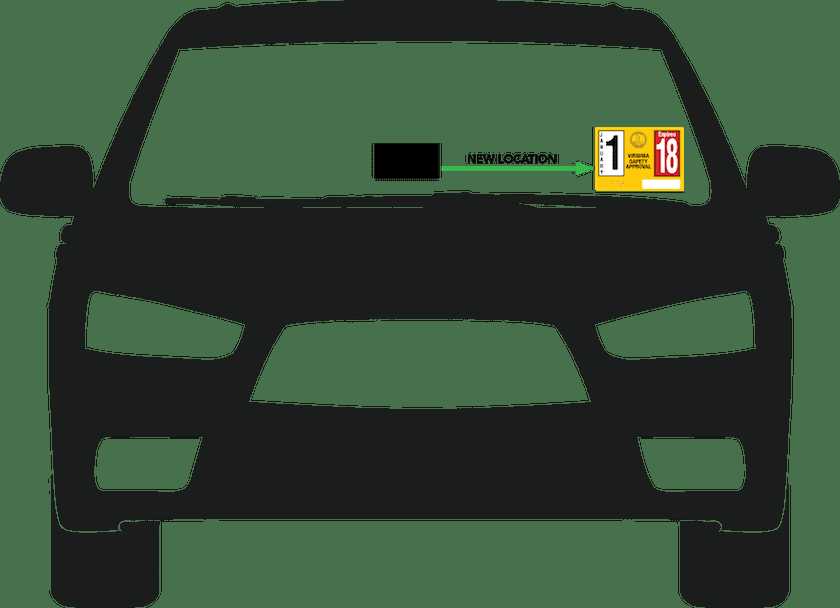
No. NC stations record the result electronically in the NCDMV database, so a windshield replacement leaves no sticker to move.
Would the same crack fail inspection in Virginia?
It can. Virginia rejects a windshield with a chip or star crack over 1-1/2 inches above the 3-inch line, or a crack that lets the glass pieces move. See will a car pass inspection with a cracked windshield for other states.
Sources
- NCDMV: Vehicle Safety Inspection (checked 22 October 2026)
- NCDMV: Emissions and Safety Inspections, including the December 1, 2025 tint change under S.L. 2025-47 (checked 22 October 2026)
- NCDMV: Emissions Inspections, list of 19 counties (checked 22 October 2026)
- 19A NCAC 03D .0536, Windshield wiper, readopted October 1, 2021 (checked 22 October 2026)
- 19A NCAC 03D, Subchapter D rules, including .0530 and .0549 (checked 22 October 2026)
- NCDMV inspection station help: safety items (checked 22 October 2026)
- N.C. General Statutes, FindLaw mirror (official text at ncleg.gov): G.S. 20-127, 20-135, 20-176, 20-183, 20-183.3, 20-183.7 and 20-183.8 (checked 22 October 2026)
- UNC School of Government, N.C.P.I.-Motor Vehicle 215.31, Windshield and Window Requirements
- NC DEQ: Inspection and Maintenance (I/M) Program (checked 22 October 2026)
- US EPA: proposed approval of North Carolina’s plan to remove emissions testing and Federal Register proposed rule, May 8, 2026
- 49 CFR 393.60, Glazing in specified openings (FMCSA)
- 19VAC30-70-210, Virginia glass and glazing inspection rule (checked 22 October 2026)
- ANSI/AGSC/NWRD/ROLAGS 002-2022, Repair of Laminated Automotive Glass Standard
- Safelite Help Center: glass damage and service and Progressive: glass repair vs. replace

Similar Posts