How to Remove Windshield Protection Film Without Damage
Senior Automotive Glass Diagnostic Specialist & Master Technician at CarGlassFix · AGSC Master Certified Auto Glass Technician, NGA Certified Installer, I-CAR Automotive Safety Specialist · 12+ Years in Automotive Glazing, Windshield Structural Bonding, ADAS Camera Calibration & Precision Chip Restoration
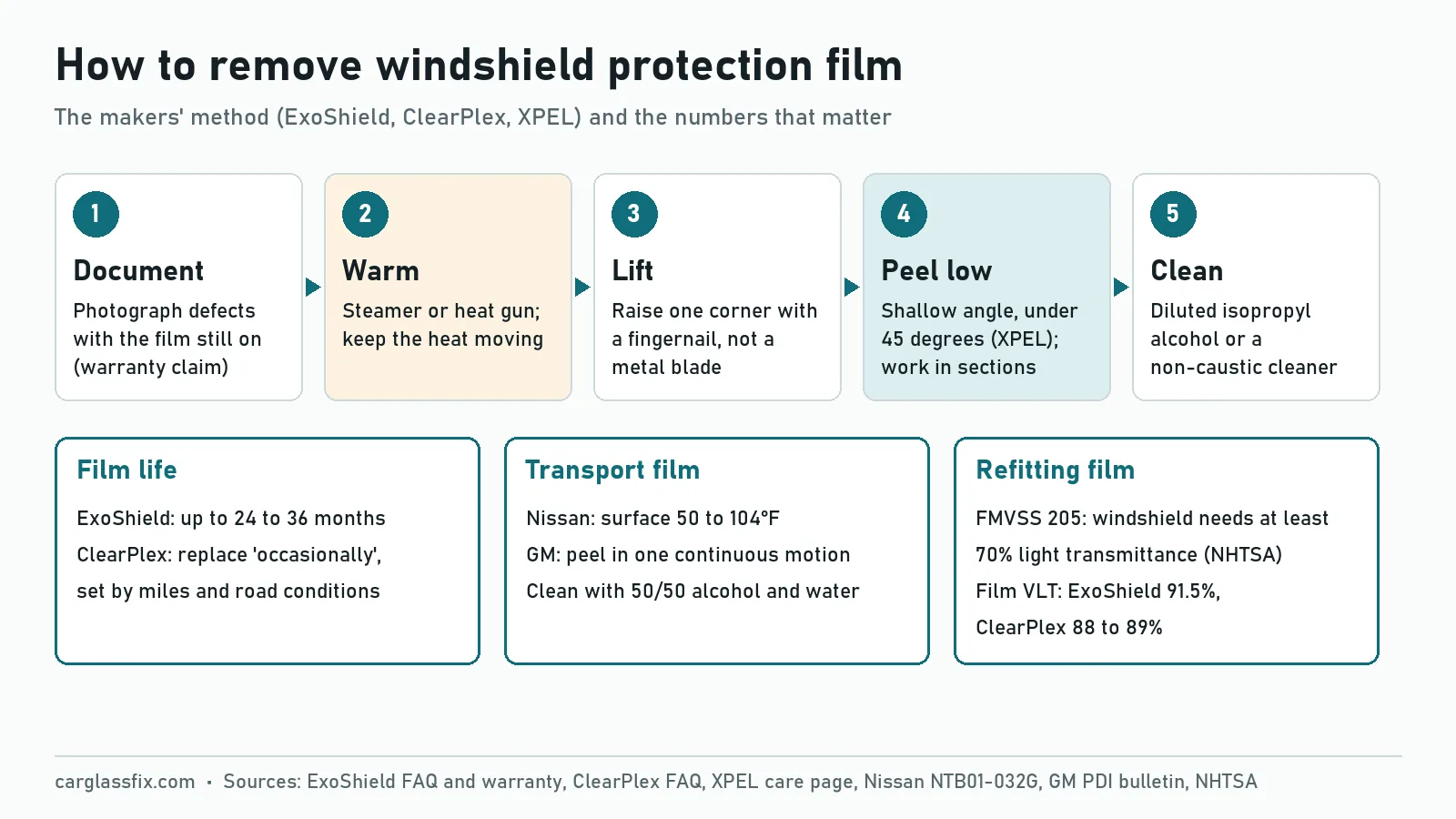
To remove windshield protection film, warm the film with a steamer or heat gun, lift one corner with a fingernail and peel the film slowly at a shallow angle, adding heat as you go. ExoShield, ClearPlex and XPEL describe this method. Then dissolve leftover adhesive with diluted isopropyl alcohol or a non-caustic adhesive cleaner and wash the glass.
What windshield protection film is
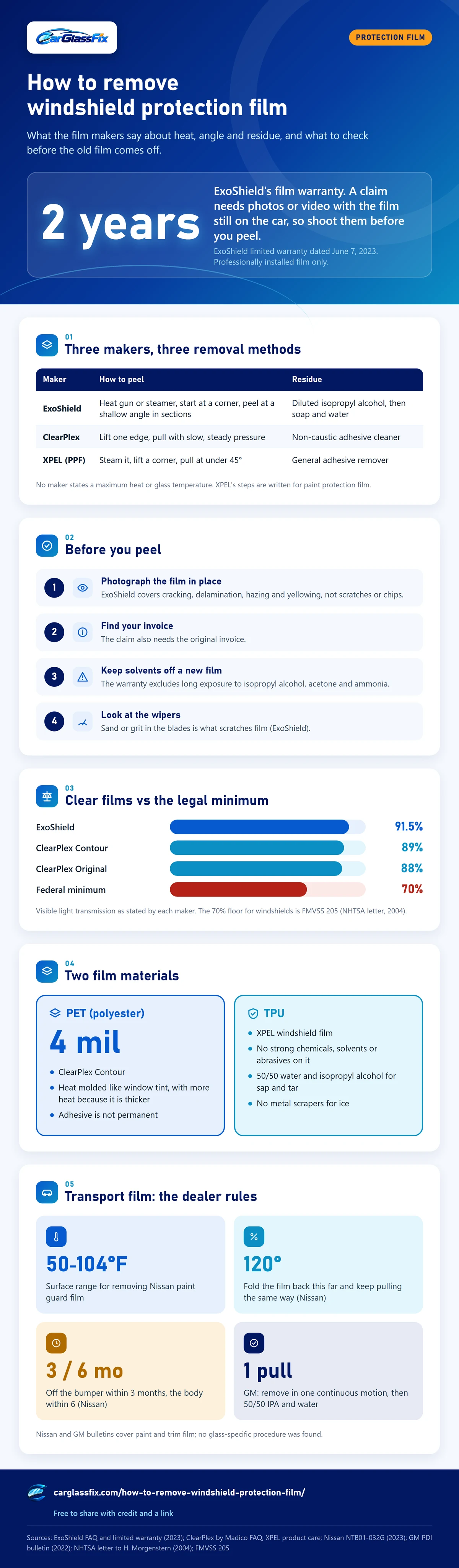
Windshield protection film is a clear plastic sheet bonded to the outside of the windshield to take rock chips and abrasion before the glass does. Sellers also call it WPF or crack prevention film, and removal is the same task under every name. Two plastics dominate. XPEL sells a TPU windshield film. Madico describes ClearPlex Contour as a 4-mil, PET-based film that is heat molded to the glass, like window tint.
The material matters for removal. Madico says ClearPlex needs more heat than tint during installation because it is thicker. Both makers rely on an adhesive that holds at highway speed but lets go under controlled heat and pulling. ClearPlex states that its adhesive “is not permanent.”
| Film | Material (maker) | Stated light transmission | Maker’s removal advice |
|---|---|---|---|
| ExoShield (Alchemy) | Windshield protection film; GT3+, ULTRA and DIY versions | 91.5% VLT | Heat gun or steamer, shallow angle, sections, diluted isopropyl alcohol |
| ClearPlex Contour (Madico) | 4-mil PET | 89% VLT | Lift one edge, slow and consistent pull, non-caustic adhesive cleaner |
| ClearPlex Original (Madico) | PET | 88% VLT | Same as Contour |
| XPEL Windshield Film | TPU | Not stated on the care page | Professional removal recommended (PPF guidance); steamer, under 45 degrees |
Film on the inside of the glass is usually tint, which has its own method in how to remove car window tint.
When to replace the film
Replace windshield protection film when it hazes, yellows, lifts or scratches enough to blur the view, or at the end of the maker’s expected life. ExoShield says owners can expect up to 24 to 36 months from its windshield film on average. Madico says ClearPlex “should occasionally be removed and replaced,” with timing set by miles driven and road conditions.
Scratches usually come from grit, not from the wipers alone. ExoShield says sand and road debris lodged in the wiper rubber raise the scratch risk. Keeping the glass clean slows this, as covered in how to protect a windshield from scratches.
Check the warranty before you peel anything. ExoShield’s limited warranty dated June 2023 runs 2 years from purchase. It covers cracking, delamination, discoloration, hazing and yellowing on professionally installed film. A claim needs the original invoice and photos or video with the film still fully installed. Scratches count as normal wear and are not covered.
Tools and conditions before you start
A steamer or heat gun, a spray bottle of slip solution, clean microfiber towels and an adhesive cleaner cover most removals. ExoShield’s removal video compares a heat gun with a steamer and calls slip solution essential. XPEL’s removal guidance for paint protection film prefers a steamer because it keeps the film pliable and wet.
Work on cool, clean glass. No film maker publishes a maximum glass temperature or a heat-gun distance for windshield film, so keep the heat source moving and warm the film gradually. Nissan’s bulletin for its factory paint film sets a surface range of 50 to 104°F (10 to 40°C) for clean removal. That range is written for paint, but it shows how temperature affects adhesive residue.
Decide who does the job before you start. XPEL recommends professional removal for its paint protection film and gives a do-it-yourself method only for when that is not possible. Have the shop that installed the film do the work while its warranty still applies, because a claim depends on the film being inspected in place.
How to remove windshield protection film step by step
The steps below follow the makers’ published directions. Use the instructions for your film brand when they differ.
How to remove windshield protection film
Photograph any defect
If the film is under warranty, record the haze, lifting or yellowing with the film still installed. ExoShield requires this for a claim.
Wash the windshield
Rinse grit off the film and glass so nothing gets dragged across the windshield during removal.
Warm one corner
Heat the film with a steamer or heat gun, keeping the heat moving, until the adhesive softens.
Lift the corner
Raise the corner with a fingernail, as XPEL describes, instead of prying with a metal blade.
Peel at a shallow angle
Pull the film back toward you, low and close to the glass. XPEL’s PPF guidance says under 45 degrees, so the adhesive leaves with the film.
Work in sections
Keep warming the area just ahead of the peel line. ExoShield removes the film across the windshield in sections.
Remove adhesive residue
Wipe leftover adhesive with diluted isopropyl alcohol (ExoShield) or a non-caustic adhesive cleaner (ClearPlex).
Wash and inspect
Clean the glass with automotive soap and water, then check it in angled light for leftover glue and chips.
ClearPlex’s own method is the short version. Madico says to lift one edge and pull “using slow and consistent pressure.” ExoShield’s trainer video adds tips for film that tears partway through the peel.
Peel angles differ by product, so follow the maker of your film. XPEL gives under 45 degrees for its paint protection film. Nissan’s bulletin for its factory paint guard film says to fold the film back 120 degrees and keep pulling in the same direction. Both aim at the same result: the adhesive should leave with the film, not stay on the glass. Madico adds that new ClearPlex can go on as soon as the windshield is clean.
Removing adhesive residue from the glass
Leftover adhesive comes off bare glass with diluted isopropyl alcohol or a non-caustic adhesive cleaner and a towel. ExoShield names diluted isopropyl alcohol. Madico names “a non-caustic cleaner designed to remove adhesive.” GM’s dealer bulletin for transit film uses a 50/50 mix of isopropyl alcohol and water.
Nissan’s paint film bulletin lists 3M General Purpose Adhesive Cleaner (08984 and 08987), 3M Specialty Adhesive Remover (38984 and 38987) and naphtha. 3M describes the 08984 cleaner as flammable and for professional use. Use any solvent with ventilation and keep it off paint, rubber seals and the cowl.
Two tricks come from automaker bulletins. Mazda tells technicians to press the sticky side of the removed film back onto the residue and peel it off again. Nissan says residue gets harder to remove the longer it sits in sunlight, so clean it the same day.
ExoShield’s warranty excludes damage from prolonged contact with isopropyl alcohol, acetone and ammonia. Finish all solvent work before a new layer goes on. Stubborn glue spots have their own guide in how to remove adhesive from a windshield.
Transport and shipping film on new glass
Transport film is a temporary protective layer put on at the factory, and automakers want it off before or at delivery. We found no automaker or glass maker document that gives a removal procedure for transport film on glass itself. The published rules cover paint, bumper and trim films, and the same adhesive logic applies to glass.
| Bulletin | What it covers | Removal rule |
|---|---|---|
| GM PDI bulletin, Chevrolet Express and GMC Savana (2022) | Bumper and grille film covers | Remove before storage; sunlight can transfer the adhesive; peel in one continuous motion; clean with 50/50 isopropyl alcohol and water |
| Nissan NTB01-032G (2023) | Paint Guard Film | Off the bumper fascia within 3 months and the body within 6 months of manufacture; surface at 50 to 104°F; fold back 120 degrees and keep pulling the same way |
| Mazda SA-006/21 (2021) | Piano black door garnish film | Keep on until just before delivery; remove after cleaning; re-stick the film to lift residue |
The GM and Mazda bulletins put removal on the dealer, at or just before delivery. Ask the dealer about any film still on the glass at pickup, and peel it in one motion on a mild day if you remove it yourself. Inspection and parking stickers on new glass are a separate job, covered in how to remove a sticker from car glass.
Risks, cameras and the rules for new film
The main removal risks are scratched glass, torn film that leaves adhesive behind and solvent on paint or seals. ExoShield’s trainer video warns that using a blade too aggressively, or pressing over trapped debris, causes dents in the next film. ExoShield’s video ends with cleaning and inspecting the bare glass for leftover glue or contamination.
The forward camera sits behind the glass, and film removal works on the outside surface only. ExoShield calls its film “completely invisible” to cameras and sensors, a maker claim. If you are not sure whether your car has a camera, see how to tell if your windshield has a camera behind it.
Any new film must keep the windshield legal. NHTSA explains that FMVSS 205 requires 70 percent light transmissibility for glazing needed for driving visibility, which includes the windshield. ExoShield lists 91.5 percent VLT and ClearPlex 88 to 89 percent for the film. State rules differ; the AS-1 line on a windshield guide explains the marking many states use. Application steps for a new layer are in how to use windshield crack prevention film.
Frequently asked questions
What is the easiest way to remove windshield protection film?
Warm the film with a steamer or heat gun, lift a corner and peel it slowly at a shallow angle while reheating the area ahead of the peel. ExoShield and ClearPlex both describe a slow, steady pull from one edge.
What can I use to get film adhesive off a windshield?
ExoShield names diluted isopropyl alcohol, and Madico names a non-caustic adhesive cleaner. GM’s dealer bulletin uses a 50/50 mix of isopropyl alcohol and water for transit film adhesive.
Is it safe to remove windshield protection film after several years?
Yes. The makers’ method is the same for new and old film. ExoShield’s removal video covers film that has been on for a few months or a few years, including film that tears and leaves adhesive behind.
Can I use a razor blade to remove windshield film?
XPEL starts the peel with a fingernail, not a blade. ExoShield’s trainer warns against using a blade too aggressively, and XPEL tells owners to keep sharp tools and metal scrapers off its windshield film.
Should I remove the film myself or go to an installer?
XPEL recommends professional removal, and ExoShield covers removal or replacement of defective, professionally installed film for 2 years. Check the warranty and take photos before you remove film yourself.
Sources
- ExoShield FAQ: How do I remove ExoShield windshield protection film? (checked 27 October 2026)
- ExoShield FAQ: How long will the film last?
- ExoShield FAQ: Will my wipers scratch the film?
- ExoShield FAQ: Is the film legal?
- ExoShield FAQ: Driver assistance systems
- ExoShield Limited Product Warranty (effective 7 June 2023, checked 27 October 2026)
- ExoShield by Alchemy: How to Safely Remove ExoShield (video, 23 February 2024)
- ClearPlex by Madico: product specifications and FAQ (checked 27 October 2026)
- XPEL: Product care, paint protection film removal and windshield film care (checked 27 October 2026)
- GM bulletin: Removing protective film covers upon delivery (November 2022)
- Nissan NTB01-032G: New paint guard film removal information (1 August 2023)
- Mazda Service Alert SA-006/21: Keep the protective films on door garnish (20 January 2021)
- NHTSA interpretation letter on FMVSS 205 light transmissibility (2004) (checked 27 October 2026)
- 3M General Purpose Adhesive Cleaner technical data sheet

Similar Posts