What Your Mirror Reflection Reveals About Your Psychology

Looking at yourself in the mirror psychology goes deeper than most people realize. That daily glance reveals a lot about your mental health and self-perception. It can shape your mood, reinforce your identity, or trigger distorted thinking.
Research from the National Institute of Mental Health indicates that roughly 2.5% of the U.S. population experiences body dysmorphic disorder. Compulsive mirror checking is a central symptom of that condition. Understanding the difference between a healthy glance and a harmful habit is the first step toward using your reflection wisely.
Quick Answer
Looking at yourself in the mirror psychology reveals how your brain processes self-image. It can boost self-awareness or trigger distorted perception. Healthy mirror use is brief and neutral.
Problematic use involves compulsive checking or avoidance. Your mirror habit reflects your mental health.

Why Your Mirror Habit Matters More Than You Think
Your relationship with the mirror is not trivial. It reflects your broader relationship with yourself. How you react to your own image tells you a lot about your mental and emotional state.
For most people, a mirror check is a neutral act. You fix your hair, check for food in your teeth, and move on. But for others, the mirror becomes a battleground.
It can trigger anxiety, rumination, and obsessive checking that disrupts daily life.
The frequency of your mirror use matters. Healthy mirror use involves brief, infrequent glances. Problematic use involves repeated checks that last several minutes or longer.
You might find yourself returning to the mirror multiple times in an hour, looking for reassurance that never quite arrives.
The emotional tone of your mirror time matters too. If you consistently feel worse after looking in the mirror, that is a red flag. Your reflection should not be a source of distress.
It should be a neutral tool.
Research shows that mirror gazing activates the medial prefrontal cortex, the part of your brain responsible for self-referential thought. This is the same area that lights up when you think about your personality, your memories, and your future. So when you look in the mirror, you are not just seeing a face.
You are processing your identity.
That is why the mirror habit matters. It is a window into your self-concept. And when that window gets foggy with distorted thoughts, it can affect everything from your confidence to your mental health.
The Healthy vs. Unhealthy Split: What's Normal and What's Not
So how do you know if your mirror habit is healthy or crosses a line? The answer depends on frequency, duration, emotional impact, and control.
Healthy mirror use is functional. You check your appearance, make adjustments, and move on. It takes seconds.
You feel neutral or slightly better afterward. You do not feel compelled to check again soon.
Unhealthy mirror use is compulsive. You feel a strong urge to check that is hard to resist. You spend several minutes or longer staring at specific features.
You feel worse afterward. You return to the mirror repeatedly throughout the day.
| Healthy Mirror Use | Unhealthy Mirror Use |
|---|---|
| Takes seconds | Takes minutes or longer |
| Feels neutral or positive | Feels anxious or distressed |
| You control the urge | The urge controls you |
| You move on easily | You return repeatedly |
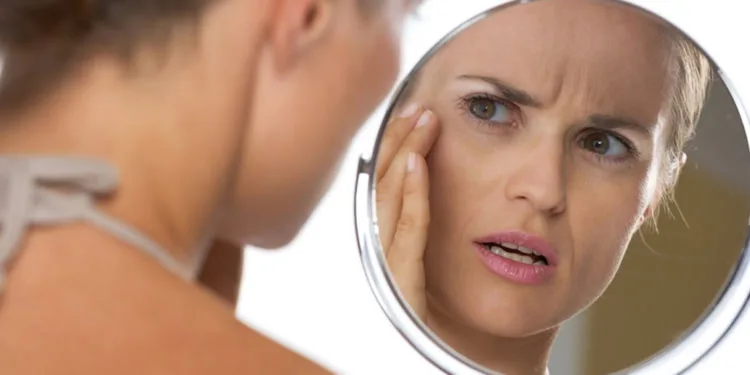
A good rule of thumb is the three-minute test. If you regularly spend more than three minutes at a time in front of a mirror, you are likely in checking territory rather than grooming territory. The longer you stare, the more distorted your perception becomes.
Another key difference is avoidance. Some people with body image concerns avoid mirrors entirely. They cover mirrors, look away, or feel intense anxiety when they catch their reflection.
Avoidance is just as problematic as excessive checking.
The healthy middle ground is mindful mirror use. You look when you need to. You do not linger.

Similar Posts