Ohio Window Tint Laws: Legal Tint Percentage by Window
Senior Automotive Glass Diagnostic Specialist & Master Technician at CarGlassFix · AGSC Master Certified Auto Glass Technician, NGA Certified Installer, I-CAR Automotive Safety Specialist · 12+ Years in Automotive Glazing, Windshield Structural Bonding, ADAS Camera Calibration & Precision Chip Restoration
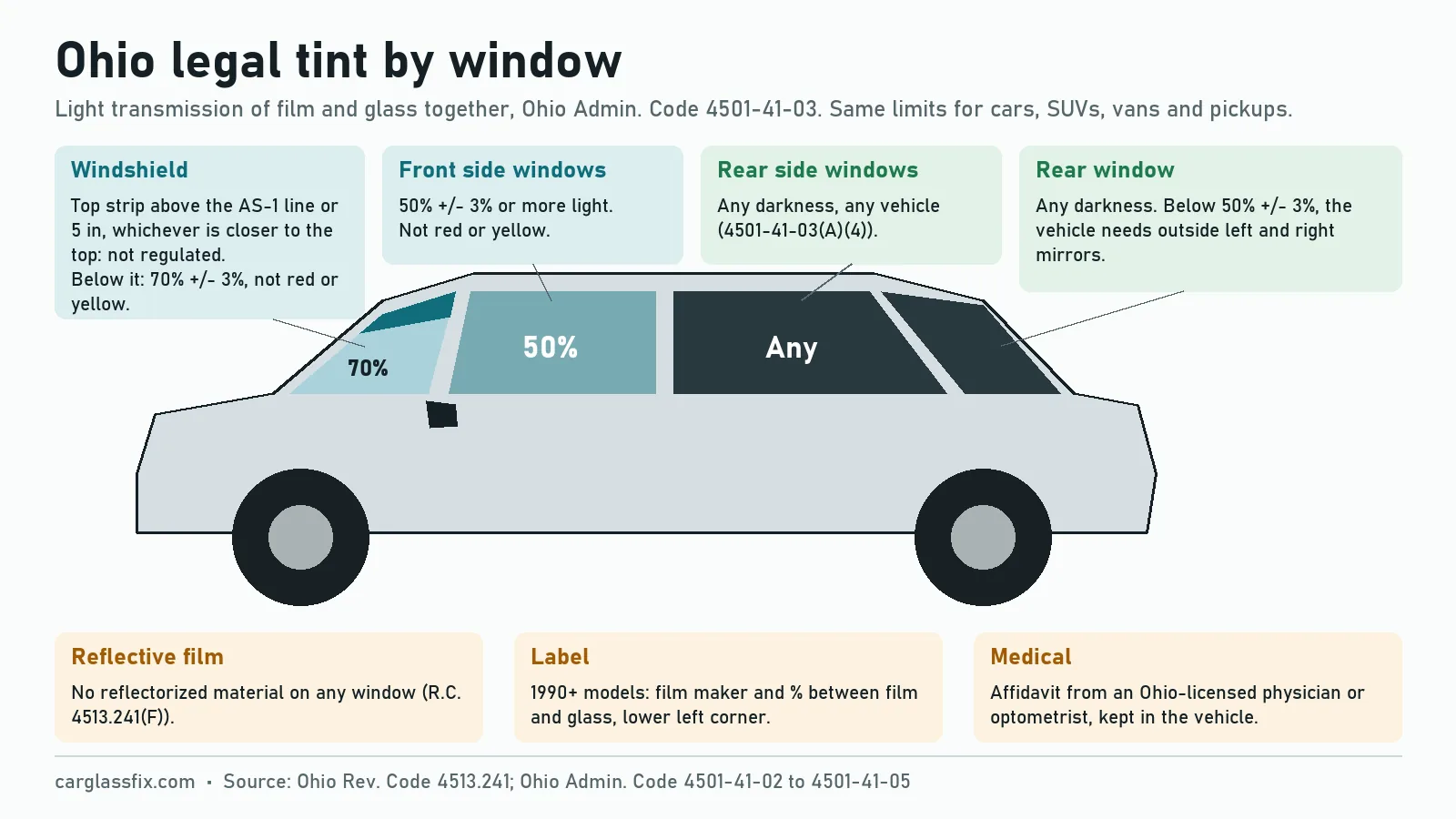
Ohio window tint laws require front side windows to pass at least 50% of light, plus or minus 3%, glass included. Rear side windows and the rear window may be any darkness, with two outside mirrors when the rear window is below 50%. Windshield film must pass 70%, apart from a strip above the AS-1 line or 5 inches.
Ohio window tint limits by window
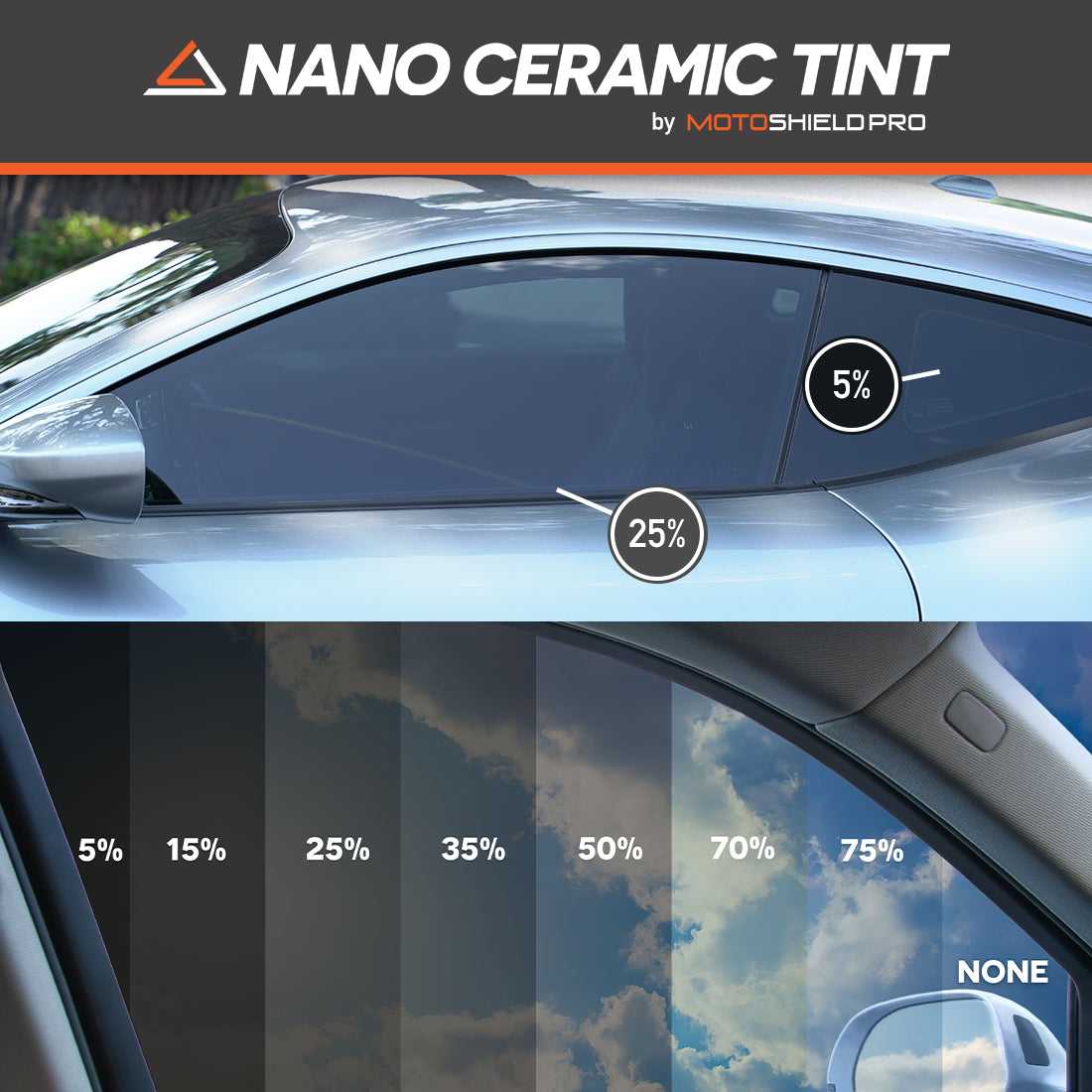
Ohio allows 50% light transmission on the front side windows and any darkness behind the driver. The same limits apply to sedans, SUVs, vans and pickups, because rule 4501-41-03 does not sort vehicles by type. Many states give multipurpose vehicles a looser rear limit. Ohio needs no separate class, since paragraph (A)(4) allows “any sunscreening material” on every window the rule does not list by name. The listed windows are the windshield and the side windows “to the immediate right or left of the driver”. Ohio is one of six jurisdictions with a 50% front side limit in our 50-state and D.C. dataset; 35 of the 51 set the front sides between 20% and 35%. Our window tint percentage chart shows what each shade looks like.
| Window | Sedan | SUV, van, pickup |
|---|---|---|
| Windshield, top strip | Not regulated if it stays above the AS-1 line or 5 in from the top, whichever is closer to the top | Same |
| Windshield, rest of the glass | 70% light or more, plus or minus 3%; not red or yellow | Same |
| Front side windows | 50% light or more, plus or minus 3%; not red or yellow | Same |
| Rear side windows | Any darkness | Any darkness |
| Rear window | Any darkness; outside left and right mirrors required below 50%, plus or minus 3% | Same |
| Reflective film | Not allowed on any window | Same |
| Measured as | Film and glass together | Same |
How Ohio sets its tint rules: R.C. 4513.241 and OAC 4501-41
Ohio’s tint percentages come from a regulation, not from the statute itself. Ohio Revised Code 4513.241 tells the director of public safety to “adopt rules governing the use of tinted glass”. The director did so in Chapter 4501-41 of the Ohio Administrative Code. Rule 4501-41-03 holds the limits and took its current form on November 22, 2014. Earlier versions took effect in 1988 and 2004. The statute was last amended by House Bill 403 of the 135th General Assembly, effective April 9, 2025.
Every limit is measured with the glass. Rule 4501-41-02(C) defines transmittance as the light that passes through the film “including glazing”. Factory glass already blocks some light, so a 50% film on tinted glass reads below 50%. Our guide on how to measure window tint shows the math. From the 1990 model year, each film needs a label between film and glass, in the lower left corner, with the maker’s name and its light transmission. Rule 4501-41-04 caps that label at 1.5 by 1.5 inches. Film makers must also certify their film to the Department of Public Safety, which may test it.
Windshield tint in Ohio: 70% film and the top strip
Ohio allows film on the whole windshield if the glass and film together pass at least 70% of light, plus or minus 3%. That rule, 4501-41-03(A)(2), also bans red and yellow film. A separate paragraph covers the band at the top. Film that does not reach below “the AS-1 line or five inches from the top of the windshield, whichever is closer to the top” is “not regulated” by the chapter. The AS-1 line is a small mark near the top edge of the glass; the AS-1 line on a windshield explains how to find it.
Many tint guides tell Ohio drivers that only the top 5 inches may be tinted. The rule text is wider than that, because a 70% clear or near-clear film may cover the rest. Most factory windshields already block part of the light, so few films can stay above 70% once applied. The statute’s ban on reflectorized material still names the windshield. For the rules in other states, read is it illegal to have tint on a windshield.
The 50% front side limit and the plus or minus 3% tolerance
Ohio’s front side windows must pass “not less than fifty per cent plus or minus three per cent” of light with the glass. The rule writes the tolerance into each limit instead of adding a separate tolerance clause. The same wording appears for the windshield at 70% and for the rear-window mirror trigger at 50%. The rule does not say how an officer or court should apply the 3 points.
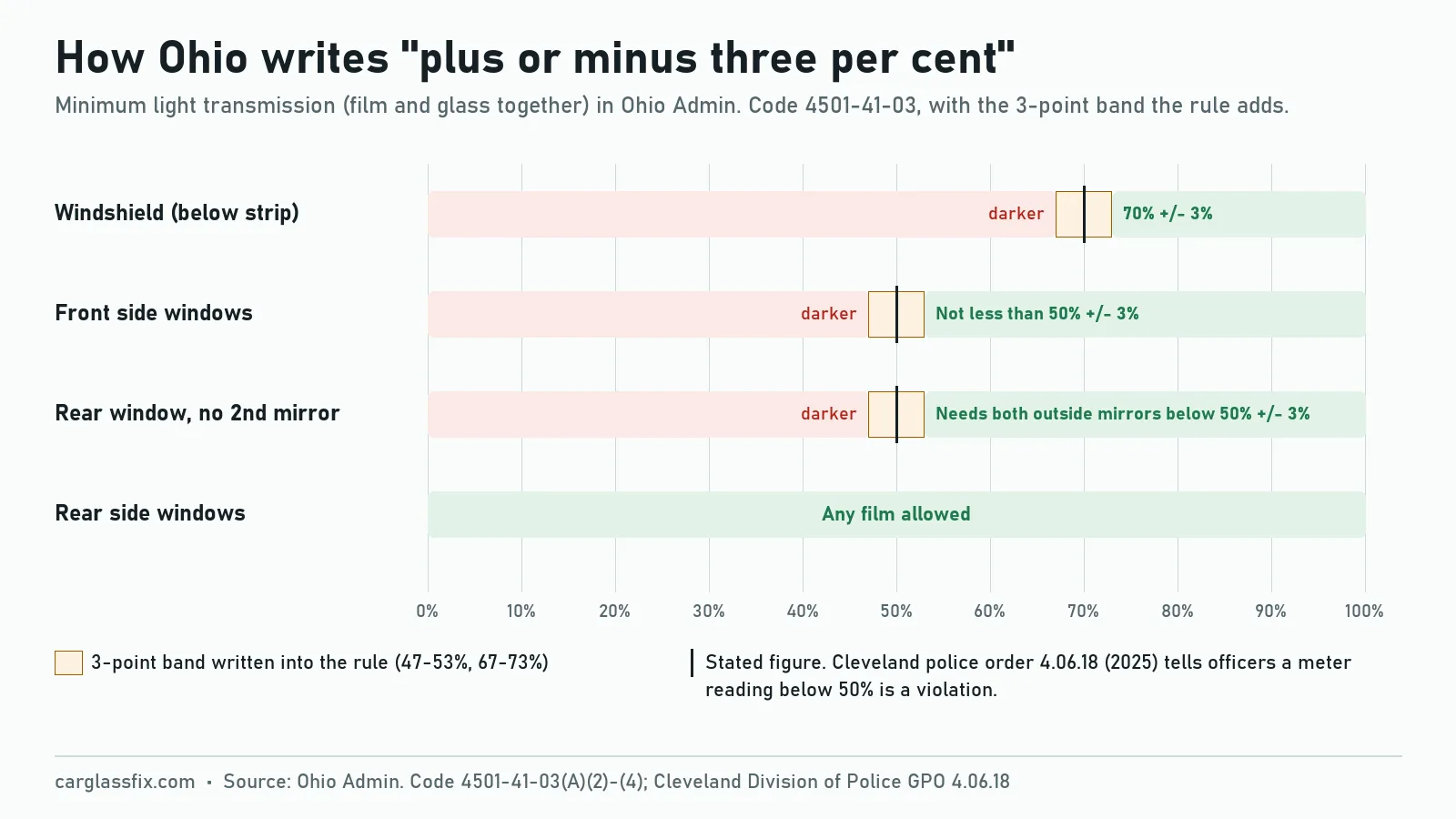
One city policy shows how the limit is read in practice. Cleveland Division of Police General Police Order 4.06.18, effective August 11, 2025, says “Meters that display a reading below 50% are in violation”. The same order bars stops made “solely due to suspicion of a window tint violation”. Officers test only the front side windows, with the window rolled down at least halfway. Each meter must read within 2% of the maker’s test samples before use. Other Ohio departments may follow different policies. A window tint meter reads the same net figure an officer sees.
Ohio medical exemption for window tint
Ohio exempts a vehicle from the tint chapter when the owner has a signed medical affidavit. Rule 4501-41-05(A) covers a vehicle registered in Ohio to the person, or to the person’s parent, legal guardian or spouse. The affidavit must come from a physician licensed in Ohio under Chapter 4731 or an optometrist licensed in Ohio under Chapter 4725. It must state that a physical condition makes darker or more reflective film necessary. The rule names no Ohio BMV form, no registrar approval and no permit sticker. Some top-ranking tint pages and a Bing AI answer say Ohio has no medical exemption; the rule text shows that it does.
How to use the Ohio medical tint exemption
See an Ohio-licensed physician or optometrist
Rule 4501-41-05(A) accepts an affidavit from either one, licensed under Chapter 4731 or 4725.
Get a signed affidavit
It must state that the person has a physical condition that makes the darker or more reflective film necessary.
Check the registration
The vehicle must be registered in Ohio to that person, or to the person’s parent, legal guardian or spouse.
Keep it in the vehicle
The affidavit must be with the person or the driver “at all times while in the motor vehicle”.
Penalties for illegal window tint in Ohio
Driving an Ohio-registered vehicle with tint that fails the rule is a minor misdemeanor, with a fine of up to $150. Section 4513.241(K) sets the offense class, and Ohio Revised Code 2929.28 sets the fine ceiling: “not more than one hundred fifty dollars”. Court costs may be added. Installing nonconforming film is a misdemeanor of the fourth degree. That class carries a fine of up to $250 under 2929.28 and up to 30 days in jail under 2929.24.
The installer is also liable in a civil action to the vehicle owner for damages, the costs of the action and attorney fees. A repeat installer who is a registered motor vehicle repair operator or a licensed dealer may lose that registration or license for up to 180 days. A dealer who sells a nonconforming vehicle commits a minor misdemeanor only if the dealer knew of the problem. Courts must report installer convictions to the motor vehicle repair board and the motor vehicle dealers board within 10 days.
Who the Ohio tint rules do not cover
The Ohio limits cover vehicles registered in Ohio, so a car registered in another state follows its home state’s law. Section 4513.241(C) applies to a vehicle “registered in this state”, and the rule uses “required to be registered in this state”. Factory tint or glazing that meets Federal Motor Vehicle Safety Standard 205 is exempt under 4513.241(G) and rule 4501-41-05(D). The rule also exempts the windows behind the driver in hearses and in chauffeured limousines that carry nine or fewer passengers for hire. Law enforcement vehicles used for agency duties are exempt under 4513.241(J). Privacy drapes, louvers or blinds must be open and secured while the vehicle moves.
The statute lets the rules protect owners of nonconforming vehicles from November 11, 1994, and new residents, but the current chapter includes no such grandfather clause. Mirror films fall under the reflectorized ban; see can you put mirror tint on a car. To preview a 50% shade, try the window tint simulator, and compare states in what car window tint is legal. Ohio tint rules can change, so check the current R.C. 4513.241 and OAC 4501-41-03 before you tint. This article is general information, not legal advice.
Frequently asked questions
What is the darkest tint legal in Ohio?
The darkest legal front side window reads 50% with film and glass together, and the rule adds plus or minus 3%. Rear side windows and the rear window have no limit, so any shade is legal there if the vehicle has outside mirrors on both sides.
Is 35% tint legal in Ohio?
A 35% reading is illegal on Ohio front side windows, which need 50% plus or minus 3%. It is legal on the rear side windows and on the rear window with two outside mirrors.
Is 35% or 20% tint darker?
A 20% tint is darker because it lets through 20% of visible light, against 35% for the lighter film. The window tint percentage chart shows the shades side by side.
Can you get a medical exemption for tint in Ohio?
Yes. Rule 4501-41-05(A) exempts a vehicle when the owner, or the owner’s parent, legal guardian or spouse, has an affidavit from an Ohio-licensed physician or optometrist, kept in the vehicle at all times.
How much is a tint ticket in Ohio?
A driver’s tint violation is a minor misdemeanor, and Ohio caps the fine for that class at $150 (R.C. 2929.28), plus any court costs. The installer faces a fourth-degree misdemeanor with a fine of up to $250.
Sources
- Ohio Revised Code 4513.241, Using tinted glass and other vision obscuring materials (effective April 9, 2025; checked 28 October 2026)
- Ohio Administrative Code 4501-41-03, Specifications (effective November 22, 2014; checked 28 October 2026)
- Ohio Administrative Code 4501-41-02, Definitions and 4501-41-04, Manufacturer’s certification (Cornell LII, checked 28 October 2026)
- Ohio Administrative Code 4501-41-05, Exemptions (checked 28 October 2026)
- Ohio Revised Code 2929.28, Financial sanctions for misdemeanors and 2929.24, Jail terms for misdemeanors (FindLaw, current as of January 1, 2026)
- Cleveland Division of Police, General Police Order 4.06.18, Window Tint Meters (effective August 11, 2025)

Similar Posts